

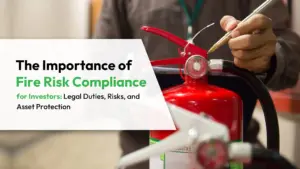

The Importance of Fire Risk Compliance for Investors is a key aspect of a backing strategy that cannot be overlooked. It involves a range of legal obligations designed to protect both properties and individuals. Investors face significant consequences if they neglect these responsibilities. Beyond the immediate risks, the implications of non-compliance can extend to financial stability and market reputation. Understanding these factors is essential for long-term success. What specific measures can investors take to guarantee they remain compliant?
Key Takeaways
- Compliance with fire safety regulations protects property value and mitigates the risk of catastrophic losses from fire incidents.
- Investors face legal penalties and increased insurance costs if they neglect fire risk compliance, impacting financial stability.
- Regular fire risk assessments and safety training increase tenant safety and property reputation, and promote trust in the market.
- Non-compliant properties may struggle to secure financing, limiting backing opportunities and jeopardising portfolio growth.
- Staying informed about evolving fire safety laws ensures long-term asset protection and stability in backing returns.
The Importance of Fire Risk Compliance for Investors Explained Clearly
Fire risk compliance serves as a key safeguard for investors manoeuvring the complexities of property ownership. It ensures that properties comply with established safety regulations, thereby greatly mitigating the risk of catastrophic fire incidents.
By adhering to these compliance standards, investors not only protect their assets but also increase their reputation in the market.
Failure to comply can lead to legal liabilities and financial losses, jeopardising the investor’s freedom to operate without constraints. Additionally, properties that meet fire safety requirements are often more attractive to possible tenants or buyers, promoting a sense of security and stability in backing returns.
In essence, fire risk compliance is not merely a legal obligation; it is a prudent choice that empowers investors. It allows them to navigate their property ventures with confidence and promote an environment where both personal freedom and financial prosperity can thrive.

Why Fire Risk Compliance Directly Affects Investment Security
While investors may focus primarily on financial returns, neglecting fire risk compliance poses significant threats to the security of the backing. The consequences of insufficient fire safety measures can be catastrophic, both financially and reputational. Ensuring compliance with fire safety regulations is essential to safeguard the building.
Key reasons why fire risk compliance directly affects backing security include:
- Property Damage: Fire incidents can result in extensive physical damage, leading to loss of asset value.
- Legal Consequences: Non-compliance can result in hefty fines and legal liabilities, impacting financial stability.
- Insurance Challenges: Insufficient compliance may lead to denied claims or increased premiums, further straining resources.
- Market Reputation: A history of fire incidents can dissuade possible investors, negatively affecting future funding opportunities.
Legal Responsibilities Investors Face Under Fire Safety Regulations
Investors must navigate a complex landscape of legal responsibilities related to fire safety regulations to protect their assets and ensure compliance. These responsibilities encompass adherence to local fire codes, regular safety inspections, and ensuring that properties are equipped with adequate fire prevention and control measures.
The Importance of Fire Risk Compliance for Investors means staying informed about evolving regulations, which can vary greatly by jurisdiction. Failure to comply can lead to substantial legal repercussions, including fines and sanctions. Furthermore, investors are responsible for ensuring that tenants and employees are educated about fire safety protocols, further extending their obligations.
Essentially, the legal framework surrounding fire safety is designed to promote accountability and protect individuals, which investors must prioritise. By addressing these legal responsibilities energetically, investors can not only safeguard their financial interests but also cultivate a habit of safety and responsibility within their properties, ultimately enhancing the value of their backing.
Financial and Liability Risks of Ignoring Fire Safety Compliance
Neglecting fire safety compliance can lead to significant financial and liability risks that can jjeopardisean investor’s portfolio. Ignoring these key safety measures not only increases the likelihood of devastating fires but also exposes investors to various repercussions that can severely impact their financial standing.
- Legal Penalties: Non-compliance can result in hefty fines and legal actions, draining resources and time.
- Increased Insurance Premiums: Insurance companies may raise premiums or deny coverage altogether, leaving investors vulnerable.
- Property Damage Costs: A fire incident can lead to extensive repair costs, disrupting cash flow and reducing asset value.
- Reputation Risks: A lack of safety compliance can tarnish an investor’s reputation, deterring possible tenants and buyers.
How Fire Risk Assessments Protect Asset Value and Rental Income
Conducting regular fire risk assessments is essential for safeguarding both asset value and rental income in real estate backing. These assessments help identify potential hazards and ensure compliance with fire safety regulations, thereby minimising the risk of devastating incidents that could compromise property integrity.
Investors who prioritise fire risk assessments are not only protecting their assets but also promoting a safe environment for tenants, which increases tenant satisfaction and retention.
Furthermore, properties that demonstrate adherence to fire safety standards attract higher-quality tenants, thereby increasing rental income. A property that has undergone thorough assessments signifies reliability and care, making it more appealing in a competitive market.
Ultimately, by actively addressing fire risks, investors can maintain asset value and secure a steady stream of income, enabling them to focus on growth and expansion without the looming threat of fire-related liabilities.
Common Fire Safety Failures That Put Property Investments at Risk
Understanding fire safety failures is essential for safeguarding property investments. Investors must remain vigilant to avoid pitfalls that can jeopardise their assets. Common fire safety failures can lead to significant financial losses and legal repercussions.
- Neglected Fire Alarms: Failing to maintain or regularly test fire alarm systems can result in undetected fires and inadequate response times.
- Blocked Exits: Obstructed emergency exits hinder swift evacuation, putting lives at risk and possibly leading to liability claims.
- Inadequate Fire Extinguishers: Insufficient numbers or types of fire extinguishers in accessible locations can delay fire suppression efforts.
- Improper Electrical Wiring: Faulty or outdated wiring increases the risk of electrical fires, a leading cause of property damage.
Fire Risk Compliance Compared Across Residential and Commercial Assets
Fire risk compliance varies considerably between residential and commercial assets, reflecting the different occupancy levels and usage patterns of each type. Residential properties typically focus on individual safety measures, while commercial assets require broader regulatory adherence due to higher foot traffic and complex fire hazards.
| Aspect | Residential Assets | Commercial Assets |
| Occupancy Levels | Lower, family-based | Higher, more diverse businesses |
| Regulations | Local housing codes | National fire safety laws |
| Fire Safety Systems | Smoke detectors, alarms | Sprinkler systems, alarms |
| Emergency Exits | Fewer, home-oriented | Multiple, industry-specific |
| Risk Assessments | Basic, homeowner-focused | Extensive, professional |
Understanding these differences is essential for investors, as compliance can notably impact both legal responsibilities and asset protection. Ensuring proper fire risk compliance safeguards freedom by protecting lives and property alike.
What Investors Should Look for in a Compliant Fire Risk Assessment
When evaluating a compliant fire risk assessment, investors should prioritise thorough documentation that adheres to local regulations and industry standards. This essential step not only protects their share but also guarantees a strong understanding of fire safety protocols.
Investors should specifically look for the following key elements in a compliant fire risk assessment:
- Detailed Analysis: A complete evaluation of fire danger, including possible ignition sources and combustible materials.
- Mitigation Strategies: Clearly outlined measures for reducing identified risks, such as fire prevention systems and emergency procedures.
- Regular Updates: Evidence that the assessment is reviewed and updated regularly to reflect changes in regulations or property conditions.
- Qualified Personnel: Documentation confirming that assessments were conducted by certified professionals with expertise in fire safety.

How Non-Compliance Can Impact Insurance and Property Financing
Non-compliance with fire risk regulations can have significant repercussions for investors, particularly in insurance and property financing.
Insurers often view non-compliance as a red flag, which may lead to higher premiums or even coverage denial. Without adequate insurance, investors expose themselves to substantial financial risks in the event of a fire-related incident.
Additionally, lenders may restrict access to financing for properties that do not meet fire safety standards, perceiving them as high-risk backing. This can impede an investor’s ability to effectively manage their assets.
Ultimately, the financial ramifications of non-compliance can extend beyond immediate costs; they can undermine an investor’s overall portfolio strategy and limit possible growth opportunities. In an environment that values autonomy and freedom, adhering to fire risk regulations becomes essential not only for compliance but also for securing financial stability and protecting backing.
Practical Steps Investors Can Take to Maintain Ongoing Fire Safety Compliance
To guarantee ongoing fire safety compliance, investors should adopt a response that includes regular assessments and updates of their properties. This commitment not only protects their assets but also increases the safety of tenants and visitors.
Here are four practical steps to contemplate:
- Conduct Regular Fire Risk Assessments: Schedule periodic evaluations to identify potential hazards and ensure compliance with current fire safety regulations.
- Implement Fire Safety Training: Provide training for tenants and staff on fire prevention measures and evacuation procedures to promote safety habits.
- Maintain Fire Safety Equipment: Regularly inspect and service fire alarms, extinguishers, and sprinkler systems to guarantee they function correctly.
- Stay Informed on Legislation: Keep up to date on changes to fire safety laws and regulations to adapt property management practices accordingly.
Frequently Asked Questions
How Often Should Fire Risk Assessments Be Conducted?
Fire risk assessments should be conducted annually, or more frequently if significant changes occur in occupancy, use, or layout. Regular evaluations guarantee ongoing safety and compliance, ultimately protecting lives and minimising possible liabilities.
What Are the Most Common Fire Hazards in Properties?
Common fire dangers in properties include faulty electrical wiring, flammable materials, blocked exits, malfunctioning smoke detectors, and improperly stored chemicals. These risks can lead to devastating consequences if not properly identified and managed through regular assessments.
Who Is Responsible for Fire Safety Compliance in Leased Properties?
In leased properties, landlords typically bear primary responsibility for fire safety compliance, ensuring that buildings comply with regulations. However, tenants may also share obligations, depending on lease agreements and local laws governing safety standards and maintenance.
Can Investors Face Criminal Charges for Non-Compliance?
Yes, investors can face criminal charges for non-compliance with fire safety regulations. Ignoring safety standards not only endangers lives but also exposes them to legal repercussions, highlighting the necessity of strict compliance with these standards in their properties.
What Training Is Needed for Property Management Staff on Fire Safety?
Property management staff require training in fire safety protocols, emergency evacuation procedures, the use of fire extinguishers, the identification of fire hazards, and compliance with regulations. This knowledge empowers them to protect residents and minimise risks effectively.
Conclusion
To sum up, The Importance of Fire Risk Compliance for Investors lies in its role as a safeguard for both assets and legal responsibilities. By adhering to fire safety regulations, investors not only protect their properties from possible losses but also increase their market reputation and financial stability. Ignoring these obligations can lead to significant financial and liability risks. Ultimately, energetic fire risk management is an essential component of preserving asset value and ensuring long-term success in the backing land.