

The Regulatory Reform (Fire Safety) Order 2005 is the main fire safety law for non-domestic premises in England and Wales. It replaces fire certificates with a continuous, risk-based duty on employers, landlords, and building controllers. A “responsible person” must assess fire risks, implement precautions, maintain equipment,t and train staff. Fire services enforce the rules and can issue notices, fines, es or prosecutions. Understanding its key changes helps duty-holders know what is expected and how to stay compliant in practice.
Key Takeaways
- Replaces previous fire laws with a single, risk-based system for nearly all non-domestic premises in England and Wales.
- Puts legal responsibility on the “responsible person” (employer, owner, or controller) to proactively manage and document fire safety.
- Requires a suitable and sufficient fire risk assessment, kept up to date whenever layouts, processes, or occupancy change.
- Demands practical precautions: clear escape routes, warning systems, firefighting equipment, and proportionate staff information, instruction, and training.
- Gives fire authorities enforcement powers, including the ability to issue notices, impose unlimited fines, and impose imprisonment for serious or persistent non-compliance.
Regulatory Reform (Fire Safety) Order 2005 Overview
The Regulatory Reform (Fire Safety) Order 2005 consolidated and replaced most previous fire safety legislation in England and Wales, creating a single, risk-based framework for managing fire safety in non-domestic premises. It swept away overlapping rules and prescriptive standards, aiming to cut bureaucracy while keeping people safe.
Instead of rigid tick-box compliance, the Order centres on continuous risk assessment. It expects danger to be identified, controls to be proportionate, and paperwork to serve practical safety, not administrative theatre. This method offers greater flexibility in achieving safety, provided the outcomes are robust and demonstrable.
The Order also shifts emphasis from state-driven inspection to self-management. It assumes that those closest to a building’s day‑to‑day reality are best placed to decide how to manage risk, as long as they do so responsibly. In practice, it trades detailed prescriptions for outcome-based duties backed by enforcement where necessary.

Who Does the Fire Safety Order Apply To
Although often associated with workplaces, the Regulatory Reform (Fire Safety) Order 2005 applies to almost all non‑domestic premises in England and Wales, including offices, shops, factories, warehouses, schools, hospitals, care homes, places of entertainment, and the common parts of blocks of flats. It covers most places where people gather, trade, learn, receive treatment, or simply pass through.
The Order applies to employers, building owners, landlords, occupiers, and anyone with control over premises, including managing agents and facilities managers. It also extends to voluntary organisations, charities, and self‑employed people using any non‑domestic space. Domestic homes occupied by a single household fall outside its scope, but once areas are shared or publicly accessible, the Order usually applies.
Your Main Legal Duties Under the Fire Safety Order
At the heart of the Fire Safety Order sits a series of core legal duties placed on the “responsible person” for premises. These duties define how far one must go to protect people without smothering day‑to‑day freedom to use a building as desired. The responsible person must take “general fire precautions” so far as is reasonably practicable, and continually balance safety with operational flexibility.
They must guarantee that routes to safety, warning systems, and firefighting equipment are suitable, maintained, and usable without specialist knowledge. Staff and occupants must be able to move freely while still knowing how to respond if something goes wrong.
Key duties include:
- Providing clear, accessible information and instruction to anyone who may be affected.
- Guaranteeing staff receive training proportionate to the real risks on site.
- Cooperating and coordinating with other duty‑holders sharing the premises, avoiding conflicting measures.
Fire Risk Assessments: What You Must Do and Record
Conducting a suitable and sufficient fire risk assessment is central to compliance with the Fire Safety Order. It is the mechanism that allows a responsible person to run premises with minimum interference while still protecting people from harm. The assessment must identify fire danger, who could be harmed and how, the adequacy of existing precautions, and what further measures are needed to reduce risk to a tolerable level.
For most workplaces and buildings with multiple occupants, the assessment and its key findings must be documented. The record should show significant danger, people at particular risk, decisions taken, and the actions required with target dates. Simple, clear documentation is enough; the law does not demand bureaucracy for its own sake. What matters is a live document that is reviewed when circumstances change, enabling occupants to enjoy maximum operational freedom within a clearly managed level of fire risk.
Competent Persons, Training and Managing Fire Safety Under the Order
Once a suitable and sufficient fire risk assessment is in place, the focus shifts to who will put its findings into practice day-to-day. Under the Order, “competent persons” are not passive rule‑takers; they are empowered individuals with the knowledge, experience, and authority to question routines, adapt procedures, and challenge unsafe practices without waiting for permission.
Training is thus less about memorising scripts and more about building practical confidence: understanding escape routes, operating equipment, leading evacuation,s and communicating clearly under pressure.
Management’s role is to provide structure without suffocating initiative.
- Establish lean, written arrangements that define responsibilities while preserving workers’ discretion to act.
- Provide scenario‑based training that encourages independent problem‑solving, not blind compliance.
- Review performance after drills and real incidents, treating feedback as a tool for continuous improvement, not as a tool for blame.
In this way, compliance becomes a framework that supports everyday autonomy rather than a constraint.
From Fire Certificates to Risk-Based Fire Safety Duties
Before the Regulatory Reform (Fire Safety) Order 2005, many premises relied on fire certificates as proof of compliance, often treating them as static, one‑off approvals. Once issued by the fire authority, these certificates could encourage a passive mindset: as long as the paper existed, owners felt “covered,” even when layouts, activities, or occupancy changed. The Order swept away this certificate and replaced it with risk‑based, ongoing duties.
The focus shifted from state‑issued permission to individual responsibility and active judgment. The “responsible person” must constantly assess how people actually use the space, what could ignite, how smoke and fire might spread, and how escape remains possible.
This model offers greater freedom in design and use of premises, but ties it to accountability: those who choose how a building operates must also think ahead, document risk assessments, and keep fire precautions proportionate, current, and genuinely effective.
Flats, HMOs, and Mixed-Use: How the Order Applies
Although the Regulatory Reform (Fire Safety) Order 2005 applies broadly, its impact is particularly nuanced in blocks of flats, houses in multiple occupation (HMOs), and mixed‑use buildings. Here, the Order draws a clear line between private living space and the shared, communal, or commercial areas where duties bite hardest. Individual flats usually remain private, but corridors, stairwells, entrance lobbies, and shared facilities are firmly within scope.
In HMOs, the Order interacts with housing law, meaning landlords must treat the building as a coherent fire‑safe system, not a patchwork of locked doors. Mixed‑use premises with shops and flats above, or co‑working with residential units, face additional complexity because responsibilities can overlap.
- Responsibility lies with whoever controls the common parts, not necessarily the freeholder.
- Fire risk assessments must account for vulnerable residents and complex evacuation routes.
- Physical measures (compartmentation, alarms, signage) must support residents’ freedom of movement without unnecessary restriction.
Enforcement, Penalties,s and How Fire Services Apply the Order
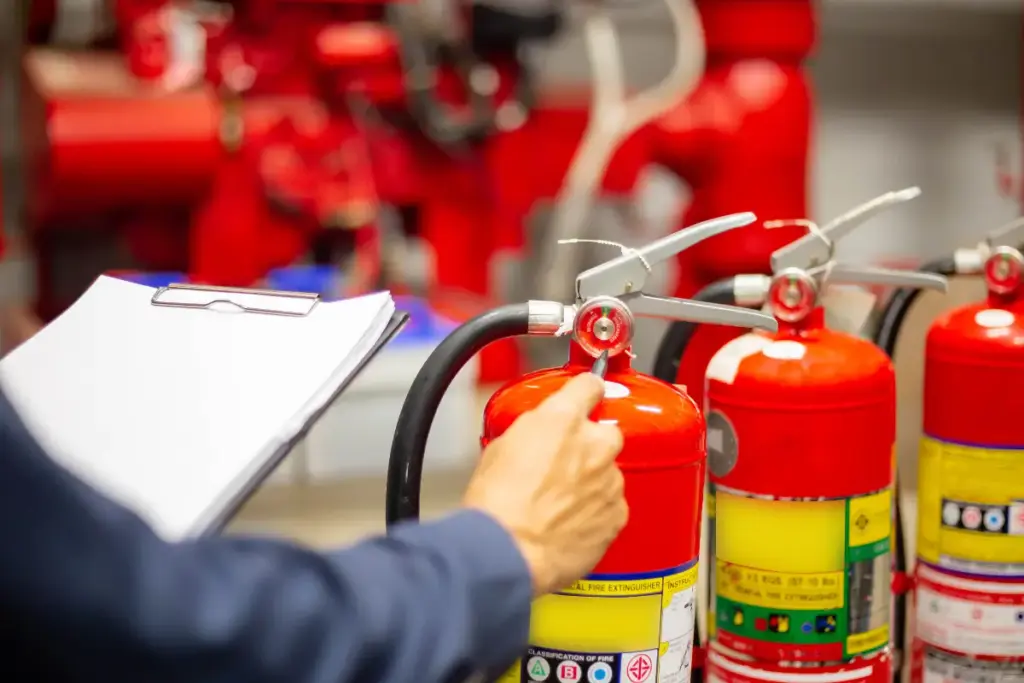
For many organisations, the real weight of the Regulatory Reform (Fire Safety) Order 2005 is felt in how it is enforced by fire and rescue authorities. These bodies act as regulators, inspecting premises, reviewing risk assessments, ts and questioning whether control measures are genuinely proportionate. Their role is to guarantee that life safety is protected without imposing arbitrary restrictions.
Enforcement is graduated. Inspectors may offer informal advice, issue an alterations notice where risk might increase, or serve an enforcement notice requiring specific failures to be remedied. Where danger is serious and immediate, a prohibition notice can restrict or shut down use of all or part of a building.
Penalties reflect the Order’s emphasis on accountability. Breaches can lead to unlimited fines and, for severe or wilful non-compliance, imprisonment. Prosecutions often follow persistent disregard of duties, signalling that freedom to operate is conditional on respecting others’ right to a safe environment.
Practical Steps and Checklist to Stay Fire Safety Compliant
While the Regulatory Reform (Fire Safety) Order 2005 sets out high-level duties, ongoing compliance depends on disciplined, routine practice. In reality, staying compliant protects the freedom to operate without disruptive inspections, enforcement notices, or unplanned closures. A pragmatic method begins with a written fire risk assessment, updated whenever layouts, processes, or occupancy change.
Responsible persons can then build a lean checklist covering alarms, escape routes, and staff competence. Weekly alarm tests, monthly emergency lighting checks, and documented maintenance show regulators that fire safety is embedded, not improvised. Staff briefings and short drills maintain confidence without stifling day-to-day activity.
A practical, autonomy‑friendly checklist typically includes:
- Clear, accessible escape routes, signed and free of storage at all times
- Tested alarms, lighting, extinguishers, and maintained fire doors, recorded in a logbook
- Trained staff who know evacuation plans, assist vulnerable persons, and challenge unsafe behavior
Frequently Asked Questions
Can Digital Fire Logbooks Fully Replace Paper Records Under the Fire Safety Order?
Digital fire logbooks can replace paper logbooks if they are secure, accessible, backed up, and reliable as evidence. The Order is non‑prescriptive, so responsible persons may choose digital systems, provided records remain accurate, available to regulators, and tamper‑resistant.
How Does the Order Interact With Listed Building Consent Requirements?
The order operates alongside listed building consent; fire safety duties remain mandatory, but solutions must respect heritage constraints. Responsible persons negotiate alternatives with fire authorities and conservation officers, documenting justified variations while never compromising occupants’ fundamental right to life safety.
Are Co-Working Spaces Treated Differently From Traditional Office Leases?
Co‑working spaces are not treated differently; the same fire safety duties apply. However, the “responsible person” role may be shared or split between the operator and the occupiers, requiring clear agreements so that each party retains maximum control over their own risk.
What Fire Safety Obligations Apply During Short-Term Pop-Up Shop Tenancies?
Short‑term pop‑up shop tenancies carry the same core fire‑safety duties: clear escape routes, suitable alarms, extinguishers, visible signage, staff briefings, and a written risk assessment, usually shared with or coordinated by the building’s primary responsible person.
How Should Fire Safety Responsibilities Be Split in Franchise Business Arrangements?
Fire safety duties are contractually shared: franchisor sets standards, procedures, and training; franchisee manages day‑to‑day compliance, maintenance, and staff conduct. Both remain “responsible persons,” so agreements must clearly allocate inspections, documentation, funding, and enforcement rights to preserve operational freedom.
Conclusion
By understanding the Regulatory Reform (Fire Safety) Order 2005, duty holders can better protect people and property while meeting legal obligations. The move from fire certificates to risk-based duties places clear responsibility on those in control of premises. With suitable fire risk assessments, competent persons, staff training, and clear procedures, organisations can manage fire risks effectively. Applying the Order correctly to workplaces, flats, and HMOs reduces the likelihood of enforcement action and supports safer communities.