




How much is rewiring a house typically costs $3,000 to $15,000, while larger, older, or difficult-to-access homes can run $20,000+ once labour, materials, permits, and finishing work are included. A full rewire usually replaces outdated cables, adds or upgrades circuits for sockets and lighting, and includes testing and certification, often alongside an upgrade to the electrical panel. Costs rise with home size, access issues, and higher-spec extras like alarms or EV charging. More details can clarify what to expect.
Key Takeaways
- Typical full-house rewire costs range from $3,000 to $15,000, with larger or older homes sometimes exceeding $20,000.
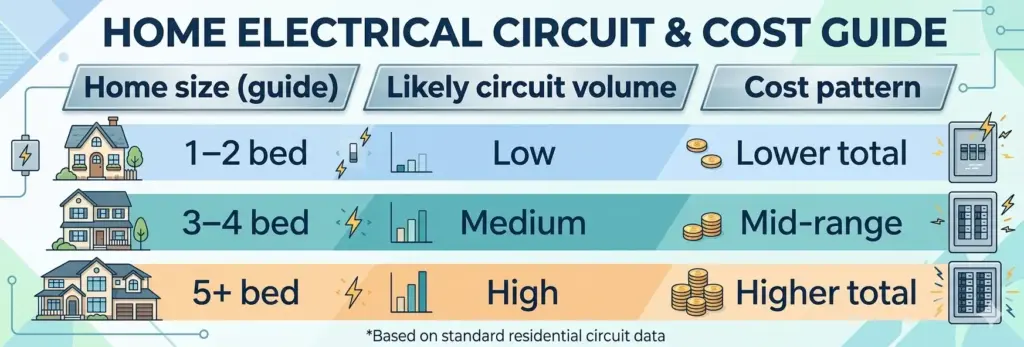
- Home size drives pricing: 1–2 bed homes cost less, 3–4 bed homes are mid-range, and 5+ bed homes cost more.
- Accessibility affects labour time; solid walls, limited voids, or finished spaces can significantly increase costs.
- A full rewire includes new cables, sockets, switches, upgrades to the consumer unit, testing, and certification for code compliance.
- Permits, inspections, and reinstatement work (patching, plastering, redecorating) can add substantial extra costs beyond electrical labour.
How Much Does It Cost to Rewire a House?
Rewiring a house is a major electrical upgrade, and costs typically range from about $3,000 to $15,000, with larger or older homes sometimes exceeding $20,000.
Price depends largely on home size, age, accessibility, and local labour rates. A small, newer home with open access may fall near the low end, while a multi-story, plaster-walled, or historically built house often costs more due to slower, more careful work. Regional permitting fees and inspection requirements can also shift totals.
The electrical service size and complexity also influence cost. Homes that add higher-capacity power for modern loads may require more extensive changes, increasing labour and materials costs.
Occupancy matters: working around finished rooms and furniture typically takes longer than an empty renovation.
Because the condition behind the walls is unknown until work starts, contractors typically give a price range after checking the site and may add extra for any surprises..

What’s Included in a Full House Rewire?
How much is rewiring a house goes beyond swapping a few outlets, which is why estimates can vary widely. It typically involves replacing outdated or unsafe wiring, upgrading the consumer unit (breaker panel), and re-establishing proper earthing and bonding to meet current safety standards.
Electricians also plan circuit layouts so high-demand appliances have dedicated lines and protection devices are correctly matched.
A complete scope often includes:
- Removal and replacement of cables feeding sockets, lighting, and fixed equipment, plus new junctions and terminations
- New electrical accessories, such as sockets, switches, light fittings (as specified), and updated smoke/heat alarms where required
- Testing, certification, and commissioning, including inspection, fault finding, and documentation for compliance
Because walls and ceilings must be accessed, the job may include lifting floorboards, chasing plaster, and making temporary supplies safe, with final making-good sometimes handled separately.
How Does House Rewire Cost Vary by Size?
How much is rewiring a house? Because floor area and circuit count usually rise together, house rewire pricing tends to scale with property size: larger homes need more cable runs, more accessories (sockets, switches, lighting points), and more time to access and reinstate finishes. Smaller properties can often be rewired with fewer circuits and shorter cable runs, so labour hours and materials typically fall at the lower end of the typical range. Medium homes commonly add extra rooms, lighting zones, and dedicated circuits, increasing both on-site time and the number of fittings to test and certify. Larger homes may also require more distribution capacity and longer fault-finding and commissioning time, so overall budgets rise even when the per‑square‑metre rate improves slightly with scale.
What Factors Affect House Rewire Cost Most?
Property size sets a baseline, but final house rewire quotes are usually driven by site-specific conditions such as access to cable routes, the number and type of circuits required, the age and condition of the existing wiring, the extent of making-good to walls and ceilings, and whether the consumer unit needs upgrading to meet current safety standards and testing requirements.
Difficult access (solid walls, limited voids, finished lofts) increases labour time because cables must be chased, lifted, or fished through tight runs. Circuit design also matters: more rooms, high-load appliances, EV charging provision, or outbuildings can require additional dedicated circuits and protective devices.
Older properties may reveal brittle insulation, undersized earthing, or non-compliant junctions, adding remedial work before new cabling is installed. Finally, decoration and reinstatement can rival electrical labour: lifting floors, repairing plaster, and redecorating after chases are cut.
- Access complexity and construction type
- Circuit count, load profile, and special locations (bathrooms, kitchens)
- Condition of existing wiring and required remedial prep
Do You Need a New Consumer Unit (Electrical Panel)?
While a full rewire can technically reuse an existing consumer unit, many projects still require a new one to meet current safety, testing, and circuit-protection standards.
Older fuse boards may lack RCD/RCBO protection, have limited options, or show heat damage and poor connections, which can fail inspection. A modern unit supports separate circuits for high-load appliances, better fault discrimination, and easier certification, which can reduce call-backs and future troubleshooting.
Consumer unit replacement is also likely when the existing board cannot accommodate extra circuits, when earthing and bonding need upgrading, or when the enclosure and labelling do not meet current regulations.
In some regions, metal-clad units, surge protection, and arc-fault devices are recommended or required for certain properties.
Although a new consumer unit adds to the overall cost, it often represents a small share of the rewire budget while delivering a major safety improvement and confidence in compliance. Still, if you need rewiring consumer unit; visit how to wire a consumer unit? to understand costing, process and all pros and cons.
How Long Does a House Rewire Take?
How long does a house rewire take in practice? For an average occupied home, the work commonly lasts 3–7 working days, while larger properties or complex layouts can extend to 2–3 weeks.
Duration depends on access to wiring routes, the amount of chasing needed in plaster, and the number of circuits, sockets, and light points being added or relocated.
Key factors that influence the timeline include:
- Property size and construction: solid walls and listed features, slow cutting and making good.
- Occupied vs vacant: protecting belongings and maintaining temporary power adds steps.
- Testing and certification: final inspection, fault-finding, and documentation must be completed before energising.
A typical sequence is first-fix cabling, back boxes and routes, then plaster repairs and drying time, followed by second-fix accessories and final testing.
Clear scheduling with other trades reduces delays and repeat visits.

Is a Partial Rewire Cheaper Than a Full Rewire?
In most cases, a partial rewire costs less upfront than a full rewire because it limits labour, materials, and making-good to specific circuits or rooms rather than the entire installation. It can be cost-effective when only certain areas show deterioration, such as a kitchen upgrade, an extension, or a few damaged circuits.
However, “cheaper” depends on what is left untouched. If existing wiring is old, undersized, or lacks adequate earthing, a partial approach can shift costs into repeated callouts, extra testing, and future disruption.
Partial work may also require upgrading the consumer unit, bonding, or adding RCD/RCBO protection to keep the overall system safe, which narrows the price gap.
A full rewire typically costs more because it replaces all cabling and accessories, but it can provide consistent safety, capacity for modern loads, and fewer compatibility issues.
The most economical option is the one that resolves underlying defects rather than masking them.
How to Get Accurate House Rewire Quotes
Because rewire costs vary with property size, access, and the condition of the existing installation, accurate quotes depend on giving electricians clear, comparable information.
A homeowner should request at least three written quotes, each based on the same scope and assumptions. Site visits matter: photographs rarely show cable routes, floor voids, or whether chasing and making good will be needed. Quotes should state what is included, excluded, and any provisional sums.
- Provide property details: age, number of rooms, consumer unit location, and whether the home is occupied during works.
- Specify the desired specification: number of sockets, lighting type, smoke/heat alarms, EV charger, and whether data or garden circuits are required.
- Ask for compliance and finishing clarity: testing certification, building control notification, patching/plastering, and final fittings versus “first fix only”.
Comparing quotes is easier when labour days, materials, and contingencies are itemised.
Frequently Asked Questions
Can I Live in My Home During Rewiring Work?
Living at home during rewiring is sometimes possible, but disruption is significant. Occupants may need temporary relocation due to safety concerns, power shutoffs, dust, noise, and restricted access. A licensed electrician should assess logistics, staging, and permits.
Will Rewiring Increase My Home’s Resale Value?
Rewiring can increase a home’s resale value, mainly by improving safety, meeting current codes, and reassuring buyers. Returns vary by market and presentation, but they often prevent price reductions and ease inspections.
Does Rewiring Require Building Permits or Inspections?
Yes, rewiring typically requires building permits and inspections, depending on local codes and the scope of work. A licensed electrician usually files permits, schedules rough and final inspections, and guarantees work meets safety standards before approval.
How Often Should a House Be Rewired?
A house is typically rewired every 25–40 years, or sooner if wiring is unsafe, damaged, or undersized. Older knob-and-tube or aluminium wiring, frequent breaker trips, or renovations may justify earlier rewiring.
What Warning Signs Indicate My Wiring Is Unsafe?
Unsafe wiring may be indicated by frequent breaker trips, flickering lights, burning odours, warm outlets, buzzing, discoloured switches, sparking, shocks, or outdated fuse boxes. A professional inspection is advisable when these symptoms appear.
Conclusion
How much is rewiring a house can be a significant but worthwhile investment, with costs varying widely based on property size, access, layout, and the scope of work required. A full rewire typically includes new cabling, sockets, switches, and safety testing, and may also involve upgrading the consumer unit. While partial rewires can reduce upfront costs, they may not address hidden issues. Accurate quotes come from detailed surveys, clear specifications, and comparing reputable, certified electricians.