

The cost of a fire risk assessment in the UK typically ranges from £150 to £1,500+, depending on building size, layout, and risk profile, with small low-risk premises often costing £200–£500, medium sites £400–£900, and higher-risk settings such as HMOs or care homes from around £700 upward. It covers fire hazards, people at risk, escape routes, alarms and emergency lighting, occupancy and management arrangements, and results in a dated report with a prioritised action plan. Further details explain the factors that affect quotes and deliverables.
Key Takeaways
- UK fire risk assessments typically cost £150–£1,500+, depending on building size, complexity, and risk profile.
- Low-risk small premises often cost £200–£500; medium sites with more rooms or footfall usually cost £400–£900.
- High-risk buildings (HMOs, hotels, care homes) often start around £700 and can exceed £1,500.
- Assessments cover hazards, people at risk, escape routes, fire alarms, emergency lighting, and fire safety management arrangements.
- Reports usually include a signed findings summary, a prioritised action plan, and, often, floor plans, plus guidance on the logbook and emergency plan.
How Much Does a Fire Risk Assessment Cost in the UK?
Although prices vary by region and risk profile, a fire risk assessment in the UK typically costs between £150 and £1,500+. Small, low-risk premises such as a single-floor shop, studio, or modest office often fall at the lower end, especially when escape routes are simplified, and occupancy is predictable.
Medium sites with multiple rooms, mixed use, or higher footfall commonly fall in the mid range, while large blocks, complex layouts, sleeping accommodation, or higher-hazard activities tend to push costs into four figures and beyond.
This spend buys practical independence: a competent assessor’s site inspection, review of fire alarms, emergency lighting, escape routes, signage, compartmentation, and ignition sources, plus a written report with prioritised actions and compliance-ready records. Some providers include a basic fire safety management check and follow-up questions, while others charge separately for updates or re-inspections.

Why Do Fire Risk Assessment Quotes Vary So Much?
Quotes for fire risk assessments vary widely because the work involved can differ sharply between premises, even when the floor area appears similar. Providers price for time on site, travel, reporting effort, and the level of professional judgement required, so two “like-for-like” buildings can still attract very different fees.
- Risk profile and complexity: sleeping accommodation, vulnerable occupants, high fire loads, or mixed-use layouts demand more careful evaluation and, as a result,t higher quotes.
- Building configuration: multiple floors, basements, plant rooms, roof voids, and restricted access increase inspection time.
- Documentation and cooperation: missing drawings, unclear tenancy boundaries, or poor site access create delays that get priced in.
- Assessor competence and assurance: third-party certification, specialist experience, and robust quality control often cost more but can reduce costly rework later.
Cheapest is not always most liberating; a clear scope, firm timetable, and transparent assumptions protect the client’s freedom to plan and budget.
What Does a Fire Risk Assessment Actually Cover?
Scope is the dividing line between a quick walk-through and a defensible fire risk assessment. The procedure of a fire risk assessment includes identifying fire hazards, fuel loads, and ignition sources, then evaluating who could be harmed, including lone workers, visitors, and people needing assistance. It checks escape routes for width, travel distance, lighting, signage, and obstructions, and tests whether doors, compartmentation, and fire-stopping support safe evacuation rather than trapping smoke
It reviews detection and warning coverage, manual call points, emergency lighting, extinguishers, and any suppression systems, focusing on their suitability, placement, and intended maintenance. It also examines how the building is actually used: occupancy levels, sleeping risk, hot works, storage, housekeeping, and contractor control. Finally, it judges whether current management arrangements, training, drills, routine checks, and clear responsibility give the responsible person practical control, not paperwork, while keeping disruption proportionate to the real risk. Further you can check out 5 Ways Fire Risk Assessment Can Help in Creating Fire Safety Strategy.
What Reports and Documents Should You Receive?
A defensible fire risk assessment is only as useful as the evidence it leaves behind. The responsible person should receive a dated, signed report that clearly states the premises assessed, the methodology used, and the assessor’s competence. It should record significant findings, not vague assurances, so decisions can be made without guesswork or dependence on any single contractor.
- A findings summary identifying fire hazards, people at risk, and existing controls
- A prioritised action plan with owners, deadlines, and risk ratings
- Annotated floor plans showing escape routes, fire doors, alarm call points, and extinguishers
- A document pack: emergency plan, drill record template, and logbook guidance for ongoing checks
Supporting photos, referenced test certificates, and maintenance gaps should be listed to ensure compliance is transparent and challengeable. The report should also state review triggers changes in layout, staffing, processes, or incidents so the organisation stays in control rather than being caught reacting to enforcement or insurers.
Typical Fire Risk Assessment Prices by Premises Type?
Price bands for fire risk assessments tend to track premises type because complex sleeping risk, occupancy, layout, and management arrangements drive the time on site and the depth of reporting required. Low‑risk offices and small retail units are typically at the lower end, often £200–£500, where evacuation is straightforward, and ignition controls are routine.
Restaurants, light industrial, and community venues usually sit mid‑range, at around £400–£900, reflecting cooking hazards, higher fuel loads, or varied user groups. Cost of a fire risk assessment for higher‑risk premises command higher fees: HMOs, hotels, care homes, and supported living commonly start near £700 and can exceed £1,500, as sleeping occupants, phased evacuation planning, and management checks require detailed scrutiny. Schools, blocks with complex common parts, and mixed‑use sites often fall between, especially where multiple dutyholders or competing uses complicate responsibilities
Prices can rise when assessors must review existing fire strategies, test assumptions, or propose practical compliance routes that protect choice while meeting duties.
What Does a Fire Risk Assessment Cost by Building Size?
Building size often provides the quickest guide to likely fire risk assessment fees, alongside premises type and risk profile. Larger footprints typically mean more escape routes, compartments, plant rooms, and occupants to sample, so assessor time rises and so does price. Small, simple layouts can be assessed quickly, keeping costs lean while still meeting legal duties without overbuying consultancy.
- Small buildings (e.g., single-floor offices, small shops): lowest fees, often a half-day visit and short report.
- Medium buildings (multi-room, multiple exits): mid-range fees, more travel time on site, and fuller action plans.
- Large buildings (multi-storey, mixed-use): higher fees, longer inspection, more stakeholder interviews, and detailed drawings.
- Very large/complex sites (campuses, industrial estates): highest fees, commonly scoped as phased work or day rates.
Clear floor plans, access to alarm logs, and a nominated contact help keep quotes competitive. Visit our blog post on Understanding the 4 Types of Fire Risk Assessment: A Complete Guide for UK Properties.
How Often Do You Need to Review a Fire Risk Assessment?
How often should a fire risk assessment be reviewed to stay legally compliant and practically effective? It should be treated as a living document: revisited at least annually, and sooner when change threatens safe escape or control measures. The responsible person maintains autonomy by scheduling reviews before regulators, insurers, or incidents disrupt.
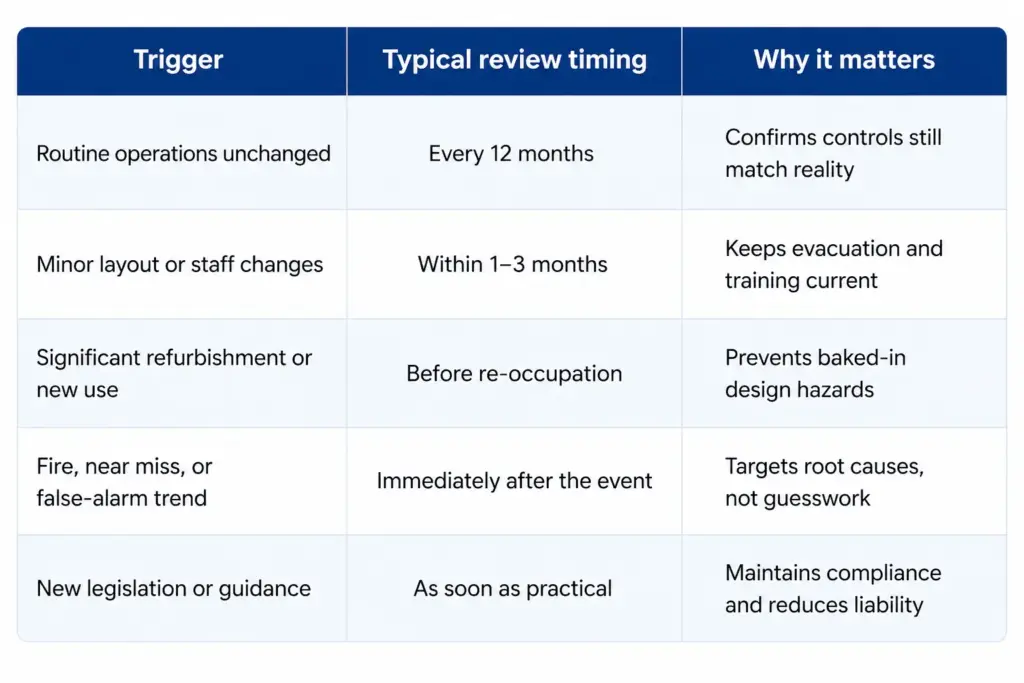
Reviews should document updates, actions, and completion dates, so the building stays safe without surrendering control to last-minute demands. Read our blog post How Often a Fire Risk Assessment should be Done? to know about frequency of FRA in detail.
How Can You Compare Fire Risk Assessment Quotes Fairly?
Regular reviews keep a fire risk assessment accurate over time, but selecting the right assessor starts with comparing quotes on equivalent scope and competence. A fair comparison protects budget choice and avoids being locked into vague deliverables.
Quotes should be normalised: same building details, occupancy, hours of operation, and any known issues. Then judge what is included, how findings are evidenced, and whether the assessor can act independently without upselling.
- Scope: areas inspected, sampling approach, access equipment, and whether flats, roofs, plant rooms, or outbuildings are included
- Output: format, action plan quality, photo evidence, floor plans, and clarity on responsible persons and timelines
- Competence: third-party certification, relevant experience, CPD, insurance, and references for similar premises
- Support: revision policy, follow-up call, update fees, and turnaround time for reports and clarifications
Choosing the clearest quote preserves freedom to switch providers later without rework. Visit Landlord Safety Certificate to get FRA quote.
Frequently Asked Questions
Who Is Legally Responsible for Arranging a Fire Risk Assessment?
The legally responsible party is the designated “responsible person,” usually the employer, owner, landlord, or occupier in control of the premises. They must guarantee an assessment is arranged and kept current, delegating tasks without surrendering accountability.
How Long Does a Typical Fire Risk Assessment Take Onsite?
A typical onsite fire risk assessment takes 1–3 hours for small premises, and 3–8+ hours for larger or complex sites. Duration depends on size, layout, occupancy, access to documentation, and escorts, while preserving independence and safety.
Do I Need to Close My Premises During the Assessment?
Most premises need not close during the assessment; it can run alongside normal operations. Assessors may request brief access to rooms, alarms, and records. Temporary restrictions or quiet periods might be chosen to keep everyone safe.
Can I Use an Old Assessment After Changing Occupancy or Layout?
An old assessment should not be relied on after occupancy or layout changes; it must be reviewed and updated. For independent compliance, a competent assessor should promptly reassess hazards, escape routes, alarms, and procedures.
What Happens if I Fail to Complete a Required Fire Risk Assessment?
Failing to complete a required fire risk assessment can trigger enforcement action, fines, prosecution, or closure notices, restricting operations. Insurers may refuse cover after a loss. Liability can rise if people are harmed, increasing civil claims.
Conclusion
The cost of a fire risk assessment in the UK varies widely, reflecting premises type, size, complexity, occupancy risk, and the assessor’s competence and scope. A suitable assessment should identify fire hazards, people at risk, existing controls, legal compliance gaps, and prioritised actions, supported by a clear written report and evidence. Prices often scale with floor area and multiple buildings or higher-risk uses. Regular reviews are essential, especially after alterations, incidents, or changes in occupancy. Quotes should be compared on scope, deliverables, and credentials.