




The cost of rewiring a home is shaped by several factors. Age, size, and layout influence labour and material needs. Old wiring types and outdated fuse boxes add removal and safety upgrade costs. Access to cables in lofts, floors, and walls affects on-site time. Permits, inspections, regional labour rates, and chosen materials further change the price. Smart tech, extra sockets, and future‑proofing features can increase upfront cost but add long‑term value, which is useful to understand in more detail.
Key Takeaways
- Size, age, and layout of the home affect labour time and material needs, with larger, older, and more complex layouts costing significantly more.
- Type and condition of existing wiring and panels (e.g., knob-and-tube, old fuse boxes) increase costs due to removal and safety upgrades.
- Accessibility of cables, such as open lofts versus solid walls or concrete floors, changes how quickly electricians can work and how much repair is needed.
- Additional features and upgrades, such as extra sockets, smart controls, data cabling, and EV-ready circuits, add components, design time, and installation labour.
- Local labour rates, permit and inspection requirements, and project timing (e.g., combined with other renovations) all influence the overall rewiring cost.
Typical House Rewiring Costs at a Glance
Typical home rewiring costs generally range from a few thousand to well over ten thousand pounds, depending on the property’s size, age, and electrical complexity. For many homeowners, a modest rewiring project might land in the £4,000–£7,000 range, while more extensive upgrades can push past £15,000, especially when modern safety features and higher-capacity panels are added.
Per-square-foot prices often serve as a quick snapshot, but they don’t tell the whole story. Labour rates, regional code requirements, and material choices such as copper versus aluminium wiring or premium devices can raise or lower the final bill. Projects that include adding more circuits for home offices, studios, or workshops tend to cost more up front, yet they also remove electrical bottlenecks that limit how people use their space. Understanding these broad cost bands lets homeowners plan, compare quotes, and choose upgrades that support a more independent lifestyle.
Age, Size, and Layout: Core Drivers of Rewiring Cost
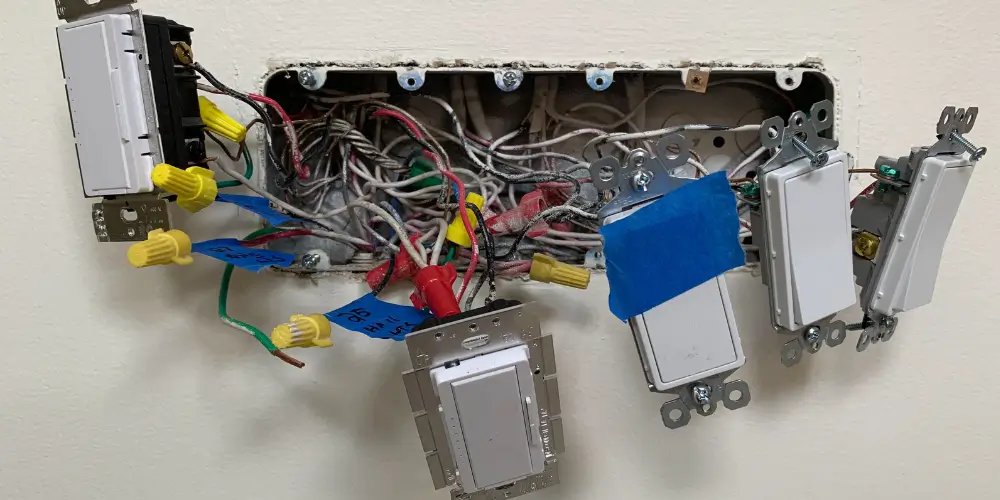
Because rewiring costs rarely follow a simple price-per-square-foot rule, the age, size, and layout of a home quickly become the main cost drivers. Older homes often demand more investigative work: concealed junctions, undocumented alterations, and cramped cavities slow electricians down and raise labour hours, directly shaping the final bill and timeline.
Larger homes typically require more cable runs, breakers, and device points. That added material and labour can greatly expand costs, especially when owners want abundant outlets to power a flexible, tech‑friendly lifestyle.
The layout then determines how intrusive the project feels. Open plans are usually faster and cheaper to rewire than chopped‑up floor plans with additions and level changes.
| Factor | Typical Effect on Cost | Why It Matters |
| Age | Increases | More unknowns |
| Square footage | Increases | Longer wire runs |
| Number of stories | Increases | More access work |
| Layout complexity | Increases | Extra routing time |
| Open access (basement/attic) | Decreases | Easier movement and pulls |
Old Wiring, Fuse Boxes, and Safety Upgrades
While square footage and layout shape the labour involved, the condition of existing wiring and panels often dictates how deep a rewiring project must go. Ageing systems such as knob‑and‑tube or brittle rubber‑insulated cables usually cannot be safely extended or partially reused. Electricians must remove or isolate them entirely, increasing time, testing, and disposal costs, but restoring confidence in the use of power.
Old fuse boxes are another major cost driver. They typically lack residual‑current devices (RCDs) and sufficient circuit capacity for today’s appliances, tools, and electric vehicles. Upgrading to a modern consumer unit with RCD and RCBO protection adds material and certification costs but enables higher loads and improved fault protection. Learn about wiring fuse box by reading our blog post Understanding how to wire a consumer unit.
Safety upgrades often include earthing improvements, bonding of gas and water pipes, and arc‑fault or surge protection where required. Each measure adds upfront cost yet reduces fire risk, nuisance tripping, and future restrictions on how occupants use their space.
Cable Access (Lofts, Floors, Walls) and Labour Time
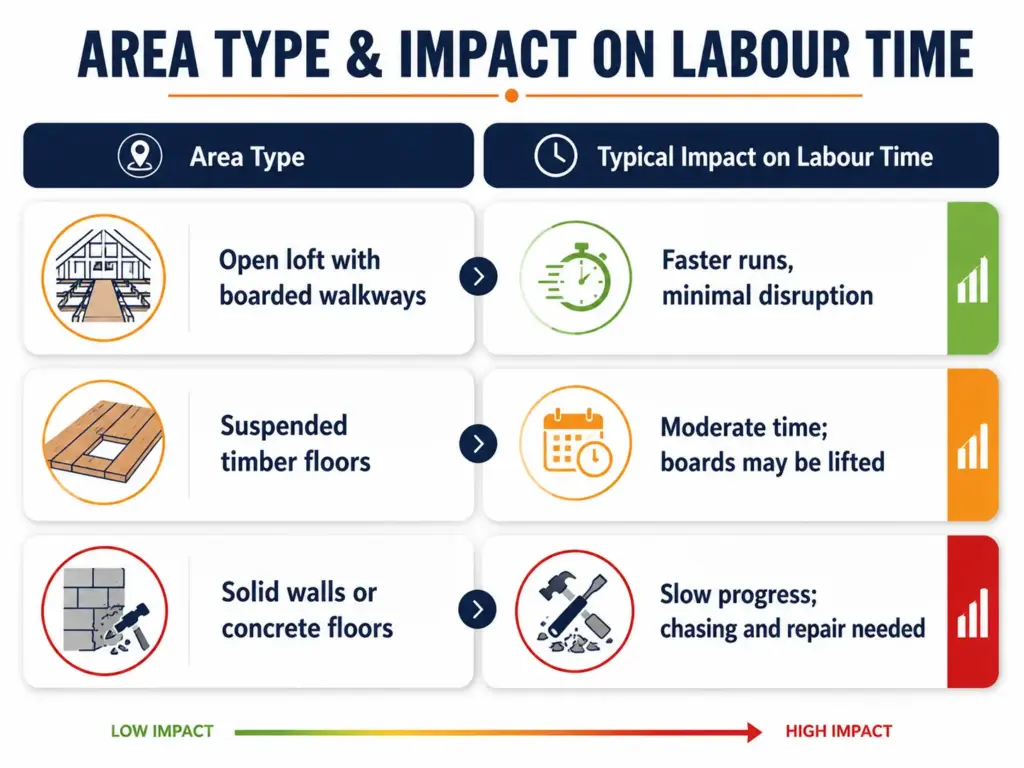
Beyond the condition of the wiring itself, ease of access to where those cables run has a major impact on labour time and overall cost. When electricians can move freely through lofts, under floors, and within wall cavities, they complete work faster and with fewer disruptive cuts. Clear routes mean less time lifting boards, drilling, or patching surfaces, which directly reduces labour charges.
Where access is tight, blocked, or unknown, labour expands. More investigative work is required, and each obstacle, dense insulation, concrete floors, tiled finishes, adds minutes that become hours. Homeowners who value autonomy over their space often prioritise layouts that keep routes open and adaptable.
Permits, Inspections, and Building Regulations Costs
A significant but sometimes overlooked component of rewiring costs arises from permits, inspections, and compliance with building regulations. Local authorities typically require permits before work begins, and fees can vary by project size and jurisdiction. Skipping this step may seem tempting to those who value independence, but it risks fines, insurance problems, and forced remedial work.
Inspections, often required at multiple stages, add further cost but verify that circuits, protective devices, and earthing meet safety standards. These checks safeguard the right to use electricity freely without hidden hazards. Building regulations also influence expenses. Updated rules may require additional protective devices, extra circuits, or upgraded consumer units, all of which increase material and certification costs.
Homeowners who plan extensions or future alterations may choose to exceed minimum standards now, trading slightly higher upfront fees for long‑term flexibility and freedom from repeated regulatory interference.
Labour Rates, Location, and Regional Price Differences
Although material prices are relatively consistent, labour rates and location can cause substantial variation in home rewiring costs. Electricians charge hourly or per project, and these figures shift sharply between dense cities, suburbs, and rural communities. Regions with higher living costs or strong construction demand typically see elevated labour rates, which directly raise the final bill and may limit how far a homeowner’s budget can stretch.
Travel distance, parking constraints, and local market competition also influence pricing. Where tradespeople are scarce, they can command premium rates; where competition is strong, homeowners may negotiate more confidently.
| Factor | Typical Impact on Labour Cost |
| Major metropolitan area | Highest hourly rates; added parking/permit issues |
| Suburban region | Moderate rates; broader contractor choice |
| Rural area | Lower base rates, but higher travel surcharges |
| High-demand construction market | Elevated prices and limited scheduling flexibility |
Wiring Types, Fixtures, and Material Costs
Material choices play a decisive role in overall home rewiring costs, often rivalling labour as a budget driver. Different wiring types, such as copper versus aluminium, or standard PVC-sheathed cable versus low-smoke, zero-halogen options, carry distinct price tags and performance profiles. Higher-grade cable can support higher electrical loads and is more durable, but it raises per-metre costs, especially in larger properties.
Fixtures also shape the final bill. Basic plastic switches, outlets, and ceiling roses are inexpensive, while metal-clad fittings, designer faceplates, and recessed lighting systems quickly increase expenditure. Choosing dimmer-compatible or speciality fixtures adds both material and planning complexity.
Beyond visible fittings, material costs include consumer units, circuit breakers, junction boxes, and earthing components. Safety-certified products from reputable brands typically cost more upfront but reduce the risk of premature failure. Ultimately, each material decision reflects a trade-off between initial expense, long-term reliability, and the homeowner’s desire for unconstrained lifestyle flexibility.

Smart Tech, Extra Sockets, and Future-Proofing Upgrades
Beyond cable and fittings, modern rewiring projects are increasingly shaped by smart technology, additional socket provision, and future-proofing choices. Each of these elements can lift costs, but they also expand flexibility and reduce constraints on daily living.
Smart switches, app‑controlled lighting, integrated speakers, and hard‑wired data points demand extra planning, specialist components, and more installation time, all of which are priced into the quote. Extra sockets are a common upgrade, driven by the desire to avoid extension leads and charge multiple devices wherever they are used. Adding outlets means more cabling runs, back boxes, and protective devices, particularly in kitchens, home offices, and entertainment areas.
Future‑proofing goes further, allowing a home to adapt instead of limiting its owners. Conduits for later circuits, spare ways in consumer units, EV‑ready cabling, and structured wiring for networks all add immediate cost, but help avoid disruptive, repeated work later.
Project Timing, Phasing, and Saving on Rewiring Costs
While the technical scope largely determines the baseline cost of a rewire, the way a project is timed and phased can considerably influence the final bill and level of disruption. Homeowners who value flexibility often schedule rewiring alongside other major upgrades, when walls are already open, and trades are on-site. This coordination can cut labour overlap, reduce repeat visits, and shorten the period of limited power access.
Staging the work room‑by‑room or floor‑by‑floor also lets occupants maintain pockets of normal life rather than surrendering the entire home at once. Off‑peak scheduling, such as shoulder seasons, may secure better contractor availability and less rush‑pricing.
| Strategy | Potential Advantage |
| Combine with renovations | Shared demolition and patching costs |
| Phase by zone | Live in other areas while work proceeds |
| Book in shoulder seasons | More competitive labour pricing |
| Prepare clear access | Faster work, fewer billed hours |
| Get multiple quotes | Transparent pricing, negotiation leverage |
Frequently Asked Questions
How Do I Prepare My Home Before the Electricians Start Rewiring Work?
They clear pathways to outlets, move furniture from walls, secure pets, and protect treasured items. They label circuits, back up digital setups, plan for temporary power loss, and embrace the disruption as a step toward safer, more independent living.
Can I Stay in My Home During a Full House Rewiring Project?
Yes, staying is sometimes possible, but often restrictive. The person must accept shutdowns of power, noise, dust, and limited room access. Many choose temporary relocation for flexibility, safety, smoother scheduling, and unrestricted work progress.
How Do I Choose a Qualified, Trustworthy Electrician for Rewiring?
They should verify licensing, insurance, and references, then compare detailed quotes. They prioritise transparent communication, written warranties, and clear timelines. Online reviews, trade association memberships, and willingness to explain options empower them to choose a genuinely trustworthy, freedom‑respecting electrician.
What Signs Indicate My Home Needs Rewiring Instead of Minor Electrical Repairs?
They notice persistent tripping breakers, flickering lights, hot or discoloured outlets, burning smells, brittle or cloth wiring, aluminium wiring, frequent blown fuses, or two-prong ungrounded outlets, signalling deeper systemic hazards demanding full rewiring rather than piecemeal fixes.
How Long Does Typical House Rewiring Disruption Last Day-To-Day?
Typical day‑to‑day disruption usually lasts 5–10 working days, with power cuts in sections for several hours. Residents can often stay home, but should expect limited appliance use, dust, noise, and restricted access to certain rooms.
Conclusion
Rewiring costs depend on a complex mix of property size, age, layout, and access, as well as regulation, labour, and material choices. Older homes and difficult cable routes typically push prices higher, while regional rates and smart upgrades further influence the final bill. By understanding these factors, planning phases carefully, and prioritising safety and future needs, homeowners can set realistic budgets and make informed decisions that balance cost, compliance, and long‑term value.