


A Level 1 fire risk assessment gives a rapid, practical appraisal of obvious fire hazards, basic detection and alarm arrangements, and principal escape routes for small, low‑risk premises. It suits simple layouts such as small offices, retail units, or single‑family homes and recommends immediate, low‑cost remedial actions and housekeeping improvements. It is not a detailed engineering study and should be escalated if operations, occupancy or building use change. Further sections explain preparation, common issues and when to upgrade.
Key Takeaways
- Level 1 Fire Risk Assessment is a rapid, practical appraisal for small, low-risk premises to identify obvious fire hazards and escape routes.
- It covers evident ignition sources, basic detection/alarm arrangements, emergency lighting, and primary means of egress.
- Suitable for small offices, retail units, and single-family dwellings, escalating to higher levels if complexity or risks increase.
- Recommendations focus on immediate, low-cost remedial actions, housekeeping, and simple preventive measures.
- Maintain accessible records of findings and remedial actions, and upgrade the assessment after significant changes.
Do You Need a Level 1 Fire Risk Assessment?
When evaluating whether a Level 1 fire risk assessment is necessary, one must consider the building’s use, occupancy, and legal obligations: typically, small premises with simple layouts, limited hazards, and clear escape routes may be adequately served by a Level 1 (basic) assessment, whereas larger, high-risk, or complex sites usually require a more detailed Level 2 or 3 evaluation.
Level 1 Fire Risk Assessment: The decision hinges on scale, risk profile, and regulatory context. A Level 1 assessment suits low-risk settings such as small offices, retail units, or single-family dwellings where fire sources are few and evacuation is straightforward. It provides a rapid overview identifying obvious ignition sources, basic detection and alarm adequacy, and primary means of escape. If routine operations, tenant changes, or identified deficiencies emerge, escalation to a Level 2 assessment is warranted.
Responsible parties should review local fire safety legislation and consult competent assessors when uncertainty exists to guarantee compliance and occupant safety.
What a Level 1 Fire Risk Assessment Covers
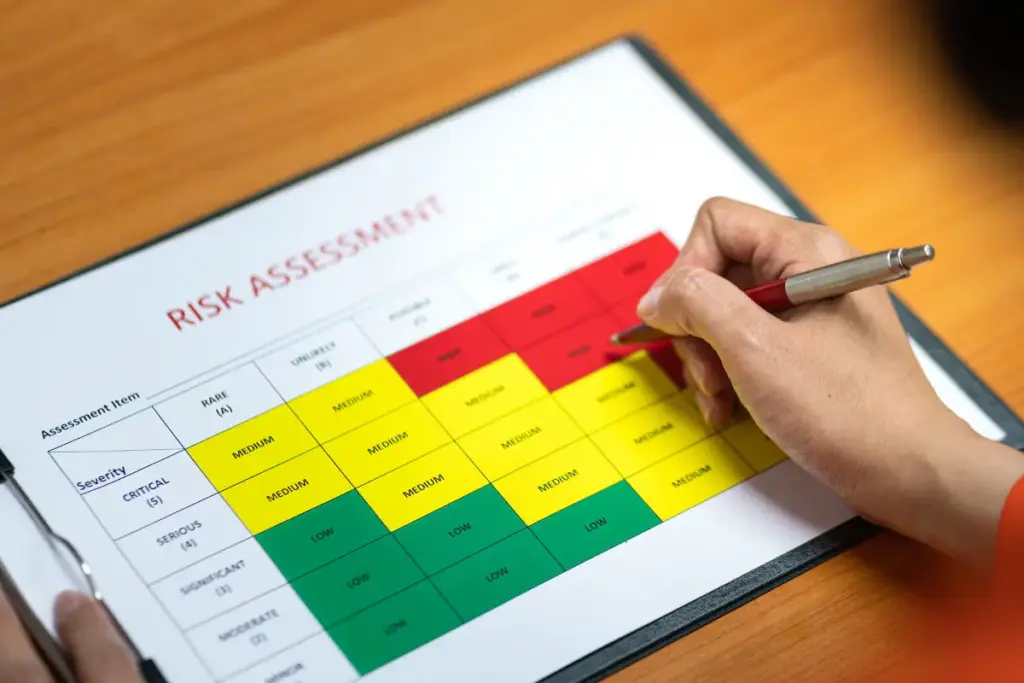
A Level 1 fire risk assessment provides a concise overview of obvious fire hazards, basic detection and alarm arrangements, primary escape routes, and immediate remedial actions needed to reduce risk.
It identifies common ignition sources, fuel loads, and vulnerable occupants, noting simple measures that materially lower risk. The report is pragmatic, aimed at managers or small-business owners seeking a clear picture without exhaustive technical detail.
- Identification of evident hazards (electrical faults, stored combustibles, hot work)
- Evaluation of basic detection, alarm and emergency lighting coverage
- Assessment of principal escape routes and means of egress
- Recommendations for immediate, low-cost remedial actions and housekeeping
- Identification of persons at increased risk and simple staff responsibilities
The assessment documents observed conditions, prioritises straightforward corrective steps, and recommends when further, more detailed investigation is warranted. It does not attempt to model fire dynamics or prescribe complex engineering solutions; instead, it delivers actionable findings to improve safety quickly. Here is the detailed guide on Fire Risk Assessment for Landlords : Ensuring Tenant Safety.
How Level 1 Differs From Level 2 and Level 3 Assessments
Level 1 assessments focus on rapid, practical appraisal for immediate risk reduction, whereas Level 2 and Level 3 extend that baseline with progressively deeper technical analysis. Level 1 provides a high-level review: visual inspections, basic identification of hazards, and clear, actionable recommendations for common issues. It suits routine checks and buildings with straightforward layouts.
Level 2 builds on that by adding targeted measurements, document review, and more detailed evaluation of fire separation, escape routes, and system capacities. It often references regulatory detail and may quantify risk to prioritise remediation.
Level 3 is the most thorough: it involves in-depth engineering analysis, modelling of fire growth and smoke movement, and exhaustive assessment of structural and system interactions. It is appropriate for complex, high-risk, or performance-based designs. Each level escalates in scope, time, and cost; selection depends on building complexity, occupancy, and regulatory or stakeholder needs. Clear documentation distinguishes each level’s findings and recommended actions.
How to Prepare Your Building: A Pre-Visit Checklist
Although a pre-visit checklist may seem routine, thoroughly preparing the building ensures that the assessment team can work efficiently and accurately identify hazards. The building owner or manager should compile key documents, guarantee access, and address obvious safety issues before the assessor arrives.
Clear signage and unobstructed routes reduce time spent on basic verification, while up-to-date records enable focused evaluation of fire detection, suppression, and evacuation systems.
- Provide floor plans, recent maintenance logs, and emergency contact details.
- Ensure access to plant rooms, storage areas, and roof spaces; remove padlocks if needed.
- Tidy communal areas and corridors; clear combustibles from escape routes.
- Verify the functionality of lighting and ensure temporary works are documented.
- Notify occupants of the visit to avoid surprises and ensure personnel availability.
A concise, well-prepared site yields a faster, more accurate Level 1 assessment and helps prioritise corrective actions based on reliable, readily available information.
What Happens During the Assessor’s Site Visit
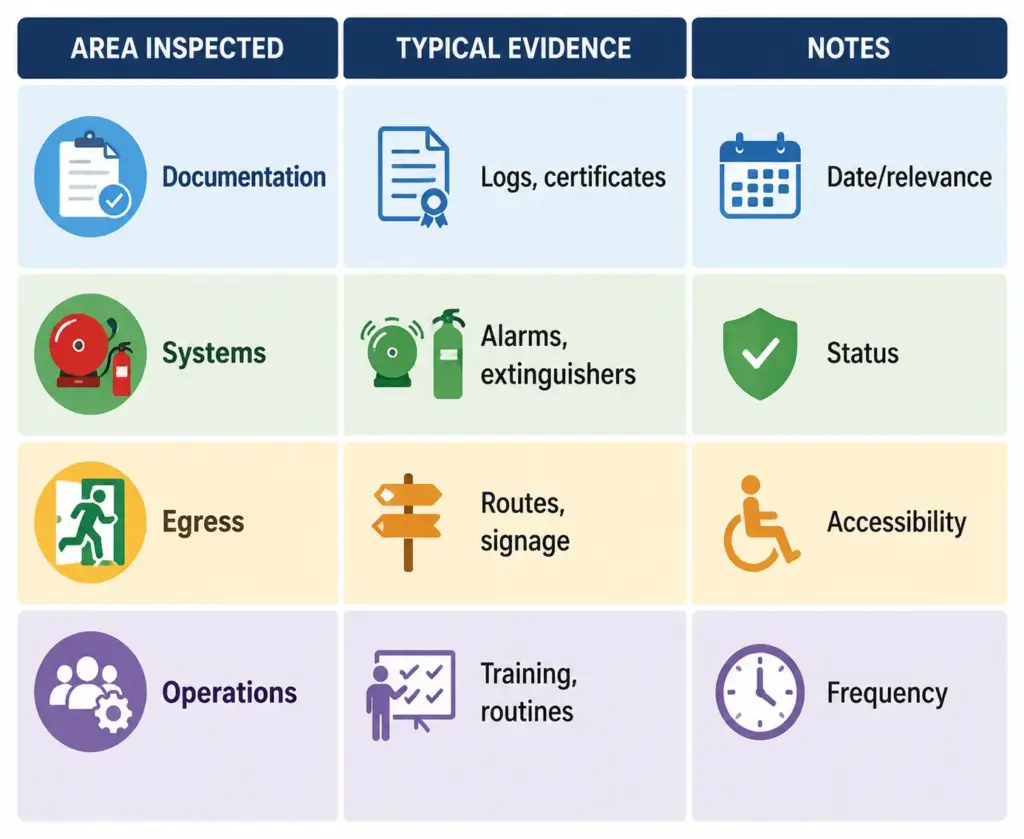
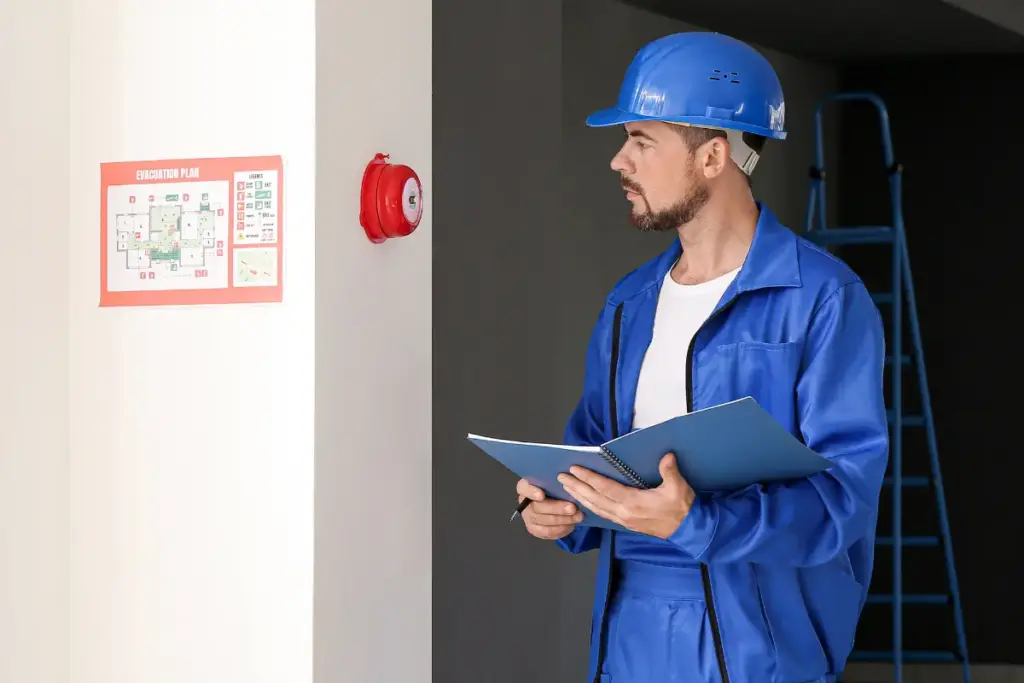
Inspecting the premises, the assessor methodically moves through the site to verify documentation, observe fire protection systems, and evaluate escape routes and potential ignition sources. The assessor notes occupancy type, staff training records, maintenance logs, and the presence and condition of alarms, extinguishers, sprinklers, and emergency lighting. Attention is given to exit signage, door functionality, and unobstructed evacuation paths. Observations are recorded systematically, with photographs and sketches as needed, to support conclusions. Discussions with responsible persons clarify routines, contractor activities, and recent changes. Measured judgments about likelihood and potential consequences are formed without prescribing remedies; the visit focuses on fact-finding and risk rating. Findings are compiled into a clear report that balances technical detail with practical explanation for non-specialists. The report guides prioritisation and further action planning while leaving corrective specifics for subsequent sections.
Common Problems Found and Easy Corrective Actions
Having compiled observations and ratings during the site visit, the assessor commonly identifies a set of recurring deficiencies that are straightforward to correct. Typical problems relate to housekeeping, escape routes, detection and alarm readiness, fire doors, and storage of combustible materials.
Corrective actions are practical: remove obstructions, label and maintain exit signage, test and report faulty detectors, repair or close fire doors, and relocate or better contain high-risk items. Implementing simple checks and staff reminders often eliminates immediate hazards and reduces risk until more significant measures can be scheduled.
- Blocked corridors or exits: clear pathways and enforce no-storage policies.
- Faulty or non-tested alarms: arrange immediate testing and servicing.
- Fire doors propped open: educate staff and fit automatic closers where needed.
- Accumulations of combustible waste: introduce regular waste removal and designated bins.
- Improper storage of flammables: move to suitable cupboards or segregated areas with clear labeling.
These steps improve safety quickly and provide measurable items for the assessor’s follow-up.
Legal Duties and Record-Keeping After a Level 1 Assessment
Once the Level 1 assessment is completed, the responsible person must ensure that legal duties are met and that accurate records are maintained to demonstrate compliance.
The assessment’s findings should be recorded clearly, noting identified hazards, people at risk, and the measures chosen to control risk. Records must include the date, assessor identity, any actions taken or planned, and assigned responsibilities and target completion dates. Legislation often requires that significant findings be documented and kept available for inspection; thus, storage in an accessible, retrievable format is essential. Records support ongoing review, help demonstrate due diligence in enforcement situations, and inform future revisions. Retention periods should align with statutory guidance and organisational policy.
Where corrective actions are deferred, a rationale and interim controls must be recorded. Regularly scheduled reviews and updates to records ensure that changes in use, occupancy, or legislation are reflected. Clear, concise record-keeping underpins effective fire safety management and legal compliance.
When to Upgrade From a Level 1 Fire Risk Assessment
When significant changes in building use, occupancy, layout, or identified hazards occur, upgrading from a Level 1 fire risk assessment becomes necessary to ensure risk controls remain effective.
An upgraded assessment, typically a Level 2 (desk-based) or Level 3 (detailed on-site), provides a focused review of altered risks, verification of detection and escape measures, and tailored recommendations. Decision-makers should consider triggers that diminish the validity of a generic survey or introduce new vulnerabilities. Timely escalation assures compliance, operational continuity, and occupant safety.
- Major change of use (e.g., storage to manufacturing)
- Increased occupancy or new vulnerable groups present
- Significant refurbishment, reconfiguration, or extension
- Introduction of high-risk processes or materials
- Previous assessment identified serious or moderate risks
The selection of the assessment level should match the complexity: desk-based reviews suit moderate changes; full on-site reassessments are required for structural, system, or high-hazard modifications. Records of the upgrade and remedial actions must be maintained.
Frequently Asked Questions
Can Tenants Request Their Own Level 1 Assessment Independently?
Yes. Tenants can request their own Level 1 assessment independently, though responsibility for commissioning typically rests with the landlord; any tenant-ordered assessment should be shared with the landlord and may require landlord cooperation for access and remedial action.
How Long Is a Level 1 Assessment Report Valid?
A Level 1 assessment report is generally considered valid for 12 months, though validity depends on changes to the premises, legislation, or significant incidents; responsible parties should review or update the assessment sooner if conditions or risks change.
Will a Level 1 Assessment Identify Electrical Wiring Faults?
No, a Level 1 assessment will not typically identify electrical wiring faults. It notes obvious hazards and recommends specialist inspection for suspected wiring issues. The assessor advises qualified electrical testing when concealed defects are suspected.
Are Level 1 Assessors Licensed or Certified Nationally?
No, they are not universally licensed nationally. Certification and regulation vary by country or jurisdiction, with some requiring formal training or accreditation, while others allow competent persons or employers to conduct Level 1 assessments without national licensure.
Can Insurance Premiums Be Reduced After a Level 1 Assessment?
Yes, premiums can sometimes decrease following a Level 1 assessment if improved fire precautions reduce insurer risk. The assessor notes recommendations; insurers decide adjustments based on evidence, implemented actions, and demonstrated ongoing risk reduction.
Conclusion
A Level 1 fire risk assessment provides a practical, low-cost review suited to small, low-risk premises, identifying obvious hazards, basic corrective actions, and essential record-keeping responsibilities. It helps owners remain legally compliant while highlighting when further detailed assessment is warranted. Regular reassessment and prompt corrective measures guarantee ongoing safety. When occupancy, complexity, or identified risks increase, upgrading to a Level 2 or 3 assessment becomes necessary to address deeper vulnerabilities.