

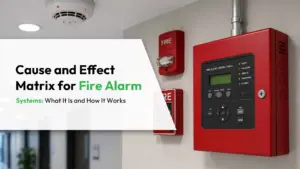

The 8-zone fire alarm control panel is a conventional system that divides a building into separate monitored zones. It links detectors, call points and sounders on each circuit, then shows exactly which zone has an alarm or fault. Key features include clear visual indicators, simple controls and programmable outputs. It is widely used in small to medium premises for cost‑effective protection and targeted evacuation. Further sections explain its features, applications and why it suits many buildings.
Key Takeaways
- A zone fire alarm control panel divides a building into separate monitored zones, showing where an alarm originates for quicker investigation and response.
- It connects detectors, manual call points, and sounders on dedicated circuits, activating audible/visual alerts and indicating alarm or fault status per zone.
- Key features include clear zone indicator LEDs, simple controls, built‑in sounder circuits, programmable outputs, and secure access via keys or codes.
- Typical uses include small hotels, apartments, schools, light industrial units, and retail premises where general area identification is sufficient.
- Benefits include lower cost than addressable systems, easier maintenance, scalable zone capacity, and more targeted evacuations that reduce unnecessary disruption.
What Is an 8 Zone Fire Alarm Panel?
An 8 zone fire alarm panel in the UK is a conventional control unit designed to monitor and manage up to eight separate detection areas, or “zones,” within a building. It forms the central hub of a hard‑wired fire alarm system, accepting signals from detectors, call points, and sounders that are grouped into clearly defined areas.
Each zone typically represents a floor, wing, or key risk area. This zoning gives building users and responsible persons clarity on where a fire signal originates, supporting faster assessment and safer movement or evacuation. Unlike addressable systems, devices on each zone are not individually identified; the focus is on clear, simple area-based indication.
In the UK, these panels are commonly found in smaller commercial premises, HMOs, community buildings, workshops, and independent retail units where people value straightforward, non‑proprietary equipment that’s easy to understand, maintain, and, when needed, upgrade without restrictive ties.

How Does an 8 Zone Panel Work?
Instead of only defining what an 8-zone fire alarm panel is, it helps to see how it actually operates in real use. An 8-zone panel groups detectors, call points, and sounders into eight separate wiring circuits, each representing a physical area. When a device in one zone detects smoke or heat, it sends a signal back to the panel, which identifies exactly which zone is in alarm.
The panel then triggers the corresponding sounders and visual indicators, while showing the active zone on its display. This allows occupants and responsible persons to respond quickly, choosing the most direct and safe route to freedom of movement and exit. At the same time, fault monitoring constantly checks each zone circuit for open or short conditions. If a fault is detected, the panel shows a clear fault indication for that zone, enabling fast, targeted maintenance without locking down the entire building.
Key Features of 8 Zone Panels
Eight-zone fire alarm panels share core features that make them practical for small to medium-sized buildings. Each zone can be wired independently, allowing devices to be grouped in ways that match how people actually use the space. This supports leaner installation choices and avoids locking users into rigid layouts.
Most 8-zone panels provide clear visual indicators for each zone, dedicated fault and alarm LEDs, and a straightforward control interface with silence, reset, and test functions. Built-in sounder circuits or outputs allow integration with bells, sirens, or voice evacuation systems.
Keyed or code‑based access levels separate everyday interaction from configuration tasks, giving occupants freedom to move while protecting system integrity. Many models include programmable outputs for door release, equipment shutdown, or interfacing with other life‑safety systems. Basic event logging and compatibility with commonly available detectors and call points further enhance flexibility and long‑term adaptability.
Understanding Fire Alarm Zones
While 8 zone panels define how many separate circuits can be monitored, the real value comes from how those circuits are divided into meaningful fire alarm zones. A zone groups detectors, call points, and notification devices into a clearly defined area, such as a floor, wing, or staircase. This structure allows occupants and responders to quickly pinpoint where a fire signal originates, minimising confusion and wasted time.
Fire alarm zones align protection with how people actually move through a building, supporting safe, self-directed evacuation instead of blind compliance with generic instructions.
- Clarity of location – Each zone label (e.g., “Zone 3 – East Wing, Level 2”) gives immediate, practical information.
- Targeted response – Responders can move straight to the affected area, without unnecessary disruption elsewhere.
- Flexible design – Zones can be shaped around real risks and escape paths, allowing systems tailored to different layouts and usage patterns.
Common Applications of 8 Zone Panels
In many small to medium-sized buildings, 8 zone fire alarm control panels offer a practical balance between coverage and simplicity. They are frequently installed in low‑rise apartment blocks, where each floor or wing can be assigned its own zone, giving residents and managers clear, actionable information without a sprawling system.
They are also common in small hotels, hostels, and guesthouses, where zones may follow corridors, stairwells, and shared facilities, helping staff respond quickly while keeping infrastructure lean. Light industrial units and workshops often use 8 zone panels to separate production areas, storage rooms, loading bays, and offices, keeping business operations flexible yet protected.
In education, small schools, learning centers, and childcare facilities map zones to classrooms, halls, and administrative spaces, supporting straightforward evacuation planning. Likewise, independent retailers, gyms, and co‑working spaces favor 8 zone panels for straightforward expansion and reconfiguration as tenants, layouts, or uses change.
Benefits of 8 Zone Fire Alarm Panels
These varied use cases highlight why 8 zone fire alarm panels are often chosen over smaller or more complex systems. They offer a balanced blend of autonomy, control, and scalability without locking occupants or owners into rigid, oversized architectures. With eight distinct zones, a single panel can protect varied areas while still giving users the flexibility to adjust layouts, uses, and occupancy patterns over time.
- Targeted Response and Minimal Disruption Eight separate zones allow responders to pinpoint the exact area of concern, reducing unnecessary evacuations and letting building users return to normal activity sooner.
- Scalable Without Overcommitment The panel supports growth, new rooms, extensions, or repurposed spaces, without forcing investment in a large networked system.
- Cost‑Effective Control and Independence It avoids the expense and complexity of high-end addressable systems, while still delivering meaningful control, clear status indication, and confidence to operate spaces freely.
Installation Requirements
Proper installation of an 8 zone fire alarm control panel hinges on meeting defined code, electrical, and layout requirements that guarantee both reliability and regulatory compliance. Installers must follow national fire codes, local amendments, and manufacturer documentation, while still allowing building owners flexibility in how zones are organised and future expansions are planned.
Conductor sizing, circuit protection, and dedicated power supply arrangements must satisfy voltage‑drop limits and fault‑tolerance criteria. Cabling routes should be clearly separated from high‑voltage lines and physical hazards so occupants retain uncompromised escape paths and clear device visibility.
| Requirement Area | Key Focus | Freedom‑Oriented Consideration |
| Codes | NFPA/local regulations | Enables approval and minimal oversight |
| Power | Dedicated, supervised circuits | Reduces dependence on building systems |
| Zoning | Logical, labeled zone divisions | Supports flexible space use |
| Cabling | Protected, low‑interference routes | Preserves open architectural choices |
| Documentation | As‑built plans, labeling, permits | Simplifies future modifications |
Testing and Maintenance Requirements
Routine testing and disciplined maintenance keep an 8 zone fire alarm control panel reliable long after installation is complete. Freedom from unnecessary risk depends on confirming that each zone, device loop, and notification circuit performs as intended, not just on the day of commissioning, but throughout the panel’s life. Competent persons typically follow manufacturer guidance, local codes, and documented schedules.
- Weekly or Monthly Functional Checks: Short tests verify panel power status, trouble indicators, and basic sounder operation. These checks minimise disruption while proving the system is awake and listening.
- Quarterly or Semi‑Annual Zone Testing Detectors, call points, and interfaces in each zone are activated in rotation. Logs record responses, enabling informed decisions instead of guesswork.
- Annual Preventive Maintenance Visual inspections, battery tests, cleaning of devices, and verification of zone labelling keep the system transparent, dependable, and ready to support occupants’ independent, confident movement.
8 Zone vs Addressable Fire Alarm Systems
One of the most important design decisions in fire protection is choosing between a conventional 8 zone panel and an addressable fire alarm system. An 8 zone panel divides a building into fixed areas; each zone can host multiple devices, but the system only reports the triggered zone, not the exact device. This suits compact premises where occupants simply need clear direction to a general area and value low upfront cost.
Addressable systems identify each device individually, empowering users with pinpoint location, event history, and easier fault tracking. This precision supports faster, more controlled evacuations and fewer unnecessary disruptions to daily life and business.
For those who value flexibility, addressable systems simplify future expansion, layout changes, and integration with other building systems. However, they require higher investment and more technical setup. The 8-zone option remains attractive where budgets are tight, layouts are simple, and code requirements are modest.
Frequently Asked Questions
Can an 8 Zone Fire Alarm Panel Integrate With Smart Building Management Systems?
Yes, an 8‑zone fire alarm panel can often integrate with smart building management systems via relays, Modbus, BACnet, or gateways, empowering flexible monitoring, event logging, and automated responses while preserving code‑compliant, independent life‑safety operation.
What Training Do Staff Need to Operate and Silence an 8 Zone Fire Alarm Panel?
Staff need panel-familiarization, alarm recognition, silencing/reset procedures, evacuation protocols, and manual call-point use training, plus drills. They must understand zoning, fault indications, authorization rules, record‑keeping, and legal responsibilities, so they can act decisively without over-relying on external technicians.
How Do Insurance Requirements Influence the Choice of an 8 Zone Fire Alarm Panel?
Insurance requirements steer selection toward certified, code-compliant 8-zone panels, demanding redundancy, event logging, monitored outputs, and compatible detectors. They push buyers toward third‑party approved systems that reduce risk, secure occupancy permits, and avoid coverage disputes after incidents.
Are There Cybersecurity Risks When Networking Multiple 8 Zone Fire Alarm Panels Together?
Yes, networking multiple 8‑zone panels introduces cybersecurity risks, including unauthorised remote access, configuration tampering, false alarms, and denial‑of‑service. Freedom‑minded users mitigate threats through segmentation, strong authentication, encrypted protocols, firmware updates, and independent manual override capabilities.
What Documentation Should Be Kept On-Site for an Installed 8 Zone Fire Alarm Panel?
They should keep as-built drawings, zone charts, operation and maintenance manuals, commissioning certificates, test records, configuration logs, software/firmware versions, cause-and-effect matrices, service contracts, modification history, and user training records, all easily accessible without gatekeeping or proprietary lock-in.
Conclusion
An 8-zone fire alarm control panel offers a practical, compliant solution for small to medium UK premises needing clear detection and rapid response. By dividing buildings into defined zones, it simplifies fault-finding, evacuation management and ongoing maintenance. While not as advanced as addressable systems, it strikes a strong balance between cost, functionality and reliability, making it ideal for many commercial, residential and public buildings aiming to meet safety obligations efficiently and effectively.