



Understanding the access to communal fuse box door regulation is important for landlords, property managers, freeholders, housing associations, managing agents, electricians and residents living in blocks of flats or other buildings with shared electrical installations. Communal electrical cupboards often contain distribution boards, fuse boxes, switchgear, meters, isolators and other equipment that may need to be accessed for inspection, testing, maintenance, repair or emergency isolation.
A common misunderstanding is that a communal fuse box cupboard must always be left unlocked so that residents can access it. This is not generally correct. Electrical distribution equipment often needs to be protected from unauthorised access, while authorised persons must still be able to obtain safe access when electrical work, inspection or emergency isolation is required.
Key Takeaways
- A communal electrical cupboard does not generally have to be permanently unlocked.
- Electrical equipment must remain accessible for safe operation, inspection, testing, maintenance and repair.
- Electrical distribution cupboards may be kept locked to prevent unauthorised access.
- Fire safety guidance recommends fire-resisting doors to electrical intake and distribution cupboards that are either locked or self-closing.
- Residents should not normally be given unrestricted access to electrical distribution equipment.
- Authorised electricians and responsible building personnel must be able to obtain access when required.
- The cupboard door must not be blocked, damaged or arranged in a way that prevents necessary electrical work.
- The fire resistance and condition of the cupboard door should be considered as part of the building’s fire risk assessment.
- Communal electrical installations should be inspected and maintained by competent persons.
- A locked cupboard is not a problem simply because residents cannot open it, provided appropriate authorised access arrangements are in place.
What Is a Communal Fuse Box?
The phrase communal fuse box is commonly used by residents and property managers to describe electrical equipment serving shared areas or multiple dwellings. Technically, the equipment could be a distribution board, consumer unit, electrical intake equipment, switchgear or another form of electrical distribution equipment.
A communal electrical cupboard may contain equipment supplying lighting to corridors, stairways, external areas, fire alarm systems, emergency lighting, communal heating equipment, lifts or other shared services. In some buildings, the cupboard may also contain equipment associated with individual flats.
Because the equipment can supply multiple circuits and may contain live electrical parts, it should not be treated in the same way as an ordinary storage cupboard.
Access needs to be controlled so that people who are not competent to work on electrical equipment do not interfere with the installation.
Does a Communal Fuse Box Door Have to Be Unlocked?
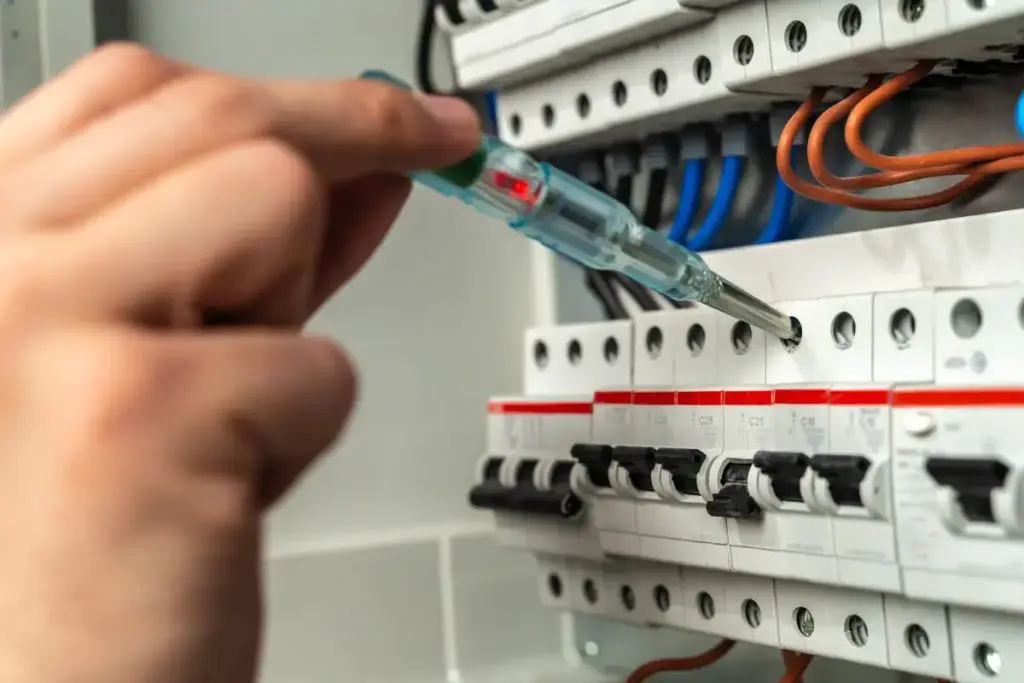
No. There is no general requirement that every communal fuse box or electrical distribution cupboard must have an unlocked door. In fact, unrestricted access can create safety problems. Residents, children, visitors or unauthorised contractors could potentially interfere with electrical equipment, operate isolators without understanding their function or come into contact with dangerous electrical parts.
A communal electrical cupboard can therefore be secured against unauthorised access. The important issue is that locking the door must not prevent authorised persons from obtaining access when the electrical installation needs to be operated, inspected, tested, maintained or repaired. This distinction is important. Restricted access does not mean inaccessible equipment.
What Does BS 7671 Say About Access to Electrical Equipment?
BS 7671 contains requirements concerning the accessibility of electrical equipment. Regulation 132.12 states that electrical equipment should be arranged to provide sufficient space for installation and replacement and accessibility for operation, inspection, testing, fault detection, maintenance and repair.
This does not mean that members of the public or residents must be able to open an electrical cupboard whenever they wish. Instead, the requirement is concerned with ensuring that the equipment can be safely reached by people who need to carry out legitimate electrical activities.
For example, if an electrician needs to inspect a communal distribution board, the electrician must be able to reach the board and have sufficient working space to carry out the work safely. If a cupboard is locked, the building manager or responsible person should therefore have an appropriate method of providing access.
What Does the Electricity at Work Regulations Say About Access?
The Electricity at Work Regulations 1989 regulation 15 contain specific requirements concerning working space, access and lighting. Regulation 15 requires adequate working space, adequate means of access and adequate lighting to be provided at electrical equipment where work is being carried out in circumstances that may give rise to danger.
The requirement is primarily concerned with enabling people to work safely on or near electrical equipment. This means that a communal electrical cupboard should not be designed or managed in a way that makes necessary electrical work unnecessarily dangerous.
For example, an electrician should not have to climb over stored materials, squeeze through an obstructed opening or work in an inadequately illuminated space simply to reach a distribution board.
Can a Communal Electrical Cupboard Be Kept Locked?
Yes. A communal electrical cupboard can be kept locked where this is appropriate. Government guidance for small blocks of flats specifically states that rooms and cupboards containing electrical intake or electrical distribution equipment should have fire-resisting doors that are either kept locked or are self-closing.
This is an important point because it demonstrates that locking an electrical cupboard is not inherently contrary to fire safety requirements. A locked cupboard can help prevent unauthorised interference, accidental contact with electrical equipment and inappropriate storage within the electrical room. However, the building manager should ensure that authorised persons can gain access when required.
Why Are Communal Fuse Boxes Often Kept Locked?
There are several reasons why communal electrical cupboards may be secured. Electrical distribution equipment can present serious hazards if accessed by people without appropriate knowledge and competence. Unauthorised persons may accidentally operate switches, remove covers, interfere with protective devices or damage components.
A locked cupboard can also help prevent vandalism, tampering and inappropriate storage. Fire safety is another consideration. Electrical intake and distribution areas can contain equipment that presents a potential ignition source. Restricting access can reduce the likelihood of combustible materials being stored around the equipment or unauthorised activities taking place inside the cupboard.
The objective is not to prevent legitimate access. It is to control access so that the people who need to work on the equipment can do so safely.
Can Residents Access the Communal Fuse Box?
Residents do not generally need unrestricted access to communal electrical distribution equipment. A resident may need to report an electrical problem, but that does not mean they should be expected to open an electrical distribution cupboard or operate equipment themselves.
Where a circuit has failed, the appropriate procedure will depend on the building’s electrical arrangement. The resident may be instructed to contact the landlord, managing agent, building manager or an emergency maintenance service. This is particularly important where the cupboard contains equipment supplying multiple flats or communal services. Allowing residents to interfere with shared electrical equipment can create risks for other occupants as well as the person operating the equipment.
What If the Communal Fuse Box Door Is Locked and There Is an Electrical Emergency?
A locked electrical cupboard should have an appropriate access arrangement for authorised personnel. For example, a managing agent, landlord, housing association or building maintenance team may hold a key or have another controlled method of access.
If an emergency requires an electrician to reach the distribution equipment, there should be a practical procedure for obtaining access without unnecessary delay. The exact arrangements will depend on the building and its management structure. A situation where the cupboard is locked and nobody knows who has the key can create a genuine maintenance and safety problem. The issue is therefore not simply whether the door is locked. The important question is whether authorised access can be obtained when it is needed.
Should Residents Have a Key to the Electrical Cupboard?
Not necessarily. There is no general requirement that every resident must have a key to a communal electrical distribution cupboard.
In many buildings, it is safer for access to be restricted to authorised building management staff and competent electrical contractors. Providing keys to every resident could increase the risk of unauthorised interference with electrical equipment. The responsible person or property manager should instead establish a suitable access control arrangement that ensures authorised access is available while preventing unnecessary access by untrained people.
Can an Electrical Cupboard Door Be Locked With a Standard Key?
The suitability of the locking arrangement depends on the building, the equipment and the fire safety strategy. The lock should not prevent authorised electrical maintenance or emergency access. Where the cupboard forms part of a fire-resisting enclosure, the door and its locking arrangement should also be consistent with the required fire performance.
The responsible person should avoid fitting a lock that creates an unacceptable delay for people who need access to the electrical equipment. The final arrangement should therefore be considered alongside the electrical installation and fire risk assessment.
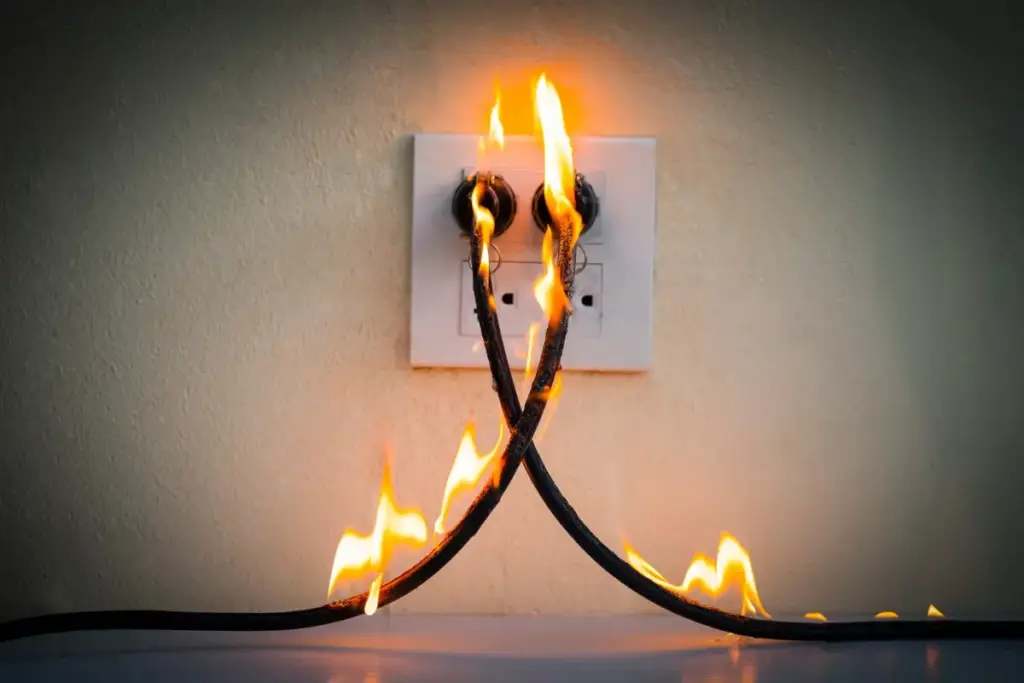
Does the Electrical Cupboard Door Need to Be Fire Rated?
In many blocks of flats, electrical intake and distribution cupboards form part of the building’s fire safety strategy and require suitable fire-resisting doors. Government guidance for small blocks of flats states that rooms and cupboards containing electrical intake or electrical distribution equipment should have fire-resisting doors that are either kept locked or are self-closing.
London Fire Brigade also identifies fire doors protecting mains electricity service cupboards as an example of fire doors used to protect areas where there is a risk of combustion. However, it would be incorrect to state that every electrical cupboard throughout every type of building automatically requires the same fire door rating. The required fire resistance depends on the building’s construction, fire strategy, risk assessment and applicable requirements.
Should an Electrical Cupboard Door Be Self Closing?
A self-closing door can be appropriate where the fire safety arrangement requires it. Government guidance states that electrical intake and electrical distribution cupboards should have fire-resisting doors that are either kept locked or self-closing.
The important objective is to maintain the fire-resisting separation provided by the door. If a self-closing fire door is installed, it should close fully and should not be wedged open. If the door is designed to remain locked shut instead, the locking arrangement should be properly managed and authorised access should remain available.
Can You Leave an Electrical Cupboard Door Propped Open?
Generally, leaving an electrical distribution cupboard door permanently propped open is poor practice where the door is intended to provide fire separation or restrict access. A propped-open door can allow fire and smoke to spread more easily if the cupboard contains an ignition source.
It can also give unauthorised people access to electrical equipment. Where a fire-resisting cupboard door is intended to be self-closing, it should be allowed to close correctly. Where the design relies on the door being kept locked shut, it should remain secured except when authorised access is required.
What If the Communal Fuse Box Door Does Not Open?
If authorised personnel cannot open the electrical cupboard, the access arrangement should be reviewed. An electrician should not be expected to force the door, damage the lock or use an unsafe method to gain access.
The landlord, managing agent, freeholder or responsible person should have a system for providing authorised access. A broken lock, missing key or inaccessible cupboard should be treated as a maintenance issue because it can prevent necessary inspection, testing or repair. If the cupboard contains critical equipment such as fire alarm supplies, emergency lighting supplies or communal electrical distribution equipment, delays in gaining access can have wider safety implications.
What If the Fuse Box Is Blocked by Storage?
Electrical cupboards should not be used as general storage areas. Boxes, cleaning materials, furniture, bicycles, rubbish and other items should not be placed in front of electrical distribution equipment where they restrict access.
Obstructions can make inspection and maintenance difficult and can increase the risk of injury during electrical work. Where electrical equipment is located in a communal cupboard, the surrounding area should be kept sufficiently clear to allow authorised personnel to work safely.
Does the Door Need a Sign?
Appropriate signage can help identify an electrical intake room, distribution cupboard or other restricted electrical area. A sign such as Electrical Intake, Electrical Distribution Board, Authorised Persons Only or another suitable warning can make the purpose of the room clear.
The exact signage depends on the equipment and building. If there are electrical hazards that require warning, appropriate electrical safety signage should be considered as part of the overall safety arrangements. Signage should not, however, be used as a substitute for proper access control or safe installation.
Can a Communal Fuse Box Be Inside a Locked Cupboard?
Yes. A communal distribution board can be installed inside a cupboard that is secured against unauthorised access, provided the installation remains accessible for authorised operation and maintenance. The cupboard should provide adequate space for the equipment and for the work that needs to be carried out.
The door should also be suitable for the location and, where applicable, form part of the required fire-resisting enclosure. The installation should not be arranged so that opening the cupboard creates an unsafe working condition.
What Does Part P Say About Communal Electrical Installations?
Part P of the Building Regulations concerns electrical safety in certain buildings, including common parts of buildings serving one or more dwellings. The requirement states that reasonable provision must be made in the design and installation of electrical installations to protect people operating, maintaining or altering the installations from fire or injury.
This supports the broader principle that electrical equipment must be installed and arranged with safe operation and maintenance in mind. Part P should not be interpreted as saying that a communal fuse box door must be unlocked. Instead, the installation needs to provide reasonable protection for people who operate, maintain or alter it.
Does the Electrical Safety Regulations Apply to Communal Areas?
There is an important distinction here. The Electrical Safety Standards in the Private Rented Sector regulations require electrical installations in rented properties to be inspected and tested at least every five years. However, government guidance specifically states that these regulations do not apply to communal areas such as stairwells, corridors and other shared spaces in blocks of flats.
This does not mean communal electrical installations can be ignored. The same government guidance explains that landlords still have legal duties concerning electrical systems in communal areas and that these installations should be regularly checked and maintained to ensure they remain safe and do not pose risks to residents or visitors. Other legislation and duties can therefore apply to communal electrical systems.
How Often Should Communal Electrical Equipment Be Inspected?
The appropriate inspection frequency depends on the installation, its use, the environment, the condition of the equipment and the relevant legal and safety requirements. For rented installations within the scope of the Electrical Safety Standards regulations, the installation must generally be inspected and tested at least every five years.
For communal areas outside the scope of those regulations, the five-year requirement should not simply be applied as though it were a direct statutory requirement under those regulations. The installation should instead be managed according to its risks and applicable requirements. An electrical installation condition report can be an important part of assessing the condition of communal electrical installations.
Who Should Have Access to a Communal Fuse Box?
Access should generally be restricted to people who need it for legitimate purposes and who have the competence required for the activity. A qualified electrician may need access for inspection, testing, fault finding or repair.
Building management staff may need controlled access for inspection or to facilitate maintenance. Residents generally do not need routine access to electrical distribution equipment. The exact arrangements should be determined by the building’s management procedures and risk assessment.
What If an Electrician Cannot Access the Communal Fuse Box?
If an electrician cannot gain access to required electrical equipment, the building’s access arrangements are inadequate for maintenance purposes. The responsible person should have a reliable process for arranging access.
This might involve a controlled key, access code, building manager, concierge, maintenance team or other suitable arrangement. The objective is to ensure that legitimate electrical work is not prevented or unnecessarily delayed while still restricting unauthorised access.
What About Emergency Services Access?
The access arrangements for electrical cupboards should also be considered within the building’s wider emergency and fire safety arrangements. Electrical intake and distribution equipment may need to be isolated during certain emergencies or electrical incidents.
The responsible person should understand where key electrical equipment is located and how authorised personnel can gain access. However, this does not necessarily mean that every resident should have direct access to the equipment. Controlled access can provide both security and safety when appropriately managed.
What If the Communal Electrical Cupboard Is in an Escape Route?
If an electrical cupboard opens onto a communal escape route, additional fire safety considerations may apply. The door should not obstruct the escape route when opened or create an unacceptable hazard for people evacuating the building.
If the cupboard door is a fire-resisting door, its condition, self-closing arrangement or locked-shut arrangement should be maintained appropriately. The fire risk assessment should consider the cupboard’s location and whether the electrical equipment creates any particular fire hazard. Know every thing about fire risk assessment.
Fire safety guidance for blocks of flats emphasises the importance of protecting common escape routes and maintaining fire-resisting doors in suitable condition.
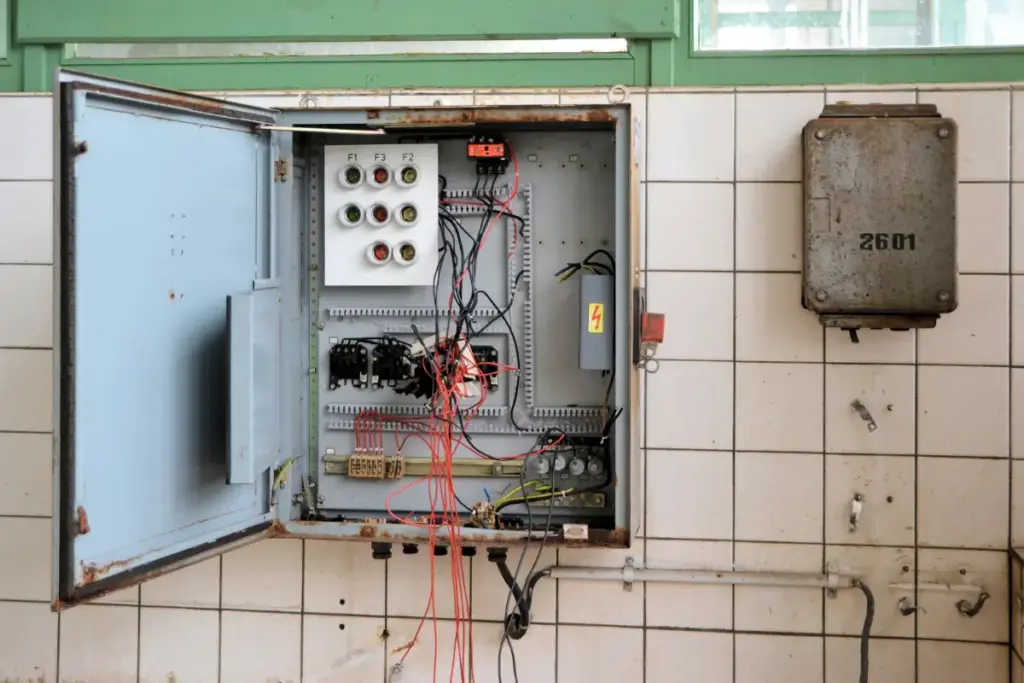
What Are the Common Problems With Communal Fuse Box Doors?
One common problem is a door that has been permanently wedged open. This can undermine the purpose of a fire-resisting enclosure and allow unauthorised access. Another problem is a locked cupboard where nobody knows who holds the key.
A damaged lock can also prevent electricians from carrying out necessary maintenance. Other problems include storage blocking access, damaged fire doors, missing seals, broken hinges, poor lighting and inadequate working space. These issues should be addressed rather than assuming that the electrical equipment itself is safe simply because it continues to operate.
Is a Locked Communal Fuse Box Door a Problem During an EICR?
A locked electrical cupboard is not automatically an EICR defect. The electrician needs appropriate access to the installation to carry out the inspection and testing required by the scope of the work.
If the equipment cannot be accessed, the inspector may be unable to complete the required inspection or testing and may need to record limitations or arrange further access. The key issue is whether the electrical installation can be safely and adequately inspected rather than whether the cupboard happens to have a lock. A properly controlled locked cupboard can therefore be entirely reasonable.
What Should Landlords and Property Managers Do?
Landlords and property managers should establish who is responsible for communal electrical equipment and ensure that appropriate access arrangements are documented. Keys or other access methods should be available to authorised maintenance personnel.
The cupboard should be kept free from storage and other obstructions. The door should be inspected for damage and, where relevant, its fire-resisting and self-closing or locking arrangements should be maintained.
The electrical installation should also be inspected and maintained by competent persons. Where an electrical inspection (EICR) identifies a defect affecting safety, remedial work should be arranged according to the severity of the defect.
What Should Residents Do If They Need Access?
Residents should normally contact their landlord, managing agent, housing association or building management team rather than attempting to access a communal electrical cupboard themselves. If a resident has lost power, the appropriate emergency procedure should be followed.
Where there is a burning smell, smoke, sparking, overheating equipment or another immediate electrical danger, residents should not attempt to open the electrical cupboard or investigate live equipment. They should report the emergency through the appropriate building procedure and, where necessary, contact the emergency services.
Conclusion
The access to communal fuse box door regulation is not based on a simple rule that every communal electrical cupboard must either be locked or unlocked.
The central requirement is safe and appropriate access.
BS 7671 requires electrical equipment to be arranged so that it is accessible for operation, inspection, testing, fault detection, maintenance and repair. The Electricity at Work Regulations 1989 also require adequate working space, access and lighting where electrical work is being carried out in circumstances that may give rise to danger.
At the same time, communal electrical cupboards can appropriately be secured against unauthorised access. Government guidance for blocks of flats states that rooms and cupboards containing electrical intake or electrical distribution equipment should have fire-resisting doors that are either kept locked or are self-closing.
Therefore, a locked communal fuse box door is not automatically a regulatory problem. The important requirement is that authorised persons, particularly competent electricians and appropriate building management personnel, can obtain access when inspection, testing, maintenance, repair or necessary isolation is required. Residents do not generally need unrestricted access to communal electrical distribution equipment. In many buildings, restricting access is actually the safer arrangement.
The cupboard should also remain free from obstruction, provide adequate working space and lighting, and have a suitable door where fire separation is required. For landlords and property managers, the practical approach is to ensure that the electrical installation is properly maintained, that competent persons can access it when required and that the access arrangements do not compromise fire safety. A communal electrical cupboard should therefore be secure but not inaccessible.
Frequently Asked Questions
Does a communal fuse box cupboard have to be unlocked?
No. There is no general requirement for a communal electrical cupboard to remain permanently unlocked. It can be secured against unauthorised access provided authorised persons can obtain access when required.
Can a communal electrical cupboard be locked?
Yes. Government guidance for blocks of flats states that electrical intake and distribution cupboards should have fire-resisting doors that are either kept locked or self-closing.
Do residents need access to the communal fuse box?
Generally, residents do not need unrestricted access to communal electrical distribution equipment. Access can be restricted to authorised persons and competent electrical contractors.
What regulation covers access to electrical equipment?
BS 7671 Regulation 132.12 addresses accessibility of electrical equipment for operation, inspection, testing, fault detection, maintenance and repair.
What does Regulation 15 of the Electricity at Work Regulations say?
Regulation 15 requires adequate working space, adequate means of access and adequate lighting at electrical equipment where work is being carried out in circumstances that may give rise to danger.
Can an electrical cupboard door be locked for fire safety?
Yes. Government guidance specifically allows electrical intake and distribution cupboards to have fire-resisting doors that are kept locked or are self-closing.
Should an electrical cupboard door be fire rated?
Where the cupboard forms part of the building’s fire-resisting separation, a suitable fire-resisting door may be required. The exact fire performance should be determined by the building’s fire risk assessment and fire strategy.
Can an electrical cupboard door be left open?
It should not normally be left propped open where the door is intended to provide fire separation or restrict access to electrical equipment.
Who should have the key to a communal electrical cupboard?
The key should be controlled by the landlord, building manager, managing agent, housing association or another responsible person so that authorised personnel can gain access when necessary.
What if an electrician cannot access the communal fuse box?
The building’s access arrangements should be reviewed. A competent electrician must be able to obtain safe access to the equipment when inspection, testing, maintenance or repair is required.
Can residents open the communal fuse box themselves?
They should not normally access or interfere with communal electrical distribution equipment unless they have appropriate authority and competence.
Does a locked electrical cupboard fail an EICR?
Not automatically. A locked cupboard is not itself evidence of an electrical defect. However, the electrician must be able to obtain the access required to complete the inspection and testing.
Can a communal electrical cupboard be used for storage?
It should not be used as a general storage area, particularly where stored items restrict access to electrical equipment or create additional fire risks.
Does Part P apply to communal electrical installations?
Part P applies to certain electrical installations in common parts of buildings serving one or more dwellings and requires reasonable provision to protect people operating, maintaining or altering installations from fire or injury.
Do the Electrical Safety Standards regulations cover communal areas?
The government guidance states that the Electrical Safety Standards in the Private Rented Sector regulations do not apply to communal areas such as stairwells, corridors and other shared spaces in blocks of flats. However, communal electrical systems still need to be safely maintained and may be subject to other legal duties.
How often should communal electrical installations be inspected?
The appropriate frequency depends on the installation and applicable requirements. The five-year inspection requirement under the private and social rented sector electrical safety regulations does not itself apply to communal areas of blocks of flats, although communal electrical systems should still be regularly checked and maintained.
What should I do if the communal fuse box is sparking?
Do not attempt to open the cupboard or touch the electrical equipment. Report the problem immediately through the building’s emergency procedure and seek assistance from a competent electrician. If there is fire or immediate danger, evacuate and contact the emergency services.
Is it safe to keep a communal electrical cupboard locked?
Yes, provided the locking arrangement is appropriate and authorised persons can obtain access when required. In fact, restricting unauthorised access can be an important safety measure.
What is the main rule for communal fuse box access?
The practical rule is that the equipment should be secure from unauthorised access while remaining safely accessible to authorised persons for operation, inspection, testing, maintenance and repair.