

EICR Fault Codes: An EICR uses four fault codes to prioritise electrical safety: C1 denotes immediate danger requiring urgent isolation and corrective work; C2 flags potentially dangerous conditions needing prompt repair; C3 covers non‑compliant items not currently hazardous but recommended for upgrade; FI means further investigation is required to determine if a defect exists. Each code guides urgency, actions and record‑keeping, with C1/FI treated as highest priority and C3 as advisory; continue for practical examples, fixes and questioning tips.
Key Takeaways
- C1 indicates an immediate danger requiring urgent isolation and corrective work to remove visible life‑safety hazards.
- C2 denotes a potentially dangerous condition needing prompt repair to prevent risk escalation or arcing.
- C3 identifies non‑compliant items that are not hazardous but recommends upgrading for best practice and future safety.
- FI (Further Investigation) flags unclear defects needing targeted testing or inspection to confirm if a danger exists.
- Prioritize remediation as C1/FI immediate, C2 scheduled, and C3 advisory, with documented decisions and audit trails.
EICR Fault Codes: The Quick Version
A concise summary presents the most common EICR fault codes, their meanings, and immediate implications for safety and remedial action. The quick version outlines each code succinctly: C1 denotes an immediate danger requiring urgent isolation and corrective work; C2 indicates a potentially dangerous condition needing prompt attention; C3 highlights items that do not meet current standards but are not presently hazardous;
EICR Fault Codes: FI signals further investigation is required to determine if a defect exists. The guide explains that C1 and C2 demand prioritised response, possibly including disconnection, while C3 can be scheduled for routine remediation. FI advises targeted testing or inspection to clarify uncertainty. Practical next steps include documenting the location, advising occupants, and commissioning qualified personnel for repair or assessment. Read our blog post: What Qualifications Are Required to Perform EICR According to UK Regulations.
This condensed overview equips readers to understand urgency levels, communicate effectively with electricians, and prioritise actions without technical elaboration.
What C1, C2, C3 And FI Mean On An EICR
After the quick summary, the report’s condition codes require a closer look to understand exact implications and actions. C1 (Danger Present) flags an immediate risk requiring urgent remedial action or isolation; it identifies conditions that are likely to cause injury or further harm if left. C2 (Potentially Dangerous) highlights significant deficiencies that are not immediately hazardous but could develop into dangerous situations; these items need prompt attention and planned corrective work. C3 (Improvement Recommended) denotes non-compliant or substandard aspects that do not present danger; these suggestions aim to bring the installation up to best practice and regulatory standards. FI (Further Investigation) indicates unclear or concealed defects where inspection or testing could not fully determine safety; it calls for targeted investigation, possibly involving dismantling, specialist testing or tracing of circuits. Each code conveys severity and the expected response, enabling prioritisation of repairs, investigations and maintenance planning without assuming timing or exact remedial steps.
How Urgent Is Each Code And What “Danger Present” Looks Like?
When prioritising EICR findings, the codes indicate both the immediacy of risk and the required speed of response: C1 (Danger Present) demands immediate action; FI (Further Investigation) signals a suspected hazard needing prompt inspection; C2 (Potentially Dangerous) requires timely repair; C3 (Improvement Recommended) is lower priority.
- C1 — Danger Present: immediate isolation or shutdown often necessary; visible burning, exposed live conductors, or imminent shock risk are typical signs requiring urgent remediation to protect life.
- FI — Further Investigation: suspected dangerous condition not fully verified; may require temporary precautions and rapid diagnostic work to confirm and address the hazard before it escalates.
- C2/C3 — Potential or Advisory: C2 needs scheduled but prompt repair to remove risk; C3 suggests non-urgent upgrades for safety or compliance. Find out the EICR C2 Meaning Explained: Is It Dangerous and What Should You Do Next?
The inspector’s notes guide the owner on urgency and specific symptoms that constitute “danger present,” enabling informed, timely decisions.
Common Defects That Trigger C1, C2, C3 Or FI (Real Examples)
Several recurring faults account for most C1, C2, C3 and FI designations on EICRs, each presenting clearly identifiable symptoms and consequences. C1 (Danger Present) examples include exposed live conductors, badly damaged cables with insulation missing, and direct contact risks where immediate isolation is necessary. C2 (Potentially Dangerous) often arises from inadequate earthing/ bonding, loose live connections causing arcing, and damaged consumer unit barriers allowing conductive paths under fault conditions.
C3 (Improvement Recommended) covers wiring installations not meeting current standards but not posing immediate danger, such as absence of RCD protection on circuits feeding sockets, substandard cable routing, or minor degradation of protective devices. FI (Further Investigation) flags ambiguous or intermittent faults like unexplained RCD tripping, suspected earth leakage without visible cause, or inconsistent insulation resistance readings requiring invasive inspection. Real examples clarify why inspectors choose each code and help occupants understand the nature and urgency of reported defects.
Typical Fixes And Expected Timescales
Many common EICR faults can be resolved within a single maintenance visit, but repair times vary by severity, access, and parts availability. Typical fixes for C1, C2 and C3 range from immediate isolation of unsafe circuits to planned component replacements. Minor issues loose terminals, poorly terminated conductors, or accessible damaged cables are often tightened or re-terminated on-site within 30–90 minutes. More involved work, such as replacing consumer units, bonding corrections, or concealed rewiring, requires detailed assessment, parts ordering and potentially multiple visits; these jobs can take from a half day to several days. FI (further investigation) entries frequently need diagnostic time before a clear scope is set.
Common expected timescales:
- Immediate repairs (loose connections, minor fittings): 0.5–1.5 hours.
- Medium repairs (partial rewiring, bonding, accessory replacements): half to full day.
- Major works (consumer unit replacement, extensive concealed wiring): 1–5+ days.
Prioritisation follows safety and regulatory requirements.
How An FI Is Investigated And Reclassified To C1/C2/C3
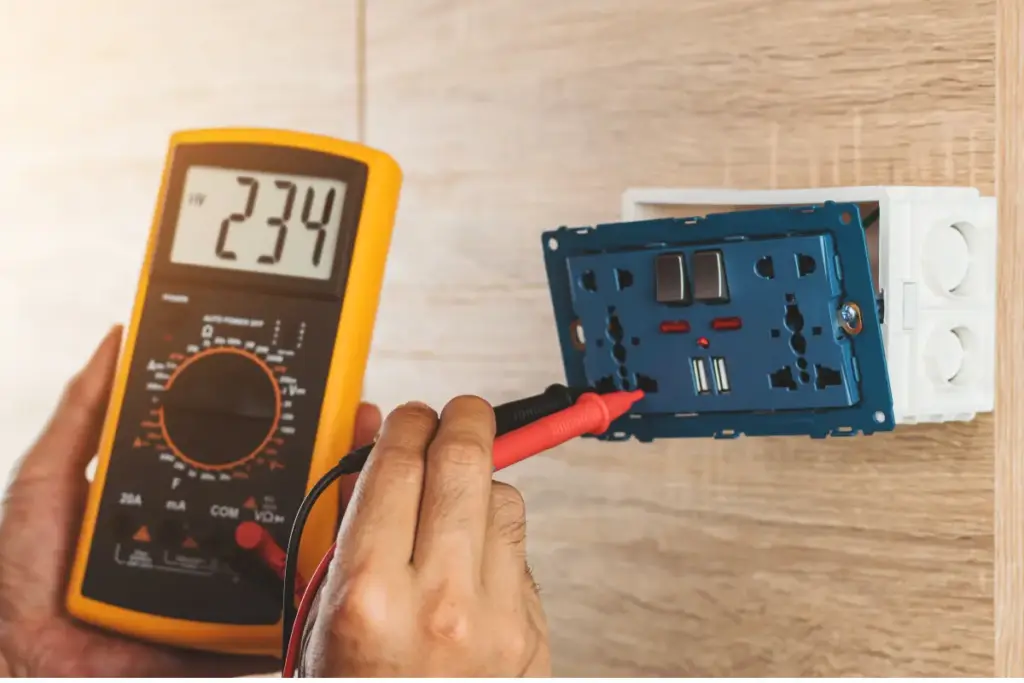
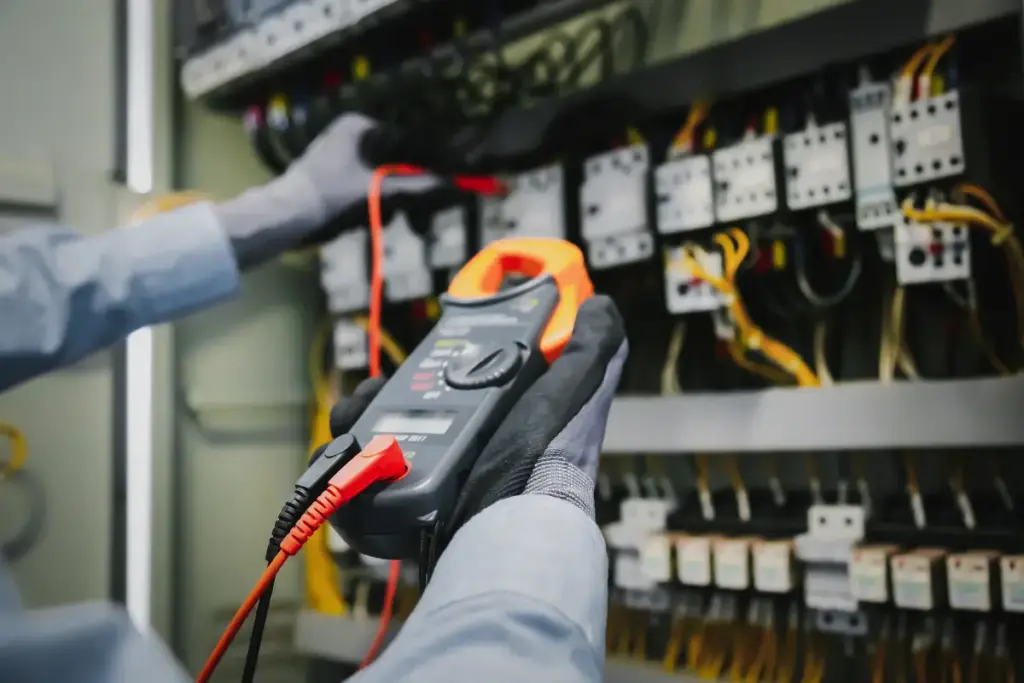
Following an FI (Further Investigation) notation, the inspector undertakes a structured diagnostic process to determine whether the issue merits reclassification to C1, C2 or C3. The process begins with a focused visual inspection and verification of reported symptoms, followed by targeted testing of affected circuits and components using appropriate instruments. Measurements such as insulation resistance, continuity, polarity and earth loop impedance are recorded and compared to standards. Where non-visible defects are suspected, the inspector isolates circuits, replicates loads and uses substitution tests to identify intermittent or loading-related faults.
Findings are evaluated against risk criteria: immediate danger (C1), potential danger requiring prompt remedial action (C2), or non-urgent recommendations (C3). Clear evidence linking test results and observations to a fault is required before reclassification. All conclusions are documented, including tests performed, readings, and rationale for the final code, enabling informed remedial action and clear communication to responsible parties without prematurely assigning unnecessary severity. Check out the EICR F1 Code Guide for Landlords: Immediate Dangers and Mandatory Actions.
Questions To Ask Your Electrician Or Landlord After An EICR
What should be asked, and why, after an EICR? A clear set of questions helps occupants understand risk, required actions, and timelines. The electrician or landlord should be asked for specifics rather than general reassurances.
- What exactly does each reported code (C1, C2, C3, FI) mean for safety and daily use?
- Which faults need immediate action, which can be scheduled, and who will arrange repairs?
- Will re inspection occur after repairs, and what documentation will confirm the issue is resolved?
Additionally, request concise explanations of any abbreviations, the location of each fault, and photographic evidence where useful. Ask whether temporary measures were implemented (labels, isolation) and if there are recommended interim precautions. Verify responsibility for communicating outcomes to tenants or building managers. By focusing on these targeted queries, stakeholders gain practical understanding, guarantee accountability, and can prioritise remedial steps without ambiguity.
Cost, Compliance And Records: Prioritising Repairs
A clear prioritisation strategy balances repair cost, statutory compliance, and accurate record-keeping to reduce risk and demonstrate due diligence. The approach ranks faults by severity C1 and FI demand immediate action, C2 significant repairs, C3 advisory items while weighing budget constraints and legal obligations. Decisions reflect duty-holder responsibilities: ensuring life-safety issues are fixed regardless of cost, scheduling non-urgent work to minimise disruption, and obtaining multiple quotes when appropriate.
Documentation underpins the process. Detailed records of estimates, work orders, completion certificates, and communications create an audit trail that evidences compliance and informed decision-making. Where landlords or businesses defer lower-risk repairs, clear written justification and planned review dates are essential. Regularly updating the asset register and noting residual risks helps manage liabilities. Ultimately, a transparent, risk-based policy aligns spending with legal duties, protects occupants, and supports defensible choices should regulators or insurers query the maintenance regime.
Frequently Asked Questions
Can an EICR Affect My Home Insurance Coverage?
Yes. An EICR showing serious defects can jeopardise home insurance; insurers may refuse claims or cancel policies if risks aren’t addressed. The homeowner should promptly remediate faults and notify their insurer to maintain valid coverage.
Do Portable Appliance Tests (PAT) Relate to EICR Results?
Yes. They are related but distinct: PAT inspects and tests portable appliances, while an EICR assesses fixed wiring. PAT results can highlight appliance faults that complement EICR findings and inform overall electrical safety records.
Will an EICR Pick up Intermittent Faults That Haven’T Occurred?
No; an EICR cannot reliably detect intermittent faults that aren’t present during inspection. The inspector can identify indicators or likely causes, recommend monitoring, retesting, or targeted investigation to reveal transient or hidden electrical issues.
Are Landlords Legally Required to Provide EICR Copies to Tenants?
No; landlords are not universally required to provide EICR copies to tenants, though many jurisdictions mandate issuing or sharing inspection results local law or tenancy agreements determine whether tenants must receive copies of electrical inspection certificates.
How Often Should Circuits Be Retested After Remedial Work?
Circuits should be retested immediately after remedial work is completed and again following any further alterations; thereafter, periodic inspections follow statutory intervals (typically every 5 years for private rentals), or sooner if risks arise.
Conclusion
EICR Fault Codes: An EICR’s fault codes offer clear, prioritised guidance on electrical risk: C1 and FI signal immediate danger, C2 indicates potentially dangerous defects needing prompt attention, and C3 covers non-urgent improvements. Understanding common causes, expected fixes and investigation processes helps tenants, landlords and electricians act appropriately. Prompt, documented repairs maintain compliance, reduce risk and protect occupants. Clear communication and timely remedial work guarantee that safety and legal responsibility are upheld following an inspection.