




An Emergency Fire Action Plan 5 Steps is essential for safeguarding lives and property within any organisation. It provides a structured way to efficiently manage fire-related incidents. By implementing five key steps, organisations and homes can guarantee compliance with safety regulations and minimise chaos during emergencies. Understanding these steps is fundamental for effective preparedness. However, many overlook analytic aspects that can make a significant difference in outcomes. What are these key elements, and how can they be effectively integrated? The Landlord Safety Certificate provides you with the best services to fight every kind of hazard.
Key Takeaways
- Conduct thorough risk assessments to identify possible fire danger within the facility.
- Establish clear communication channels for timely alerts and updates during emergencies.
- Designate and map out evacuation routes, ensuring staff are aware of them.
- Regularly conduct fire drills to reinforce training and improve response times.
- Continuously review and update the Emergency Fire Action Plan to adapt to changes and feedback.
Emergency Fire Action Plan: 5 Steps: A Complete Guide to Protecting Lives and Property
When a fire emergency arises, having a well-structured action plan can mean the difference between life and death. A thorough fire action plan consists of five essential steps that empower individuals and communities to take decisive action during an emergency evacuation.
First, identify likely fire risks to minimise them and ensure safety through prevention.
Second, make a fire escape plan and establish clear escape routes, emphasising multiple exits to maximise freedom of movement during an emergency.
Third, equip the space with functional fire extinguishers and fire alarms to ensure readiness for any situation. Why Do Fire Safety Systems Fail? It is due to not having a fire alarm certificate, which confirms that you are taking adequate safety precautions.
Fourth, conduct regular fire drills to familiarise everyone with the plan, instilling confidence and awareness.
Finally, assign roles and responsibilities to all members, and encourage a sense of collective accountability.
This structured method not only protects lives but also secures property, reinforcing the idea that safety is a fundamental right. Empowered individuals can act swiftly and effectively, safeguarding their freedom amid chaos. Learn more about 5 Things to Be Careful of in a House Fire.
Why Every Workplace Needs an Emergency Fire Action Plan: 5 Steps Explained
An effective Emergency Fire Action Plan is not just a guideline; it is a necessity for every workplace. It serves as an energetic measure, ensuring that employees are well-prepared for budding fire emergencies. The plan clearly outlines the “responsible person” staff roles and responsibilities, cooperating with employers, and encourages a culture of safety and accountability.
In a world where freedom is paramount, having a structured response to emergencies empowers individuals to act decisively and confidently.
Furthermore, an Emergency Fire Action Plan minimises chaos during analytical moments, enabling efficient communication and coordination. It not only protects lives but also safeguards property, reducing latent financial losses.
Regular training and drills associated with the plan cultivate a sense of readiness, allowing employees to embrace their autonomy while prioritising safety.
Ultimately, a well-crafted plan enables workplaces to operate smoothly, ensuring that the spirit of freedom thrives even in the face of adversity.
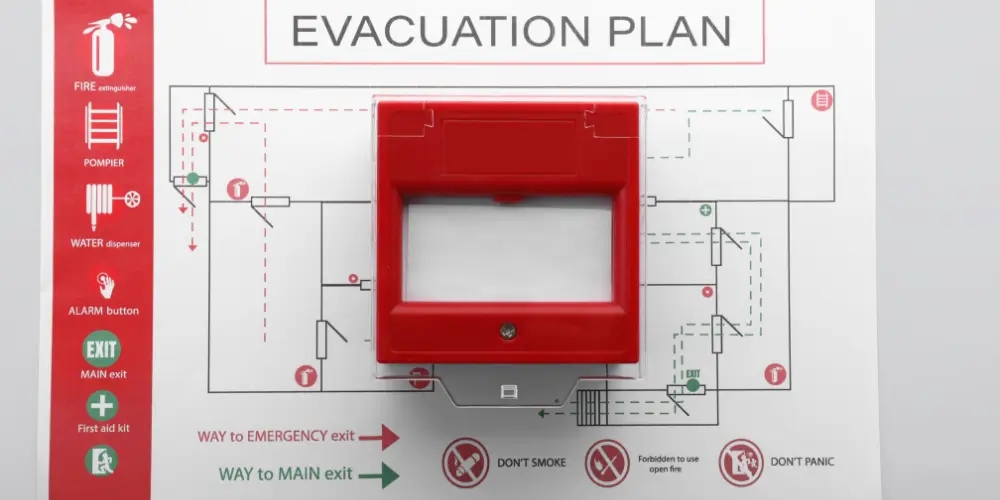
Emergency Fire Action Plan: 5 Steps for Fast, Safe, and Organised Evacuations
Five essential steps form the backbone of an effective Emergency Fire Action Plan, ensuring fast, safe, and organised evacuations during a fire emergency.
First, clear communication channels must be established so everyone receives timely alerts about the situation.
Second, designated evacuation routes should be mapped out, guiding occupants swiftly to safety.
Third, regular fire drills are analytic; they familiarise individuals with the process, reducing panic and confusion.
Fourth, training staff on their specific responsibilities during an evacuation empowers them to act decisively and efficiently.
Finally, continuous rating of the plan is essential, incorporating feedback and making necessary adjustments to increase its effectiveness.
Understanding the Emergency Fire Action Plan: 5 Steps and Their Legal Importance
How to Manage Fire Safety within the Organisation? Implementing an Emergency Fire Action Plan is essential not only for ensuring the safety of individuals during a fire emergency but also for carrying significant legal implications for organisations.
Understanding the five key steps of this plan is essential. First, organisations must conduct a thorough risk assessment to identify fire danger.
Second, they should establish clear communication protocols to effectively alert individuals.
Third, training personnel in fire safety and evacuation procedures guarantees preparedness.
Fourth, regular drills are necessary to reinforce these skills and assess the plan’s efficacy.
Finally, documentation of all training and drills serves as essential evidence of compliance with legal obligations.
Failure to adhere to these steps can lead to liability issues, including fines and lawsuits.
How the Emergency Fire Action Plan 5 Steps Reduce Panic During Fire Emergencies
Effective implementation of the Emergency Fire Action Plan greatly minimises panic during fire emergencies. By establishing a structured response, individuals can focus on the necessary actions rather than succumbing to fear.
The first step encourages awareness and training, ensuring everyone knows the escape routes and procedures. This familiarity breeds confidence, allowing individuals to react calmly.
The second step emphasises clear communication, which is essential during chaos. Knowing who to alert and how to relay information reduces uncertainty.
The third step involves assigning designated roles and specific tasks to trained personnel. This delegation alleviates the burden on individuals and promotes a sense of teamwork.
Next, regular drills increase preparedness, reinforcing behaviour and responses in real situations.
Finally, the plan mandates regular reviews, adaptation to changes, and effectiveness. Together, these five steps cultivate an environment of readiness, enabling individuals to respond with clarity and composure when emergencies arise.
Emergency Fire Action Plan 5 Steps: Key Responsibilities for Staff and Managers
While implementing the Emergency Fire Action Plan requires collective effort, staff and managers each have distinct responsibilities that are essential for ensuring safety.
Managers must lead the charge by developing, communicating, and regularly reviewing the fire action plan. They are responsible for conducting training sessions, ensuring that all staff are familiar with emergency procedures, and establishing clear lines of communication during an incident.
Staff members, on the other hand, are tasked with adhering to the plan and actively participating in drills. They should understand their roles, including evacuation routes, assembly points, and specific tasks during emergencies.
This dual responsibility promotes a civilisation of safety, empowering everyone to act decisively in a crisis. By embracing their roles, both staff and managers contribute to a secure environment, minimising risks and enhancing overall preparedness for fire emergencies.
Creating an Effective Emergency Fire Action Plan: 5 Steps That Meet UK Standards
Creating an effective Emergency Fire Action Plan that meets UK standards requires a systematic way to ensure safety and compliance. The following five steps provide a framework for organisations to craft a robust plan:
| Step | Description |
| 1. Risk Assessment | Identify fire danger and assess risks. |
| 2. Emergency Procedures | Develop clear evacuation protocols. |
| 3. Training | Conduct regular fire safety training sessions. |
| 4. Communication | Establish clear channels for reporting fires. |
| 5. Review and Revise | Regularly update the plan in response to changes. |
Common Mistakes to Avoid When Following an Emergency Fire Action Plan: 5 Steps
Many organisations fall short in implementing their Emergency Fire Action Plans due to common mistakes that can endanger safety. One prevalent error is neglecting to update the plan regularly, leading to outdated procedures that fail to address current risks.
Additionally, inadequate communication of the plan to all employees can create confusion during an emergency, undermining its effectiveness. Organisations often overlook conducting regular drills, which are essential for ensuring that everyone knows their roles and responsibilities.
Another mistake is failing to designate clear evacuation routes; complex layouts can lead to chaos when every second counts. Ultimately, relying solely on written plans without engaging employees in discussions can promote a false sense of security.
Emergency Fire Action Plan: 5 Steps and How Regular Training Improves Safety
An effective Emergency Fire Action Plan consists of five key steps organisations must implement to guarantee safety and preparedness during fire emergencies. These steps have been proven to promote a civilisation of safety and ensure that all individuals understand their roles in an emergency.
| Step | Description | Importance |
| 1. Evacuation Route | Clearly defined escape paths | Guarantees a quick and safe exit |
| 2. Alarm Systems | Functional fire alarms | Alerts everyone promptly |
| 3. Training | Regular drills for all staff | Builds confidence and readiness |
Regular training reinforces these steps, empowering individuals to respond effectively under pressure. It cultivates an environment where safety is paramount, allowing individuals to act decisively in emergencies. By prioritising training, organisations can confirm that their Emergency Fire Action Plans are not merely documents but living practices that amplify safety and freedom for all.

Reviewing and Updating Your Emergency Fire Action Plan: 5 Steps for Ongoing Compliance
Although an Emergency Fire Action Plan is essential for safety, it requires regular reviews and updates to remain effective and compliant with evolving regulations.
First, organisations should conduct annual assessments to identify changes in the environment or personnel.
Second, they must engage with local fire authorities to stay informed about updated codes and best practices.
Third, it is essential to incorporate feedback from fire drills to ensure the plan reflects real-world experiences.
Fourth, involve employees in the review process to promote a sense of ownership and awareness.
Finally, maintain documentation of all revisions to provide a clear compliance trail.
By following these steps, organisations not only increase safety but also embrace a commitment to freedom through preparedness, empowering individuals to respond effectively in emergencies.
An up-to-date Emergency Fire Action Plan cultivates a resilient civilisation, enabling organisations to thrive in the face of unforeseen challenges.
Frequently Asked Questions
What Should I Do if I Discover a Fire?
Upon discovering a fire, one should immediately alert others, activate fire alarms, and evacuate the area. Prioritise personal safety, avoid smoke inhalation, and do not attempt to extinguish the fire unless trained to do so.
How Often Should Fire Drills Be Conducted?
Fire drills should be conducted at least twice a year to guarantee preparedness and familiarity with evacuation procedures. Regular practice encourages confidence and strengthens individuals’ response capabilities, promoting a civilisation of safety and self-reliance.
Are Fire Action Plans Required by Law?
Fire action plans are often required by law, particularly in commercial and public buildings. These regulations aim to ensure safety and preparedness, provide guidelines for effective emergency response, and protect individuals’ freedom to act in emergencies.
Who Is Responsible for Maintaining the Fire Action Plan?
The responsibility for maintaining the fire action plan typically falls to the designated safety officer or facility manager, who ensures compliance with regulations, provides regular updates, and trains staff to promote a safe environment for all.
What Types of Fires Require Different Evacuation Procedures?
Different types of fires, such as electrical, chemical, or structural, necessitate distinct evacuation procedures. Each situation demands tailored responses to guarantee safety, with specific routes and protocols suited to the nature of the fire hazard.
Conclusion
In summary, implementing an effective Emergency Fire Action Plan through five essential steps greatly increases workplace safety and compliance. By conducting thorough risk assessments, establishing clear communication, designating evacuation routes, training personnel, and regularly updating the plan, organisations can guarantee preparedness for fire emergencies. This responsive not only protects lives and property but also promotes a civilisation of safety and accountability, ultimately reducing panic and chaos during repelling situations. Continuous improvement is pivotal for ongoing resilience and compliance.