



PAS 79:2020 defines a practical UK standard for fire risk assessments, clarifying terms, competence and documentation. It guides assessors and dutyholders in recording clear, evidence‑based judgments, proportionate actions, and review triggers. Reports must name assessors, show methodology, list hazards, risks and remedial plans with dates and responsibilities. Emphasis is on accountability, traceable rationale and accessible records to withstand audits and enforcement. Follow the guidance; the subsequent sections explain implementation, templates, and audit‑ready practices.
Key Takeaways
- PAS 79:2020 provides a standardised, auditable template for recording fire risk assessments and clear evidence of decision-making.
- It defines competence requirements and advises dutyholders to use trained, experienced assessors or competent external advisers.
- The guidance requires concise records of significant findings, hazards, people at risk, and proportionate practical risk levels.
- Reports must include assessor identity, methodology, action plans with responsibilities and target dates, plus version control.
- Robust, transparent documentation reduces enforcement risk and supports efficient audits, reviews, and stakeholder engagement.
Who This PAS 79:2020 Guide Is For and What It Covers
This guide addresses professionals and organisations involved in fire risk assessment and building safety, such as fire risk assessors, building owners, facility managers, and competent persons, by explaining the scope, intended users, and practical applications of PAS 79:2020. It outlines who benefits from the standard: those conducting assessments, those managing premises, and stakeholders requiring clear, auditable records.
The content defines practical uses, consistent report formats, structured evidence capture, and guidance for presenting findings to decision-makers. It clarifies applicability across building types and occupancy classes without prescribing fire engineering solutions, enabling users to adapt procedures to context and regulatory obligations.
The guide supports those seeking operational autonomy by promoting transparent judgment, auditable rationale, and templates that reduce ambiguity while preserving professional discretion. It emphasises usability for organisations seeking repeatable, defensible assessments and for auditors or insurers requiring coherent documentation, thereby enabling efficient risk management and informed choices about mitigation, maintenance, and resource allocation.
PAS 79:2020 – Key Changes and Clarified Terminology
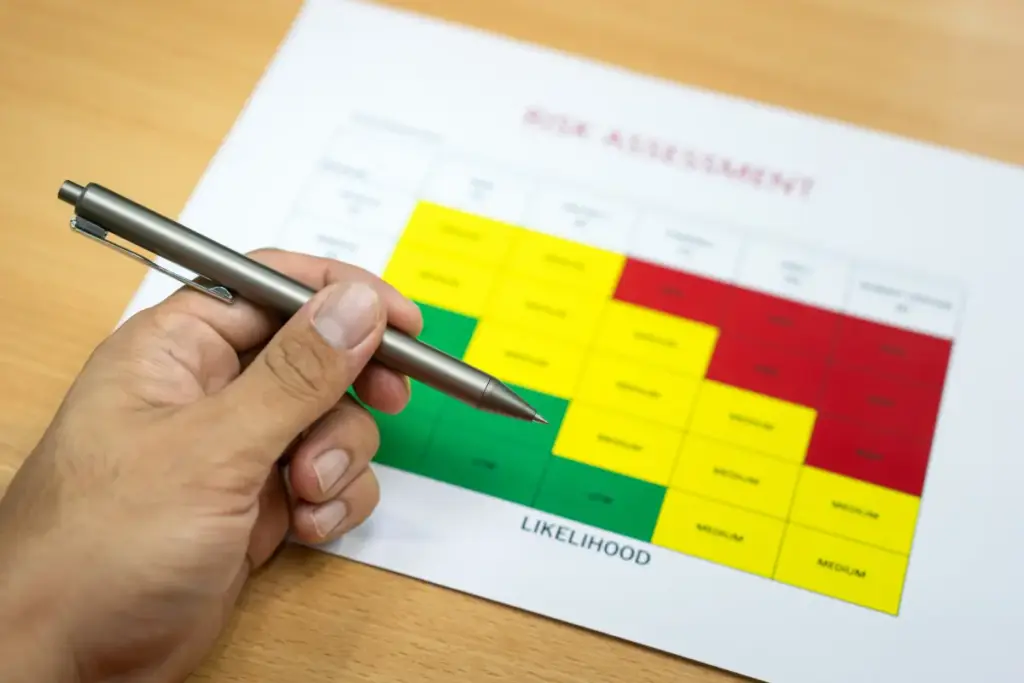
PAS 79:2020 introduces targeted revisions and clarified terminology to promote consistency and reduce ambiguity in fire risk assessment practice. It refines definitions such as likelihood, consequence, and risk level to align terminology with practical decision-making, enabling assessors to justify judgments without overreliance on rigid formulas. The update clarifies roles and responsibilities in descriptive terms, focusing on actions rather than titles, which supports flexible working arrangements and personal autonomy in approaching assessments.
Guidance tightens on recording outcomes: concise, evidence-based entries are encouraged, avoiding unnecessary prose while preserving traceability. New examples illustrate proportional approaches for different building types, helping practitioners select controls proportionate to actual risk.
Emphasis on plain language and consistent labels improves communication with dutyholders and occupants who value clear, actionable information. Overall, PAS 79:2020 aims to streamline assessment language, reduce interpretive drift, and empower practitioners to make clear, defensible decisions aligned with modern, freedom-minded working practices.
Who Must Follow PAS 79:2020 – And What “Competent Person” Really Means
A clear framework sets expectations for who should adopt PAS 79:2020 and what constitutes a “competent person” when carrying out fire risk assessments. The guidance applies primarily to dutyholders responsible for premises owners, employers, landlords, and those with control of buildings, who must ensure that fire safety arrangements meet legal duties. Adoption is voluntary but aligns practice with recognised good practice, reducing legal and operational risk.
“Competent person” is defined by capability, training and experience relevant to the building and fire hazards, not by a single qualification. Competence includes understanding of fire science, building layout, occupancy profiles and control measures, plus the ability to produce clear, proportionate records. Where dutyholders lack in-house competence, they are advised to engage competent external advisers. Responsibility for selecting, briefing, and overseeing such advisers remains with the dutyholder, preserving autonomy while ensuring accountability and the effective protection of people and property.
Step‑By‑Step PAS 79:2020 Fire Risk Assessment
Begin by systematically preparing the premises and gathering relevant information: identify building layout, occupancy types, existing fire safety measures, previous incident records, and any maintenance or alteration history that could affect risk. The assessor then surveys hazards (ignition sources, fuel load, and activity patterns), evaluates fire detection and suppression provisions, inspects means of escape, and checks compartmentation and signage.
Next, people at risk are identified, with attention to vulnerable groups and likely locations at different times. The assessor estimates likelihood and potential consequences, recording practical risk levels to prioritise actions. Reasoned recommendations follow: remove or reduce hazards, enhance detection and containment, improve escape routes, and train occupants. Decisions on tolerability and need for immediate measures are explicit and proportionate. Finally, review intervals are set and triggers for earlier reassessment noted, ensuring the assessment remains responsive to changes in use, structure, or occupancy without unduly constraining responsible discretion. read our blog post Fire Risk Assessment Checklist Easy Guide To know the details.
What Records and Reports PAS 79:2020 Requires
Clear documentation underpins PAS 79:2020’s approach to fire risk assessment, specifying the essential records and reports that must be produced to demonstrate that risks have been systematically identified, evaluated and managed. The standard requires a concise written record of significant findings, including identified fire hazards, people at risk, existing control measures and a clear statement of risk level where appropriate. A structured fire risk assessment report should document premises information, assessment methodology, inspection dates and assessor identity, enabling accountability and future review.
Action plans listing remedial measures, target dates and responsible persons must be recorded to track progress. Where premises host multiple fire safety zones or vulnerable occupants, supplementary diagrams and compartmentation details are advised. Records of testing, maintenance and any fire safety training delivered should be retained to prove ongoing competence and compliance. Finally, retained records must be accessible for review, revision, and presentation to enforcing authorities or stakeholders asserting confidence in safety decisions.
Turning Findings Into Proportionate Fire Controls and Priorities
With documented findings in hand, the assessor must convert identified hazards and recorded deficiencies into proportionate controls and priorities that align with the scale of risk. The assessor translates evidence into clear, achievable measures that respect occupier autonomy while ensuring safety. Controls are chosen for effectiveness, cost, and minimal intrusion, with priorities set by likelihood and consequence rather than blanket rules. Recommendations empower responsible persons to act decisively and proportionately.
- Targeted engineering or procedural changes where risk is highest, preserving normal use elsewhere.
- Short-term interim measures for immediate reduction, paired with planned longer-term works.
- Clear allocation of responsibilities and timescales so that actions remain voluntary yet accountable.
- Monitoring and review triggers tied to occupancy, change of use, or incident learning to maintain freedom of operation.
This approach aligns PAS 79:2020 principles: proportionate, evidence-led, and enabling rather than prescriptive, fostering practical risk reduction without unnecessary constraint.
Common PAS 79:2020 Pitfalls and Enforcement Risks
Identify common pitfalls and enforcement risks that undermine PAS 79:2020’s intent: inadequate evidence recording, vague recommendations, and failure to proportionately justify controls can leave responsible persons exposed to enforcement action. Inspectors often find assessments lacking clear documentation of decisions, insufficient linkage between risks and chosen measures, and missing timescales for remediation. Overly generic conclusions or boilerplate statements obscure accountability and invite challenge.
Failure to demonstrate competence, relevant site knowledge or stakeholder engagement weakens defensibility. Non-compliance with statutory duties such as neglected common areas, escape routes or maintenance regimes escalates risk of notices or prosecutions. Records that omit fire safety testing, training evidence or altered premises history hinder regulatory responses. Conversely, robust, proportionate reasoning and traceable evidence reduce enforcement exposure. The emphasis should remain on transparent justification, clarity of responsibility, and practicable actions that preserve freedom through accountable, risk-based decision making rather than box‑ticking or evasive reporting.
Prepare for an Audit or Third‑Party Review
Prepare essential documentation and processes to demonstrate compliance, competence, and traceability during an audit or third‑party review. The organisation should assemble clear evidence of risk assessments, decision rationales, and remedial actions, all indexed for fast retrieval. Records must show assessor qualifications, scope, methodologies aligned to PAS 79:2020, and version control to prove integrity. A concise evidence pack supports independent scrutiny while preserving operational autonomy and respectful engagement with reviewers. Practical preparedness reduces friction and protects organisational freedom to act on findings.
- Assessment reports with sign‑offs, dates, and assessor credentials
- Action plans, completion records, and risk reduction evidence
- Versioned templates, methodology notes, and calibration logs
- Access protocol, site‑visit records, and stakeholder communications
The checklist promotes transparent governance without constraining decision‑making, enabling organisations to demonstrate conformity efficiently while retaining the flexibility to implement improvements after review.
Frequently Asked Questions
How Does PAS 79:2020 Interact With British Standards for Fire Door Assessments?
PAS 79:2020 complements British Standards by guiding fire risk assessors in recording door inspections; it doesn’t replace BS 8214 or BS 476 requirements, allowing assessors the freedom to reference specific standards when documenting compliance and recommendations.
Can PAS 79:2020 Be Used for Non-Building Fire Risk Assessments (Events, Outdoor Sites)?
Yes. It can be adapted for events and outdoor sites, though its building-focused templates and terminology require pragmatic modification; professionals ought to retain core systematic risk principles while tailoring assessments to dynamic, temporary, and open-air scenarios.
What Insurance Implications Arise From Using PAS 79:2020-Compliant Assessments?
Insurers may view PAS 79:2020-compliant assessments favorably, potentially reducing premiums and dispute risk; however, coverage depends on policy terms, insurer acceptance and documented competence, so independent verification and clear records protect claim defensibility and freedom of choice.
Are Digital/Automated Tools Acceptable for PAS 79:2020 Record-Keeping?
Yes; the standard permits digital and automated tools for record-keeping provided they guarantee accuracy, integrity, accessibility, and auditability. The assessor remains responsible for content, secure storage, version control, and retrievability to support independent verification or legal scrutiny.
How Often Should PAS 79:2020 Assessments Be Reviewed After Significant Building Changes?
They should be reviewed promptly after any significant building change, usually immediately and followed by a documented reassessment within a short, practical timeframe (commonly within days to weeks), ensuring freedom to adapt mitigation proportionately to new risks.
Conclusion
PAS 79:2020 refines fire risk assessment practice by clarifying terminology, outlining skills for the competent person, and standardising records and reporting. Its structured, stepwise approach supports proportionate controls and prioritisation, reducing enforcement exposure when followed correctly. Organisations should adopt PAS 79:2020 templates, address common pitfalls, and maintain robust documentation to demonstrate compliance. Preparedness for audits and third‑party reviews hinges on consistent application, competent assessors, and timely implementation of identified remedial actions.