




Knowing what to check on fire extinguisher equipment is an important part of effective fire safety management. Fire extinguishers are often the first line of defence when a small fire occurs, but they can only provide protection if they are correctly selected, accessible, maintained and ready for use.
A fire extinguisher that is damaged, incorrectly positioned, discharged or poorly maintained may fail during an emergency. Regular checks help identify problems early and ensure that extinguishers remain suitable for the risks present within a building.
In the UK, fire extinguishers in commercial premises are managed under fire safety requirements including the Regulatory Reform (Fire Safety) Order 2005 and maintenance guidance provided by standards such as BS 5306-3 and BS 5306-8. These requirements emphasise the importance of selecting suitable extinguishers, maintaining them properly and ensuring they remain available for use.
Checking a fire extinguisher is not only about looking at the cylinder. A proper inspection considers its location, condition, identification markings, accessibility, operating components and maintenance history.
Key Takeaways
- Fire extinguishers should be checked regularly to ensure they remain safe, accessible and operational.
- Visual inspections should confirm there is no damage, discharge, obstruction or missing components.
- The extinguisher type must match the fire risks present in the building.
- Pressure indicators, seals, pins and labels should be checked during routine inspections.
- Professional servicing is required to ensure extinguishers remain compliant and effective.
- Any damaged or defective extinguisher should be removed from service and repaired or replaced.
Why Is Checking Fire Extinguishers Important?
Fire extinguishers can deteriorate over time due to environmental conditions, accidental damage, misuse or general wear. A fire extinguisher may appear suitable from the outside but still have internal problems that prevent correct operation.
Regular checks help confirm that extinguishers are:
- In the correct location
- Suitable for the identified fire risks
- Easy to access
- Clearly labelled
- Not damaged
- Ready for emergency use
For example, an extinguisher hidden behind storage items may technically be present but would not provide effective protection because occupants may not be able to reach it quickly during a fire.
Routine inspections also help businesses demonstrate that fire safety arrangements are actively managed rather than relying on equipment that has not been reviewed for years.
What Should You Check on a Fire Extinguisher?
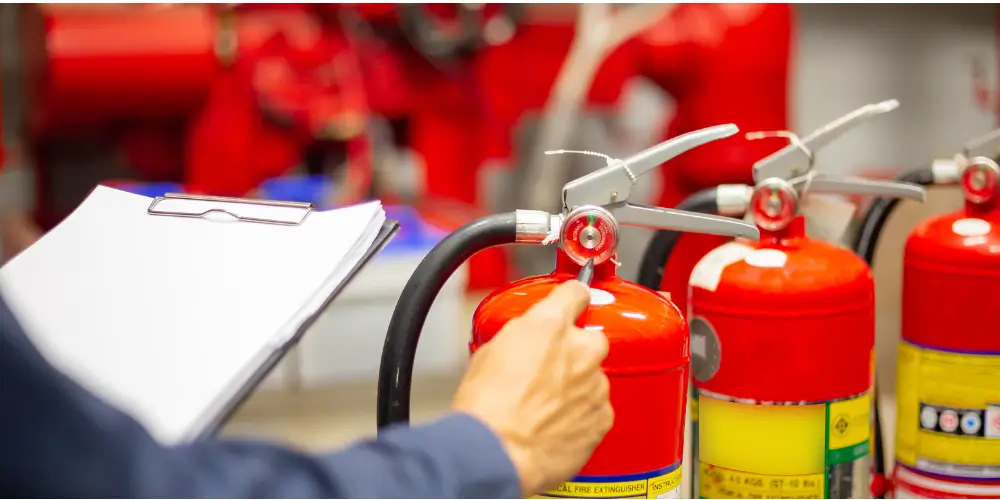
A fire extinguisher inspection should begin with a general visual assessment. The purpose is to identify obvious problems that could affect performance during an emergency.
The first check should confirm that the extinguisher is present in its designated location. It should be mounted correctly or positioned on a suitable stand where required. The access area around the extinguisher should remain clear, allowing anyone to quickly locate and remove it without obstruction.
The extinguisher should also be checked for visible signs of damage, including dents, corrosion, cracks or leakage. Physical damage can affect the integrity of the cylinder and may prevent safe operation.
Check the Fire Extinguisher Type and Suitability
One of the most important checks is confirming that the extinguisher type is suitable for the hazards within the building.
Different extinguishers are designed for different fire classes.
For example:
- Water extinguishers are mainly used for Class A fires involving materials such as wood, paper and textiles.
- Foam extinguishers can be suitable for certain Class A and Class B fires.
- Dry powder extinguishers may be used for several fire types depending on their rating.
- Carbon dioxide extinguishers are commonly used for electrical equipment fires.
- Wet chemical extinguishers are designed for cooking oil and fat fires.
Installing the wrong extinguisher can create additional danger. For example, using water on burning cooking oil or live electrical equipment can make the situation worse.
The extinguisher label and fire rating should always be checked to confirm suitability.
Check the Fire Extinguisher Location and Accessibility
The position of a fire extinguisher is just as important as the extinguisher itself.
During an inspection, check that:
- The extinguisher is easy to see
- It has not been moved from its designated position
- Access is not blocked
- Signs or identification markings are visible
- It is available near areas of relevant fire risk
Fire extinguishers should generally be located where people can quickly access them, such as near exits, escape routes or areas where specific hazards exist.
An extinguisher that is difficult to find wastes valuable time during a fire emergency.
Check the Fire Extinguisher Condition
The physical condition of the extinguisher should be examined carefully.
Look for signs such as:
- Corrosion on the cylinder
- Damage to handles or valves
- Cracked hoses
- Damaged discharge nozzles
- Missing components
- Leakage
- Evidence of tampering
Corrosion is particularly important because it can weaken the extinguisher body and affect safe operation.
Extinguishers installed in harsh environments, such as outdoor areas, workshops or damp locations, may require more frequent checks because they are more exposed to damage.
Check the Pressure Indicator
Some fire extinguishers have pressure gauges that show whether the extinguisher is within the correct operating range.
Where a pressure gauge is fitted, the indicator should be checked to confirm it is within the acceptable zone.
A low or abnormal pressure reading may indicate:
- Loss of extinguishing agent
- Leakage
- Damage
- Need for servicing
Carbon dioxide extinguishers normally do not use pressure gauges in the same way as many other extinguisher types, so their condition is checked through other inspection methods.
Check the Safety Pin and Tamper Seal
The safety pin prevents accidental discharge and should remain correctly fitted.
During inspection, confirm that:
- The safety pin is present
- The pin is not damaged
- The tamper seal is intact
A missing pin or broken seal may indicate that the extinguisher has been operated or interfered with.
If an extinguisher has been discharged, even partially, it should not be relied upon and must be serviced or replaced.
Check the Hose, Nozzle and Discharge Components
The hose and discharge components must be inspected to ensure they are in good condition.
Check for:
- Cracks
- Blockages
- Damage
- Loose connections
- Missing parts
A blocked nozzle or damaged hose can prevent the extinguishing agent from being directed correctly onto the fire.
Carbon dioxide extinguishers should also be checked for the condition of the discharge horn because damage can affect safe operation.
Check the Fire Extinguisher Labels and Instructions
Every extinguisher should have clear operating instructions.
The label should be:
- Visible
- Legible
- Correctly attached
- Suitable for the extinguisher type
The instructions help users understand how to operate the extinguisher during an emergency.
The extinguisher should also display information about its fire rating and suitable applications.
Check the Service Label and Maintenance Records
A fire extinguisher should have a service label showing relevant maintenance information.
This may include:
- Date of last service
- Engineer details
- Service information
- Next recommended inspection date
Maintenance records should be retained as evidence that fire safety equipment is being properly managed.
Professional servicing is separate from routine visual checks and must be carried out by a competent person.
How Often Should Fire Extinguishers Be Checked?
Fire extinguishers should be visually checked regularly to ensure they remain suitable and available.
The frequency of checks depends on the premises, risk level and environmental conditions.
In commercial buildings, routine checks are often carried out as part of regular fire safety inspections, while a competent person should complete formal servicing in accordance with relevant standards.
Higher risk environments may require more frequent monitoring.
Examples include:
- Kitchens
- Workshops
- Industrial premises
- Storage areas
- Buildings with high public occupancy
What Happens During a Professional Fire Extinguisher Service?
A professional extinguisher service involves a more detailed examination than a visual check.
The engineer may inspect:
- Cylinder condition
- Operating mechanisms
- Extinguishing agent condition
- Components
- Labels
- Discharge equipment
- Service history
The extinguisher may require additional maintenance depending on its type, age and manufacturer requirements.
Servicing ensures that extinguishers remain safe and effective throughout their working life.
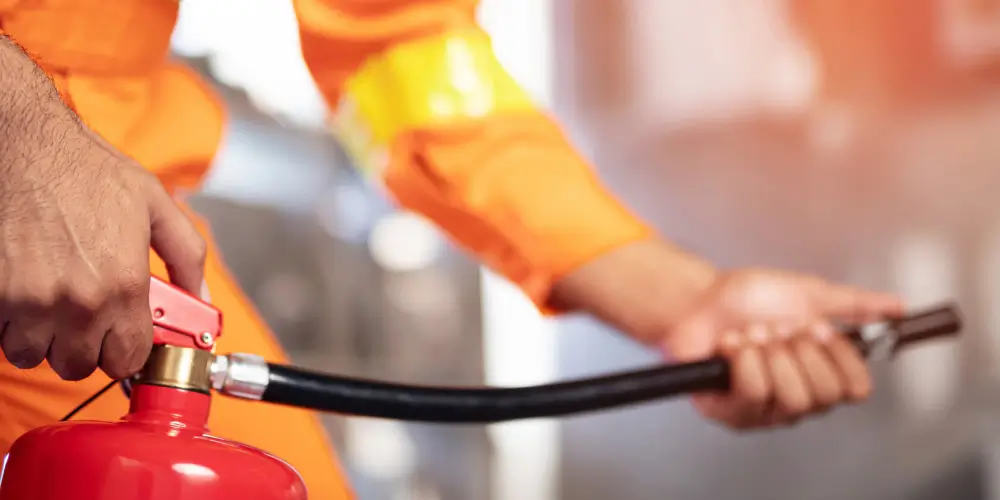
Common Fire Extinguisher Problems Found During Checks
Common issues identified during inspections include:
- Extinguishers blocked by furniture or equipment
- Incorrect extinguisher types installed
- Missing safety pins
- Damaged hoses
- Low pressure readings
- Corrosion
- Expired service dates
- Poor signage
- Unrecorded maintenance
These problems can reduce the effectiveness of fire protection arrangements and should be corrected promptly.
Frequently Asked Questions
What should be checked on a fire extinguisher?
A fire extinguisher should be checked for its location, accessibility, condition, pressure, safety pin, tamper seal, labels and maintenance status.
How often should fire extinguishers be checked?
Fire extinguishers should be checked regularly through visual inspections, with professional servicing completed according to relevant standards and manufacturer guidance.
Can anyone check a fire extinguisher?
Basic visual checks can be carried out by responsible persons, but servicing and repairs should be completed by a competent fire extinguisher technician.
What are signs that a fire extinguisher needs replacing?
Signs include corrosion, physical damage, leakage, missing components, discharge or failure to meet servicing requirements.
Should fire extinguishers have expiry dates?
Fire extinguishers do not always have a simple expiry date, but they require periodic inspection, maintenance and replacement according to condition and manufacturer guidance.
Conclusion
Understanding what to check on fire extinguisher equipment helps ensure that firefighting equipment remains ready when it is needed most.
Regular checks should include confirming the correct extinguisher type, accessibility, physical condition, pressure, safety seals, labels and maintenance records. While routine visual inspections help identify obvious issues, professional servicing is essential to confirm continued compliance and reliability.
Fire extinguishers are an important part of a building’s fire safety strategy, but they only provide effective protection when they are properly selected, maintained and available for immediate use.