


The cost of installing a consumer unit in 2026 typically ranges from £450 to £1,200, depending on the unit type, the number of circuits, and the ease of access to the board. Quotes usually include safe removal of the old unit, fitting the new board, circuit identification and labelling, full inspection/testing, and an Electrical Installation Certificate with Building Regulations notification. Extra costs often arise from earthing/bonding upgrades, repairs to faulty wiring, or added surge protection, with labour commonly costing £250 to £600. Further details clarify what drives each price point.
Key Takeaways
- Consumer unit replacement typically costs £450–£1,200 in 2026, depending on board type, size, and wiring complexity.
Labour usually runs £250–£600, varying by region (higher in London/South East) and access difficulty.
- Quotes commonly include safe removal, installation, circuit identification/labelling, full testing, and an Electrical Installation Certificate.
- Extra costs often arise for earthing/bonding upgrades, remedial circuit faults, new tails/labels, surge protection, or asbestos/awkward locations.
- Proper certification and Building Regulations notification are essential; missing documents can delay property sales and cause insurance or compliance issues.
How Much Does Consumer Unit Replacement Cost in 2026?
In 2026, the cost of replacing a cost of installing a consumer unit typically ranges from about £450 to £1,200, with the final price shaped by factors such as the type and size of the unit (for example, RCD- or RCBO-based boards), the complexity of the existing wiring, the condition of the meter tails and earthing, and whether remedial work is required to bring the installation up to current standards.
Prices sit toward the lower end when the board is accessible, circuits are clearly labelled, and no faults appear during testing. Costs rise with cramped locations, additional circuits, older properties, mixed cable types, or signs of overheating, which can trigger further corrective work.
Regional labour rates and parking or travel constraints also shift totals. For homeowners seeking autonomy, the key is budgeting for a compliant upgrade that reduces nuisance tripping and improves fault protection without locking them into unnecessary add-ons.
Transparent, itemised pricing keeps control with the customer.

What Does a Consumer Unit Installation Quote Include?
The cost of installing a consumer unit quotes itemise more than the new board itself, covering labour, isolation and safe removal of the existing unit, supply and fitting of the replacement (including main switch and RCD/RCBO devices), circuit identification and labelling, full inspection and testing, and the issue of an Electrical Installation Certificate with Building Regulations notification where required.
A clear quote will also state the installer’s approach to keeping circuits live only when safe, the expected duration on site, and whether power will be off for defined periods. It should confirm compliance with BS 7671, describe the make and model of the consumer unit, and specify the number and type of protective devices to be fitted.
Many quotes include minor sundries, tidy-up, and a functional demonstration so occupants know how to reset devices and safely isolate circuits. Transparent terms protect choice: the customer can compare like-for-like and keep control of standards and timing. Visit Landlord Safety Certificate to get quote for installing or upgrading consumer unit.
What Extra Costs Commonly Get Added On?
Even with a well-itemised quote, consumer unit replacements often attract additional charges once the existing installation is opened up and compliance checks begin. Common add-ons relate to making the wider system safe, legal, and future-proof, rather than the board itself. If bonding is missing or undersized, upgrades may be required before certification can be issued. Aged meter tails, damaged consumer-unit cabling, or a non-compliant main switch arrangement can also force replacement parts.
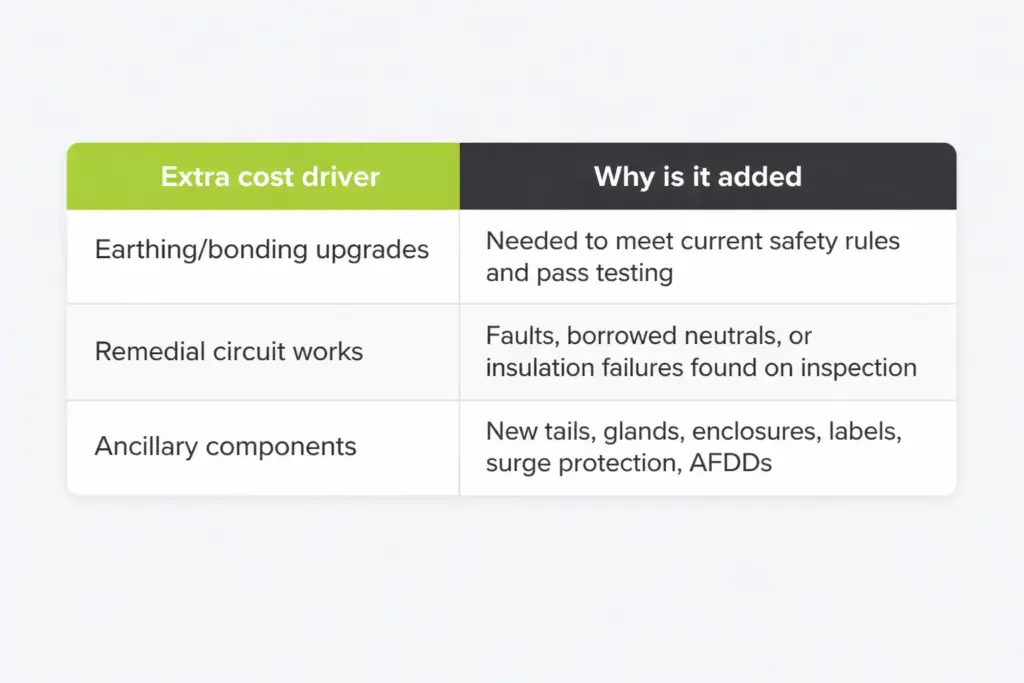
Access constraints can also push costs up: asbestos-backed boards, restricted cupboard space, or awkward service heads. Clear paperwork options, such as Building Control notification or landlord certificates, may appear as separate line items, preserving choice and control.
How Much Is Labour to Replace a Consumer Unit?
Labour usually accounts for a significant share of the overall cost to replace a consumer unit, reflecting the time required for safe isolation, careful removal and fitting, and the full schedule of inspection, testing, and certification. In 2026, typical labour charges in the UK often fall between £250 and £600, with higher figures in London and the South East or where access is awkward.
Pricing is shaped by whether it is a straightforward like-for-like swap, the condition of the existing wiring, the number of circuits to label and reconnect, and the number of remedial faults found during testing. A clean job may take half a day; complex boards or poor documentation can push it to a full day or more.
Labour should include Electrical Installation Certificate or Minor Works paperwork, test results, and notification where required. Clear, itemised quotes protect choice and prevent lock-in, letting households compare without sacrificing compliance.
Which Consumer Unit Type Is Right for Your Home?
Which consumer unit type best fits a property depends on the number and layout of circuits, the need for surge protection, and whether the installation must comply with current requirements for RCD and AFCI/AFDD protection. For simple flats with few circuits, a compact dual‑RCD board can be cost‑effective, though a single RCD trip can interrupt multiple circuits at once.
For most modern homes, an all‑RCBO consumer unit gives each circuit its own protection, reducing nuisance outages and preserving independence when a fault occurs. When AFDDs are expected or specified for higher-fire-risk circuits, choosing a board with sufficient inputs and compatible devices avoids future constraints.
Homes with outbuildings, EV charging, heat pumps, or workshops typically benefit from larger, expandable metal enclosures and spare capacity. Ultimately, the “right” unit is the one that meets regulations, supports lifestyle upgrades, and keeps occupants in control of their power.
Do You Need Surge Protection (SPD) in 2026?
The cost of installing a consumer unit selection is not only about the number of ways and whether protection is split by RCDs or RCBOs; it also affects how easily surge protection can be added or integrated. In 2026, SPDs matter because modern homes rely on electronics that are sensitive to voltage spikes caused by nearby lightning, grid switching, or EV charging. Many UK installations now treat SPD fitting as the default unless a documented risk assessment justifies omission. Choosing a board with space and compatible busbar layouts can keep the decision in the homeowner’s hands, rather than forcing compromises later.
| Situation | SPD relevance |
| Home office, studio, gaming | Protects sensitive kit, reduces downtime |
| Solar PV, battery, EV charger | Helps guard costly power electronics |
| Rural/overhead supply exposure | Higher surge likelihood; SPD recommended |
| Minimal electronics, low risk | Possible omission with formal assessment |
Cost is usually modest versus replacing routers, TVs, or control boards, and it supports the freedom to upgrade technology without fear.
Will You Need Earthing, Bonding, or Wiring Upgrades?
Before a new consumer unit can be fitted, does the existing installation have earthing and bonding that meet current standards, and is the wiring sound enough to support modern protective devices?
If not, upgrades may be required before any board change can be safely priced or completed. Earthing may need a new main earth conductor, improved connection to the supply earth, or an earth rod where appropriate.
Main bonding to gas and water services is often undersized, missing, or poorly terminated; correcting it reduces shock risk and nuisance tripping. Older wiring can also limit choice: brittle insulation, mixed cable types, borrowed neutrals, shared circuits, or no CPC (earth) in lighting may prevent straightforward RCD/RCBO protection.
An electrician will usually test loop impedance, insulation resistance, and continuity to confirm suitability. Where defects appear, targeted rewiring, extra circuits, or junction box remediation adds time, disruption, and cost.

What Certificates and Building Regs Sign-Off Should You Get?
Although fitting a new consumer unit can look like a simple swap, the paperwork that follows is what proves the work was designed, installed, and tested to the required standard and properly notified under Building Regulations.
In England and Wales, consumer unit replacement is usually Part P notifiable, so the installer should provide an Electrical Installation Certificate (EIC) plus a Building Regulations Compliance Certificate (BRCC) issued via their competent person scheme, or a council Building Control completion certificate if notified directly.
Without this, a homeowner’s future sale can be delayed or forced into indemnity workarounds. The EIC should include inspection schedules and test results confirming RCD/RCBO operation, polarity, earth fault loop impedance, and bonding checks.
Certificates should show the electrician’s name, registration number, and date, and be backed by a clear invoice. Keeping copies protects choice, insurance claims, and the right to switch suppliers or modify circuits later.
Frequently Asked Questions
How Long Will My Power Be off During the Consumer Unit Swap?
Power is typically off for 2–6 hours during a consumer unit swap, sometimes longer if faults appear. A competent electrician should minimise downtime, isolate only what’s necessary, and restore power promptly once testing confirms safe operation.
Can I Keep My Existing Fuse Box Location or Should It Be Moved?
Keeping the existing fuse box location is usually acceptable if access, ventilation, and safety clearances meet current regulations; otherwise, relocation is advised. They should choose the least restrictive compliant spot, avoiding damp areas and obstructions.
Will a New Consumer Unit Reduce Nuisance Tripping of My Circuits?
A new consumer unit can reduce nuisance tripping, especially with modern RCBOs and correctly rated RCDs. However, persistent trips often signal wiring faults or appliance leaks, so testing and circuit separation are most important.
What Preparation Should I Do Before the Electrician Arrives?
Before the electrician arrives, they should clear access to the consumer unit, label circuits, list recurring faults, and secure pets. They should back up sensitive electronics, plan a power-off window, and decide desired protections beforehand.
Does Replacing the Consumer Unit Affect My Home Insurance or Mortgage?
Consumer unit replacement can affect home insurance or a mortgage if it’s undocumented or non‑compliant. They should keep electrical certificates, notify Building Control where required, and inform insurers/lenders if asked, protecting cover and lending terms.
Conclusion
The cost of installing a consumer unit. Replacing a consumer unit in 2026 typically involves more than swapping the box, with quotes covering parts, labour, testing, and certification. Final costs can rise if faults are found, circuits need upgrading, or earthing and bonding require improvement. Choosing the right unit depends on property size, existing wiring, and safety requirements, with surge protection increasingly expected. A reputable electrician should provide clear pricing, full electrical tests, and the correct Building Regulations sign-off.