

Replacing a Fuse in the Breaker Box: Start by confirming the panel type: fuse boxes use screw‑in or cartridge fuses, while breaker panels use toggle switches. Fuses usually blow from overloaded circuits, shorts, ground faults, or ageing wiring. Replace only with the same fuse type and amp rating; never upsize. Shut off the main disconnect, verify power is off, then remove the blown fuse and install the new one carefully. If it blows again or there’s heat, smell, or buzzing, an electrician is needed, with more guidance ahead.
Key Takeaways
- Confirm whether you have a fuse box or breaker panel: fuses screw in or pull out; breakers are toggle switches.
- Blown fuses usually mean overloads, short circuits, ground faults, or ageing wiring; repeated blowing signals a persistent problem.
- Replace fuses with the exact same type and amp rating; never upsize amperage to “stop” blowing.
- Shut off the main disconnect, verify power is off, and work with dry hands and good lighting before touching fuses.
- Call an electrician for burning smells, heat, buzzing, scorched parts, shocks, or fuses that blow immediately after replacement.
Fuse Box or Breaker Panel? How to Tell
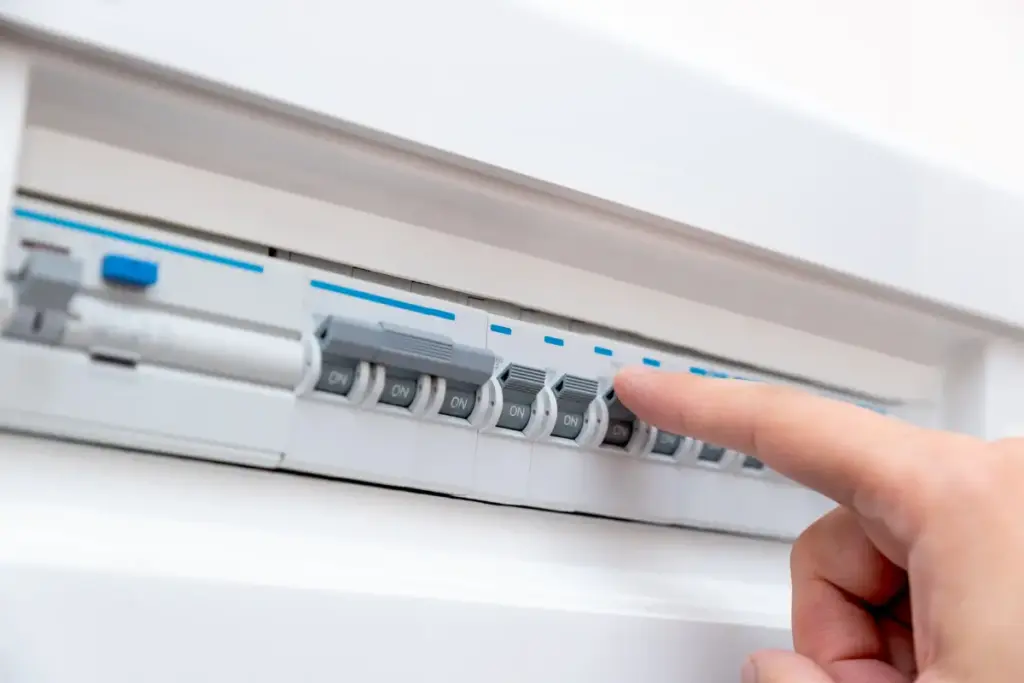
Replacing a Fuse in the Breaker Box: How can a homeowner tell whether the service panel is a fuse box or a breaker panel? The quickest clue is the hardware inside the door. A fuse box uses round, screw-in fuses or pull-out cartridge fuses; a breaker panel uses rows of toggle switches that click between ON and OFF. Labels may mention “fuse,” “Type S,” “Edison base,” or specific amp ratings on individual caps rather than on switch handles.
A fuse box often has fewer circuits and a simpler layout, sometimes with a main pull-out disconnect. Breaker panels typically have a single main breaker and many branch breakers aligned in two columns.
Visual inspection should be done with dry hands, good light, and no metal tools. If identification is uncertain, the most self-reliant choice is to pause and have a licensed electrician confirm before any work begins.
Why Do Fuses Blow? Common Causes
Once a homeowner has confirmed that the panel uses fuses rather than breakers, the next step is to understand what causes a fuse to open. A fuse “blows” when too much current flows and its internal link melts, cutting power to protect wiring from overheating and fire. The most common cause is an overloaded circuit: too many high-draw devices running at once, especially heaters, microwaves, or hair dryers.
Replacing a Fuse in the Breaker Box: Short circuits also trigger rapid failure when a hot conductor contacts neutral or ground, often due to damaged cords, loose connections, or worn insulation. Ground faults, current leaking to grounded metal, can appear with damp outlets, faulty appliances, or nicked wiring. Ageing components matter too; brittle insulation, corroded terminals, and vibrations can create resistance and heat that push a circuit past safe limits.
Repeated blowing signals a real problem, not bad luck, and it limits a household’s freedom until corrected.
Pick the Right Replacement Fuse: Type and Amps
Before a fuse is swapped, the correct replacement must match both the fuse type and its amp rating to keep the circuit protected. A homeowner should read the markings on the blown fuse and the panel label, then buy the same style: plug fuses (Edison-base or Type S), cartridge fuses, or time-delay vs fast-acting versions.
Type S adapters prevent oversized fuses and are worth using because they lock the circuit into its safe limit.
Amperage matters more than convenience. A higher-amp fuse may stop nuisance tripping, but it also removes the circuit’s guardrail and can allow wiring to overheat. A lower-amp fuse can trip frequently and interrupt work, yet it stays safer than upsizing.
The replacement should match the circuit’s rated amps and the conductor size serving it. When in doubt, verifying wire gauge and panel specifications preserves choice without gambling with hidden heat.
Replace a Fuse: Shut Off Power Safely First
In most fuse panels, power should be shut off at the main disconnect before any fuse is handled. This keeps the work under the homeowner’s control rather than the panel’s. If the disconnect is unlabeled, the correct handle should be confirmed by observing which circuits lose power, then leaving it OFF.
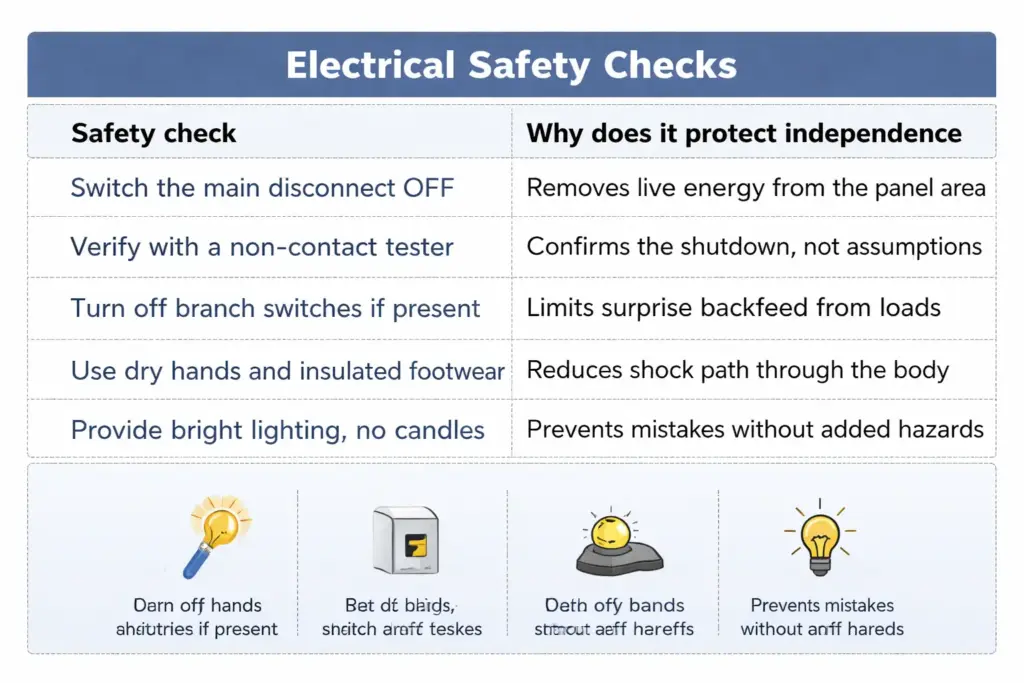
The panel cover should remain secure; only the access needed for the fuse area is opened. Nearby water, metal ladders, and clutter are cleared so movement stays deliberate. If any buzzing, heat, or scorch marks are noticed, the safest choice is to stop and call a licensed electrician.
Remove the Blown Fuse Safely (No Socket Damage)
Power verified off and the area kept clear, attention can shift to removing the blown fuse without stressing the socket.
With dry hands and steady footing, the person should face the panel squarely, avoiding any reach across exposed metal. For screw-in fuses, a firm, straight grip is key; twisting should be slow and controlled, never jerky, so the threads do not bind or strip.
If resistance is felt, backing the fuse slightly in the tightening direction can free stuck threads, then loosening can resume. A fuse puller may be used for cartridge types; it should clamp the fuse body, not the terminals, to prevent cracking or bending clips.
The fuse should be lifted straight out, aligned with the holder. Any scorching, melted plastic, or loose contacts should be noted and left untouched for qualified service. Set the blown fuse aside for inspection later.
Install the New Fuse and Restore Power
Seat the replacement fuse with a deliberate, straight motion, confirming the correct amperage and type match the panel labelling. It should thread smoothly; resistance suggests cross-threading, so back off and realign to protect the socket. Once snug, avoid over-tightening; the goal is solid contact, not force.
| Step | What to do | Why it matters |
| Align | Centre and start by hand | Prevents socket damage |
| Tighten | Turn until firmly seated | Guarantees reliable contact |
| Restore | Close the panel, then switch the main on | Returns controlled power |
Replacing a Fuse in the Breaker Box: After the panel cover is secure, restore power in an orderly way: main disconnect first, then individual branch switches one at a time. This staged approach keeps the homeowner in command, limits surprise loads, and helps confirm normal operation without guesswork. Finally, verify the affected circuit is live with the intended device or a tester, then label the panel if needed for future self-reliance.
If the New Fuse Blows: Common Causes to Check
Treat a freshly blown fuse as a clear symptom, not bad luck. A replacement that fails immediately usually means the circuit is drawing more than it’s allowed to, or the fuse type is mismatched.
Before restoring power again, confirm the fuse matches the panel’s specified amperage and style; “upsizing” to keep things running only trades inconvenience for risk.
Common culprits to check include overloads and short paths created by worn cords, pinched insulation, or moisture. Reduce the load by unplugging devices on that circuit, then try again to isolate what tips it over.
Also, inspect lamps and appliances that were on when it blew; failing motors and heating elements can pull a sudden surge.
- A power strip packed like an overstuffed suitcase
- A cord was crushed under a rocking chair leg
- A damp garage outlet after a windy rain
When to Call an Electrician (Danger Signs)
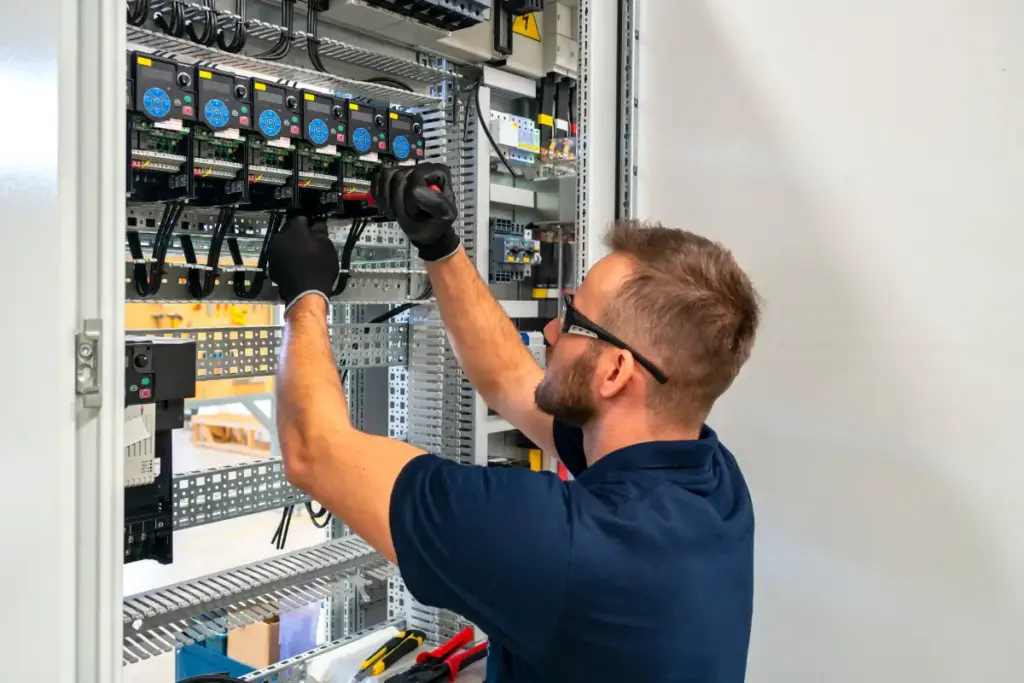
Although a blown fuse can be a simple overload, certain warning signs call for stopping immediately and bringing in a licensed electrician, especially repeated failures after load reduction, any burning smell or heat at the panel, visible scorching or melted fuse parts, buzzing or crackling sounds, or shocks/tingling from outlets or appliances on the circuit. In these cases, forcing a “DIY fix” can trade independence for injury, fire, or a ruined panel.
| Danger sign | Why it matters |
| Fuse blows again fast | A hidden short or failed device |
| Hot panel or odour | Overheating, arcing risk |
| Scorching/melted parts | Damage beyond a simple fuse |
| Buzzing/crackling | Loose connection or arcing |
| Shocks/tingling | Grounding fault, lethal hazard |
A licensed electrician can isolate the fault, verify the correct fuse sizing, inspect the integrity of the neutral and ground, and repair damaged sockets or wiring. Calling early protects property, preserves the right to use power safely, and prevents a small fault from becoming a costly shutdown.
Frequently Asked Questions
Can I Replace a Fuse With a Circuit Breaker Without Rewiring?
Usually not; converting a fuse to a circuit breaker often requires a compatible panel and changes to the wiring. A person seeking a choice should hire a licensed electrician to confirm safety, code compliance, and equipment compatibility.
Are Modern Fuses Safer Than Older Screw-In Fuse Types?
Yes, modern fuses are generally safer than older screw-in types. They resist tampering, reduce overfusing, and offer more consistent protection. Still, safety depends on correct sizing, sound wiring, and respecting personal choice to hire professionals.
What Tools Do I Need to Replace a Fuse Correctly?
To replace a fuse correctly, one needs a flashlight, insulated gloves, safety glasses, a voltage tester, and the properly rated replacement fuse; a fuse puller helps. These tools support safe, self-directed work and verification of power.
Can I Replace a Fuse at Night Safely Using a Flashlight?
Yes, it can be done safely at night if power is shut off, the area is dry, and a hands-free flashlight is used. If unsure, he should wait for daylight or hire help.
How Do I Dispose of Blown Fuses and Old Fuse Holders?
Dispose of blown fuses and old holders by treating them as e-waste or metal scrap: bag shattered glass/ceramic, tape sharp edges, and drop at recycling or hazardous collection sites; avoid trashing, preserving safety and choice.
Conclusion
Replacing a Fuse in the Breaker Box: Replacing a blown fuse can quickly restore power, but it must be done with care. The correct fuse type and amperage are essential to prevent overheating, equipment damage, or fire risk. Power should be shut off before removing the failed fuse, and the socket should be inspected for heat damage or corrosion. If a new fuse blows again, an overloaded circuit or wiring fault is likely. Persistent trips, burning smells, or warm panels warrant a call to a licensed electrician.