


Who Does the Control of Asbestos Regulations Apply To applies to employers, building owners, landlords, facilities managers, managing agents, maintenance firms, and contractors or tradespeople whose work could disturb asbestos-containing materials. They also cover self-employed workers if their activities could expose them or others. “Control” means having the authority, legally or in practice, to direct maintenance and work methods, including stopping unsafe work and requiring surveys. Regulation 4 places a duty to manage asbestos on whoever controls non-domestic premises. Further details clarify shared control, surveys, registers, and plans.
Key Takeaways
- The Control of Asbestos Regulations apply to employers who must prevent or minimise asbestos exposure for employees and others.
- They apply to anyone controlling non-domestic premises, including owners, landlords, managing agents, and facilities managers (Regulation 4 dutyholders).
- They apply to contractors and tradespeople likely to disturb asbestos-containing materials during maintenance, repair, refurbishment, or demolition.
- They apply to organisations arranging asbestos surveys, risk assessments, registers, and management plans to keep asbestos information accurate and accessible.
- They apply to self-employed workers when their work could expose them or others to asbestos risks.
Who Does the Asbestos Regulations Apply To
In practice, to whom do asbestos regulations apply? They apply to those with legal duties to prevent exposure to asbestos fibres in workplaces and relevant premises.
Typically, this includes employers, building owners, landlords, facilities managers, and organisations responsible for maintenance and refurbishment decisions. It also covers contractors and tradespeople whose work could disturb asbestos-containing materials, along with those who commission, plan, or manage such work. Duties can extend to anyone involved in surveys, risk assessments, and the management of asbestos information, including duty holders who must keep records and communicate findings to workers.
Public bodies, schools, and healthcare organisations may be included where they occupy or manage older buildings. The regulations also affect self-employed workers when their activities create a risk to themselves or others. Application depends on the type of premises, the work undertaken, and the presence of asbestos-containing materials.

What Counts as “Control” Under Asbestos Regulations
Is It a Legal Requirement to Have an Asbestos Report? Yes, Asbestos regulations exist and apply duties to specific people and organisations, but those duties only bite where there is “control” over the premises or work that could disturb asbestos.
“Control” generally means having the authority or practical ability to make decisions about maintenance, refurbishment, access, and work methods, or to direct others carrying out the work.
Control can be legal (set by a contract, lease, or written agreement) or practical (arising from day-to-day management).
It may sit with whoever approves work, instructs contractors, sets site rules, or holds keys and permits access. It also includes the ability to stop unsafe work, require surveys, or specify how tasks are carried out.
More than one party can exercise control at the same time, and it may shift as projects move from occupation to refurbishment. In practice, the question is not job title but influence: who can identify asbestos risks, communicate them, and guarantee work is planned to avoid disturbance.
At Landlord Safety Certificate, we have the legal authority under UK law to conduct asbestos survey and manage any related risks. Our experienced team ensures that all work is carried out safely and in full compliance with asbestos regulations, providing peace of mind to property owners and managers.
Regulation 4 Dutyholder: Who’s Responsible and When
Regulation 4 places the “duty to manage” on the dutyholder, typically the person or organisation with control of non-domestic premises or shared parts of domestic buildings, and it applies whenever asbestos-containing materials could be present and liable to be disturbed during normal occupation, maintenance, or planned works.
Responsibility usually rests with the party with repair obligations or day-to-day control: for example, an owner-occupier business, a landlord, a managing agent acting under contract, or a facilities manager with delegated authority.
In multi-occupancy sites, more than one dutyholder may exist, so responsibilities should be clearly allocated in leases and service agreements, particularly for common areas and plant rooms. The duty begins as soon as control exists, even before any work is planned, because management depends on knowing what is present. Where control is shared, coordination is required so information about asbestos is consistent and accessible to those who may disturb it.
Employers’ Duties Under Asbestos Regulations
Where work could disturb asbestos-containing materials, employers must guarantee exposure is prevented or, where that is not reasonably practicable, reduced to the lowest level reasonably practicable through risk assessment, appropriate controls, and competent supervision.
This includes identifying signs that your property may contain asbestos material, using available surveys and records, and guaranteeing suitable assessments are completed before tasks begin. Employers must provide adequate information, instruction, and training so staff understand risks, safe systems of work, and emergency procedures.
They must implement control measures, such as suitable methods, enclosure or extraction where needed, and ensure the correct selection, use, maintenance, and storage of respiratory protective equipment and other PPE. Arrangements must be in place for air monitoring when required, health surveillance for applicable work, and safe handling, containment, and disposal of asbestos waste. Clear plans, signage, and record-keeping support ongoing compliance and effective incident response.
Contractors and Trades: When CAR Applies on Site
Contractors and individual trades often encounter asbestos-containing materials during refurbishment, maintenance, and demolition, and the Control of Asbestos Regulations (CAR) apply whenever their work could disturb such materials, or they are liable to be exposed. This captures builders, electricians, plumbers, joiners, roofers, and removers working on premises where asbestos may be present.
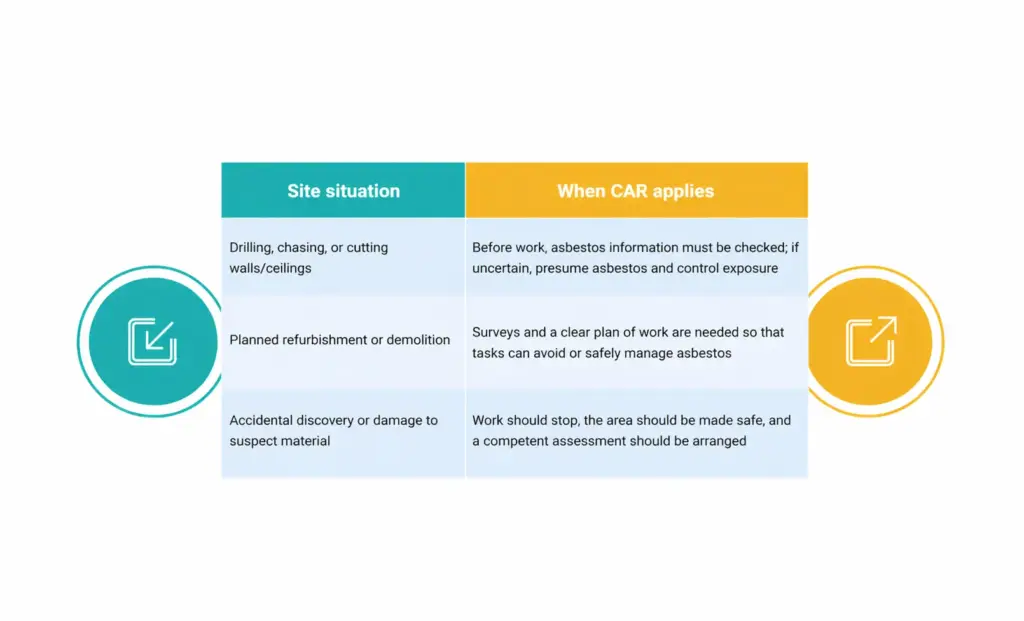
CAR expectations commonly include task-specific risk assessment, suitable controls (e.g., wet methods, enclosure where needed), correct PPE/RPE, training, and waste handling. Responsibilities follow those who direct work and those who carry it out on-site.
Landlords vs Tenants: Who Controls Asbestos Risk?
Who controls asbestos risk when a building is occupied by a tenant but owned by a landlord? Under the Control of Asbestos Regulations, the “dutyholder” is the person or organisation with responsibility for maintenance and repair of non-domestic premises, or the parts they control.
In many leases, the landlord is responsible for the structure and common areas, while tenants may control their demised space and day-to-day fit-out decisions. Control, not ownership, is the deciding factor.
Key points that determine who must manage asbestos include:
- Lease terms and repairing obligations who arrange and pay for maintenance.
- Areas under control include common parts, plant rooms, risers, and tenant areas.
- Ability to act who can commission surveys, keep an asbestos register, and brief anyone doing work.
Where duties are shared, both parties should coordinate, exchange asbestos information, and guarantee arrangements that prevent disturbance of asbestos-containing materials.
Domestic Jobs: When Asbestos Regulations Still Apply
Although the duty to manage asbestos focuses on non-domestic premises, domestic work can still fall under the Control of Asbestos Regulations when a trade carries out maintenance, repair, refurbishment, or installation activities that may disturb asbestos-containing materials in a home. In these situations, the relevant employer must prevent exposure so far as reasonably practicable, use competent workers, and apply suitable controls and training. The homeowner is not usually the dutyholder, but contractors must treat the property as a work site with regulated hazards.
| Domestic task | Why regulations may apply |
| Drilling walls/ceilings | May disturb asbestos insulation board or textured coatings |
| Removing old floor tiles | Can release fibres from asbestos-backed vinyl or adhesive |
| Replacing a boiler | Can disturb asbestos lagging, gaskets, or cement flues |
| Loft work and cabling | May disturb asbestos insulation or debris |
Where asbestos is likely to be present, work should be planned to minimise disturbance and ensure safe waste handling.
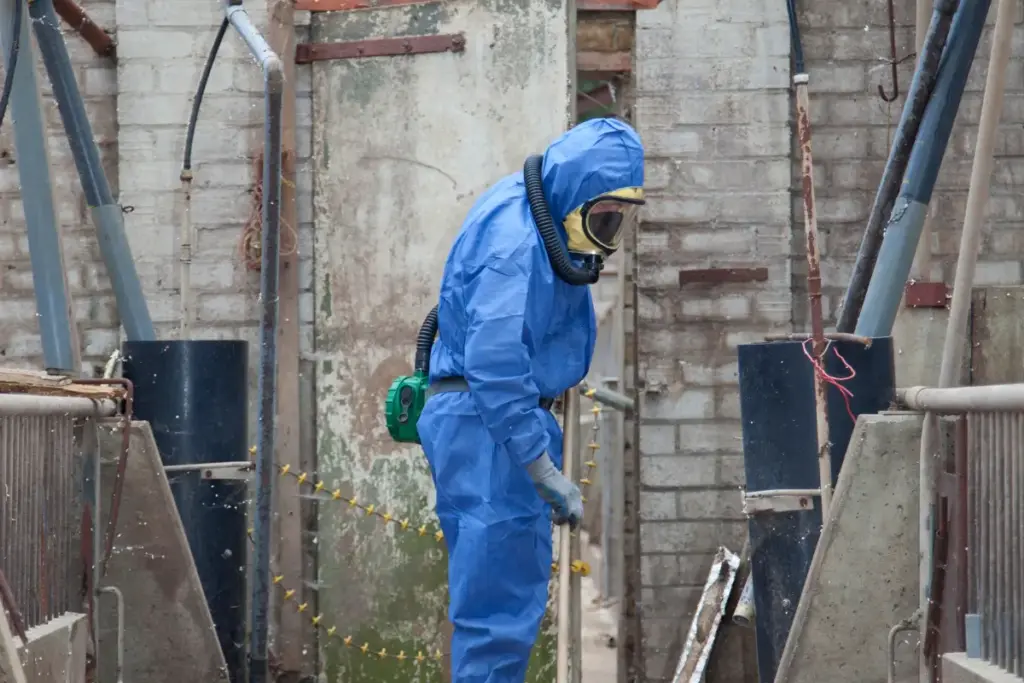
Proving Compliance: Surveys, Registers, and Plans
Who Does the Control of Asbestos Regulations Apply To in many workplaces, compliance with the Control of Asbestos Regulations is evidenced through clear documentation an up-to-date asbestos survey to identify and assess suspected asbestos-containing materials, an asbestos register recording their location and condition, and a management plan setting out how risks will be controlled, communicated, and reviewed before any work that could disturb them is carried out.
These records show that dutyholders have identified asbestos risks and taken practical steps to prevent exposure.
- Survey evidence: Management surveys support day-to-day operations; refurbishment/demolition surveys are required before intrusive works to ensure hidden materials are identified.
- Register accuracy: The asbestos register should be accessible, kept current, and updated after inspections, removals, or changes in condition.
- Plan in action: The management plan should assign responsibilities, set inspection intervals, explain how contractors are informed, and define emergency procedures if materials are damaged.
When documentation is missing, outdated, or not followed, organisations may struggle to demonstrate that asbestos risks are being controlled in practice.
Frequently Asked Questions
What Penalties Apply for Failing to Manage Asbestos Risks Properly?
Penalties for failing to manage asbestos risks can include unlimited fines, criminal prosecution, and imprisonment for serious breaches, as well as enforcement notices and costly remedial work. Courts may consider harm, negligence, and repeated noncompliance when sentencing offenders.
Do Asbestos Rules Differ Between England, Scotland, Wales, and Northern Ireland?
Asbestos rules are broadly similar across the UK, but differ in legal instruments and enforcement. Great Britain follows CAR 2012; Northern Ireland uses separate regulations. Guidance, inspectors, licensing, and penalties can vary by jurisdiction.
How Long Must Asbestos Records and Air Monitoring Results Be Retained?
Asbestos records and air monitoring results should usually be kept for at least 40 years, especially health and exposure data. Some documentation, such as surveys and management plans, should be retained and updated when relevant.
When Is Licensed Asbestos Removal Required Versus Non-Licensed Work?
Licensed asbestos removal is required for higher-risk work on insulation, asbestos coating, and most asbestos insulation board, or when Who Does the Control of Asbestos Regulations Apply To applies to employers, building owners, landlords, facilities managers, managing agents, maintenance firms, and contractors or tradespeople whose work could disturb asbestos-containing materials. They also cover self-employed workers if their activities could expose them or others. “Control” means having the authority, legally or in practice, to direct maintenance and work methods, including stopping unsafe work and requiring surveys. Regulation 4 places a duty to manage asbestos on whoever controls non-domestic premises. Further details clarify shared control, surveys, registers, and plans.
The risk is not low. Non-licensed work involves lower-risk materials, such as asbestos cement, under controlled conditions.
How Do Asbestos Regulations Interact With CDM and Other Health and Safety Laws?
Asbestos regulations complement CDM by requiring surveys, risk assessments, and exposure controls that inform design and planning. They sit alongside COSHH and HSWA duties, adding specific licensing, training, notification, and waste management requirements.
Conclusion
Who Does the Control of Asbestos Regulations Apply To applies to anyone who controls or manages premises, work activities, or maintenance where asbestos may be present. Responsibility commonly sits with the Regulation 4 dutyholder, but employers, landlords, tenants, and contractors can also carry legal duties depending on who directs work and controls risk. Even domestic projects can trigger requirements for competent management. Compliance is typically demonstrated through suitable surveys, an up-to-date asbestos register, and a clear management plan communicated to those at risk.