


Fire Extinguishers Are Coded By The Following Colours. UK fire extinguishers are red with a coloured band showing the agent and typical fire classes. Red (water) is used for Class A combustibles such as wood and paper. Cream (foam) suits Class A and B, such as flammable liquids. Blue (dry powder) covers A, B, and C but can reduce visibility and leave residue. Black (CO₂) is for electrical and small liquid fires. Yellow (wet chemical) targets cooking oils. Further guidance explains labels, risks, and the use of PASS.
Key Takeaways
- UK extinguishers are red with a coloured band near the top that identifies the extinguishing agent quickly.
- Red band (Water) is for Class A combustibles like wood, paper, and textiles; never use on electrics or flammable liquids.
- Cream band (Foam) tackles Class A and B fires by smothering and cooling; avoid live electrical equipment and cooking oils.
- Black band (CO₂) is for electrical fires and small Class B fires; it leaves no residue but can cause cold burns and asphyxiation risk.
- Blue band (Dry powder) covers Class A, B, and C, while Yellow (Wet chemical) is for cooking oil fires; always follow PASS: Pull, Aim, Squeeze, Sweep.
UK Fire Extinguisher Colour Codes: Quick Chart
Although modern UK fire extinguishers are typically red with a small coloured panel, the panel colour still provides a quick way to identify the extinguisher type at a glance. A simple chart helps people choose fast without waiting for instructions or permission.
UK colour code quick chart:
- Water (Class A): Red panel paper, wood, textiles.
- Foam (Classes A, B): Cream panel solids and flammable liquids.
- Dry Powder (Classes A, B, C; some electrical): Blue panel versatile, messy.
- CO₂ (Electrical, Class B): Black panel live electrics and liquids; no residue.
- Wet Chemical (Class F; some A): Yellow panel cooking oils and fats.
Used correctly, these colours support independent action: pick the right tool, tackle the right fire class, and avoid escalating danger through guesswork.
UK Labels Explained (Red Body + CColorBand)
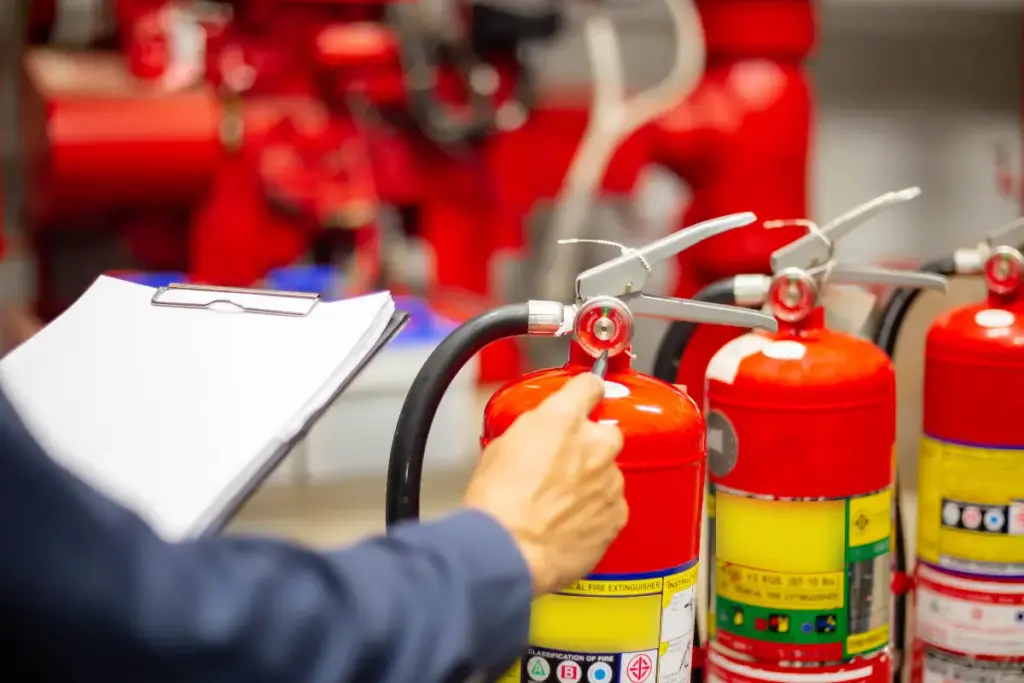
Fire Extinguishers Are Coded By The Following Colours. Modern UK extinguishers largely share a red body to comply with current standards, so identification now relies on the label and the small colour band rather than an all-over colour. The colour band sits near the top and signals the extinguisher medium at a glance, while the main label confirms type, capacity, and approved fire classes. Together, they let people act fast without guessing or waiting for instructions.
Labels typically show the extinguisher name, pictograms for suitable fire classes, and plain-language warnings. The band colour provides quick recognition in dim corridors, but the label is the authority when seconds matter. Responsible sites keep bands visible and labels readable, avoiding paint, tape, or clutter that hides information.
For personal independence and safer choices, users should scan for the band, then read the label before committing. Clear signage and regular checks preserve that freedom under pressure.
Red (Water) Extinguishers: When They’re Safe
Most water fire extinguishers are safe only where the fuel is ordinary combustible material, such as paper, wood, textiles, and similar Class A fires. They work by cooling and soaking the burning material, stopping heat from rebuilding. In homes, workshops, and small offices, this offers a straightforward way to protect people and property without complex decision-making.
They are a good choice when the user wants clear, self-reliant action and the fire matches the risk. Suitable situations include:
- Waste bins, cardboard storage, and packaging areas with no live electrics nearby
- Curtains, furniture, and other solid furnishings are burning on the surface
- Wooden pallets, shelving, and general stock where deep cooling matters
They are not a universal tool. Water should be kept away from energised electrical equipment and from burning liquids or cooking oils, where it can spread flames. When used on the right fuel, a red water extinguisher keeps response simple and effective.
Cream (Foam) Extinguishers: Best Uses and Limits
Cream (foam) fire extinguishers build on the simplicity of water by adding a smothering layer that helps control flames and cool the fuel.
Fire Extinguishers Are Coded By The Following Colours. They are typically chosen for Class A fires involving wood, paper, and textiles, and for Class B fires where flammable liquids such as petrol, paints, or solvents are burning on the surface. The foam blankets the fuel, reducing vapour release and helping prevent re-ignition, giving people a better chance of protecting property and exiting on their own terms. Their limits matter. Foam is not suitable for fires involving live electrical equipment because its water content can conduct electricity, increasing the risk of shock.
It is also a poor choice for burning cooking oils and fats, which can splatter and spread the fire. In windy outdoor conditions, foam coverage can be disrupted, reducing effectiveness. Users should aim the jet at the base and sweep steadily for coverage.
Blue (Powder) Extinguishers: Uses and Key Risks
Many blue (powder) fire extinguishers are selected for their versatility, as they tackle Class A fires (solids such as wood and paper), Class B fires (flammable liquids), and Class C fires (flammable gases) by rapidly knocking down flames and interrupting combustion.
They suit garages, workshops, and outdoor storage where fuels vary and fast action matters, giving people the freedom to respond without overthinking the fire type.
- Broad coverage across common fuel classes, useful for mixed-risk areas
- Immediate flame knockdown, helping create time to escape or isolate fuel
- Works in cold conditions and windy locations better than some alternatives
Key risks should be weighed before relying on powder.
Discharge can reduce visibility, making exits harder to spot. The fine residue can infiltrate hinges, tools, and electronics, prompting costly cleanup and corrosion. Re-ignition remains possible if heat sources persist, so monitoring is essential after use. Where clean environments are critical, powder may be a poor fit.
Black (CO₂) Extinguishers: For Electrical Fires
Fire Extinguishers Are Coded By The Following Colours. Black (CO₂) extinguishers offer a cleaner alternative to powder where residue and equipment damage are concerns, particularly around live electrical apparatus. They work by displacing oxygen and rapidly cooling, making them effective on energised electrical equipment and suitable for small flammable liquid fires. Because CO₂ leaves no mess, it enables rapid recovery of servers, switchgear, and control panels, helping people stay in charge of their operations with minimal downtime.
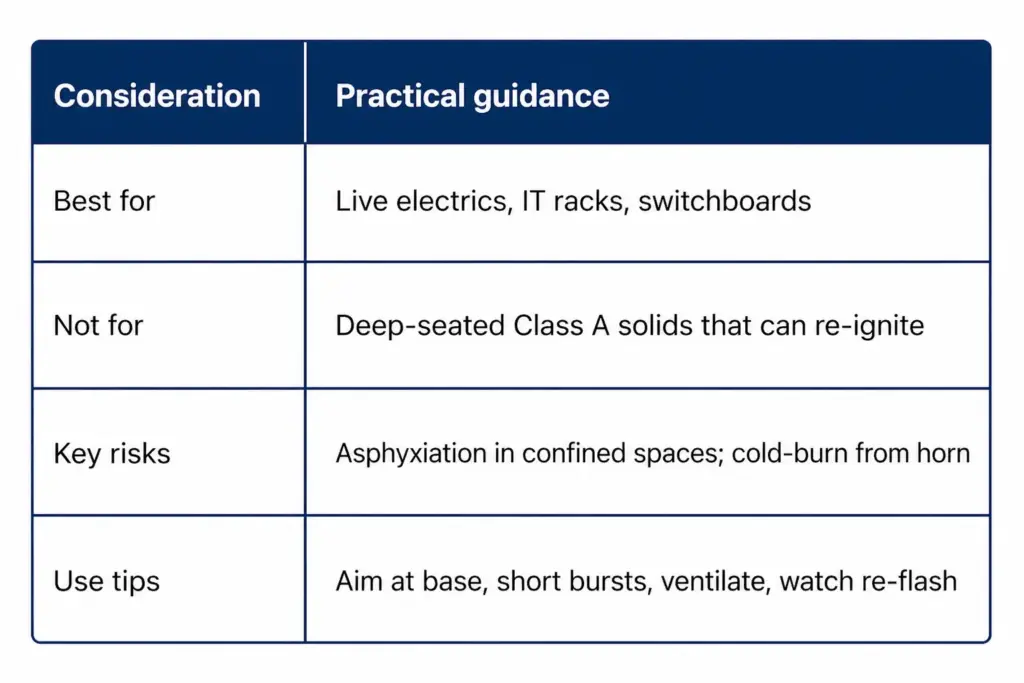
CO₂ provides quick knockdown, but limited cooling means vigilance is required after discharge. Clear signage, training, and access keep response decisive and unobstructed.
Yellow (Wet Chemical): For Cooking Oil Fires
Fire Extinguishers Are Coded By The Following Colours. Yellow (wet chemical) extinguishers are the kitchen specialist for Class F cooking oil and fat fires, using a fine spray that cools the burning oil and triggers saponification to form a soapy blanket that suppresses vapour and prevents re-ignition. They suit commercial fryers, restaurant pass lines, and home deep-fat pans where water would violently spread burning oil. Used correctly, they let occupants act decisively without improvising risky “hacks.” The operator should keep a distance, aim gently at the surface, and apply in controlled bursts to avoid splashing.
Once the blanket forms, the area should be left undisturbed until fully cooled.
- Place near cooking areas, but not so close that flames block access
- Train staff on the slow, sweeping application technique
- Replace or service after any discharge; residue requires cleanup and inspection
This yellow label signals a purpose-built tool for safer kitchens and freer choices under pressure.
Fire Classes First: Match Fuel to Extinguisher Colour. Every safe extinguisher choice starts with identifying the fire class and what fuel is burning before looking at the colour code. Fire classes map to materials: Class A for wood, paper, and textiles; Class B for flammable liquids like petrol and solvents; Class C for flammable gases; Class D for combustible metals; and electrical fires where live equipment adds shock risk.
A quick fuel check protects choice, speed, and personal control. Once the class is clear, the colour band becomes a fast confirmation tool, not a guess.
Water (red) suits Class A only. Foam (cream) targets A and B. Powder (blue) covers A, B, C, and electrical, with cleanup costs included. CO₂ (black) fits electrical and small-B fires but offers little cooling. Wet chemical (yellow) is for cooking oils (Class F). Matching fuel first preserves freedom: act decisively without creating a worse hazard.
Frequently Asked Questions
How Often Should Fire Extinguishers Be Serviced to Remain Compliant in the UK?
In the UK, fire extinguishers should be serviced annually by a competent person to stay compliant. Users should perform regular monthly visual checks. Extended servicing or replacement may be required after discharge, due to damage, or per manufacturer schedules.
Where Should Extinguishers Be Mounted, and What Height Is Recommended?
Extinguishers should be mounted on escape routes, near exits and high-risk areas, visible and unobstructed. A typical recommendation is wall brackets with the handle about 1 meter from the floor, with clear signage and access.
What Should I Do if an Extinguisher’s Pressure Gauge Shows Low Pressure?
If the gauge shows low pressure, it should be removed from service and reported for inspection, recharging, or replacement. No one should rely on it in an emergency. A certified technician should service it promptly.
Can I Use an Extinguisher After It Has Been Partially Discharged?
A partially discharged extinguisher should not be relied on; it may fail when needed. It may be used only in immediate necessity, then removed from service, tagged, and recharged or replaced by qualified personnel.
How Do I Safely Dispose of or Recycle an Expired Fire Extinguisher?
Safely dispose of an expired fire extinguisher by contacting local hazardous-waste or recycling centres, or the manufacturer for take-back. Depressurise only if instructed; keep upright; never puncture; schedule drop-off to avoid fines.
Conclusion
Fire Extinguishers Are Coded By The Following Colours. Understanding UK fire extinguisher colour codes helps guarantee the correct extinguisher is chosen quickly and safely. Although modern units are typically red with a coloured band, each colour still indicates the extinguishing agent and the types of fires it can tackle. Water suits Class A solids; foam adds versatility; powder covers multiple classes but carries risks; CO₂ is preferred for electrical equipment; and wet chemical is essential for cooking oils. Fire class identification remains the safest starting point.