


Fire detection systems range from basic smoke alarms to extensive monitored networks. Homes typically use ionisation or photoelectric smoke detectors, dual-sensor or smoke+CO combos, and heat detectors for kitchens or garages. Businesses often require zoned or addressable panels, specialty detectors, and professional monitoring integrated with HVAC and security systems. Placement, maintenance, and compliance drive performance and costs. The right selection balances false‑alarm control, lifecycle budgeting, and code requirements; further sections explain practical choices and implementation.
Key Takeaways
- Choose smoke detectors (ionisation for fast-flame fires, photoelectric for smoldering fires) based on the room’s risk and nuisance-alarm potential.
- Use dual-sensor or combo alarms to combine smoke, CO, and reduced-maintenance advantages in bedrooms and living areas.
- Install heat detectors (fixed-temperature or rate-of-rise) in kitchens, garages, and dusty or ventilated spaces to avoid false alarms.
- Select addressable, zoned, or hybrid system architectures according to building size, complexity, and maintenance needs.
- Implement routine testing, maintain documented logs, and conduct compliance checks to ensure ongoing reliability and regulatory compliance.
Quick Guide: Choosing the Right Fire Detection System
How should a facility select the most suitable fire detection system? The decision begins with an evaluation of the facility’s layout, occupancy, and fire risks. A detailed analysis considers ceiling height, compartmentalisation, ventilation, and the presence of combustible materials or hazardous processes. Regulatory requirements and insurance standards narrow acceptable options; compatibility with existing building systems HVAC, security, and emergency power further guides choices.
Response time, detection sensitivity, and false-alarm susceptibility must align with operational priorities: rapid alerting in high-risk areas versus nuisance resistance in dusty or humid environments. Maintenance capacity and lifecycle costs influence selection: systems requiring frequent calibration or specialised parts may be impractical for some sites. Integration with notification appliances, monitoring services, and suppression systems guarantees coordinated emergency response. Finally, stakeholder consultation with fire safety professionals, facility managers, and authorities having jurisdiction validates design assumptions and confirms that the chosen detection system meets both performance needs and compliance obligations.
Ionisation vs. Photoelectric Smoke Detectors
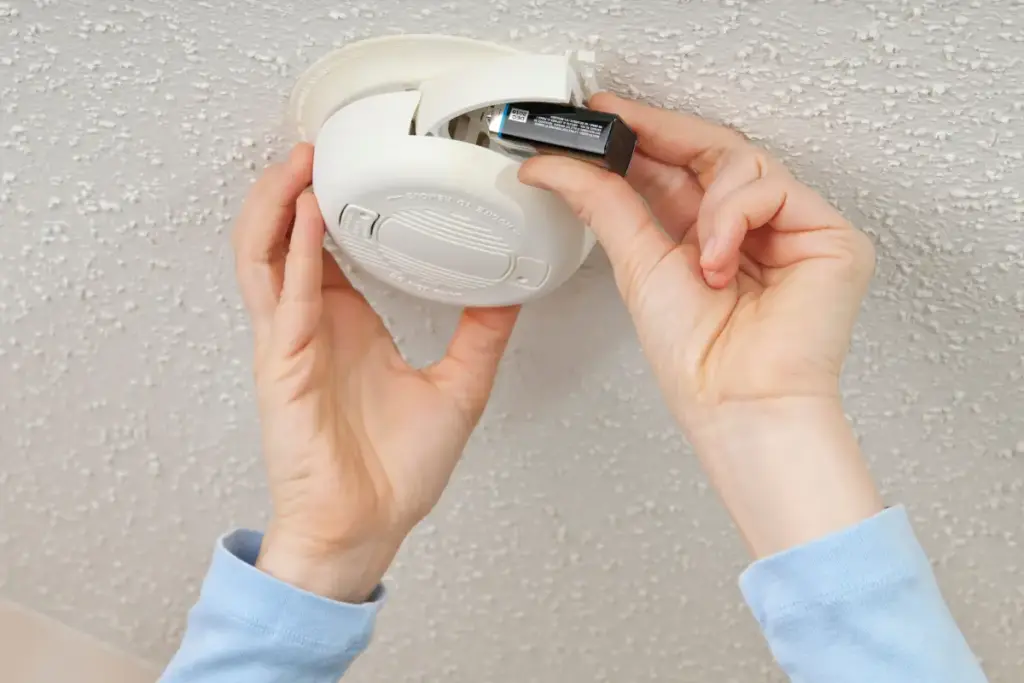
Two primary types of residential and commercial smoke detectors, ionisation and photoelectric, rely on different sensing principles that make each more effective for particular fire characteristics: ionisation detectors respond quickly to fast-flaming fires with small combustion particles, while photoelectric detectors excel at detecting smoldering fires that produce larger smoke particles. The distinction affects placement and expected response: kitchens and areas with open flames may benefit from ionisation’s sensitivity, while living rooms, bedrooms, and spaces with upholstered furniture favor photoelectric detectors for earlier smoldering detection. Maintenance, nuisance alarms, and false positives differ between types; understanding these helps stakeholders choose appropriate coverage.
Dual-Sensor and Smoke+CO Combo Alarms: Pros and Ideal Rooms
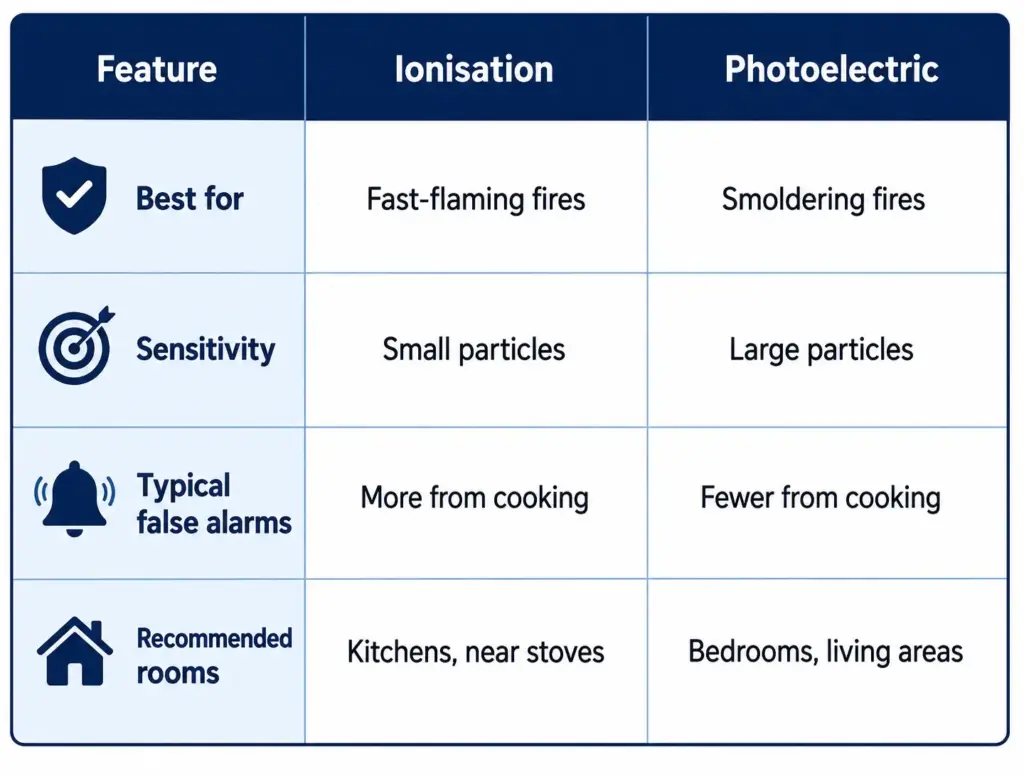
When combined into a single unit, dual-sensor alarms and smoke-plus-carbon-monoxide (CO) combo alarms offer broader hazard coverage by integrating different detection technologies, typically ionisation and photoelectric sensors for smoke, and an electrochemical sensor for CO, so they can respond appropriately to both flaming and smoldering fires while also alerting occupants to toxic gas buildup. These devices reduce the need for multiple detectors, simplify installation and maintenance, and lower the risk of missed events by covering multiple threats with a single unit.
Ideal locations include bedrooms, living areas, hallways adjacent to sleeping rooms, and central spaces where occupants spend significant time. For CO detection specifically, placement near sleeping areas and on each level of a dwelling is recommended. Users should confirm alarms meet relevant standards, have clear labeling for both hazards, and undergo regular testing and battery replacement. While not a substitute for specialised detectors in atypical environments, combos provide practical, efficient protection for most homes and general commercial spaces.
Heat and Specialty Detectors for Kitchens, Garages, and High Ceilings
Because cooking, vehicle exhaust, and large-volume spaces produce conditions that confuse standard smoke alarms, heat and specialty detectors are used instead in kitchens, garages, and high-ceiling areas to provide reliable alerts without frequent nuisance activations. Fixed-temperature heat detectors trip when a preset temperature is reached, offering simple, dependable protection where steam or smoke from normal activities would false-alarm a smoke sensor. Rate-of-rise heat detectors respond to rapid temperature increases, detecting fast-developing fires even before a high absolute temperature is reached.
Combination heat sensors incorporate both methods for broader coverage. Specialty detectors include electric-vehicle battery monitors, flame detectors for open cooking areas, and beam or multi-sensor units for high ceilings where stratification limits conventional coverage. Placement follows manufacturer specifications and local codes to guarantee detection zones, mounting heights, and environmental tolerances are appropriate. Regular maintenance, cleaning, testing, and periodic replacement preserve performance. Selecting the correct detector type minimises false alarms while guaranteeing timely, situation-appropriate fire detection.
Addressable & Zoned Fire Detection Systems for Businesses
After outlining detectors suited to challenging environments, the discussion shifts to system architectures that organise and manage those devices across business properties: addressable and zoned fire detection systems. Addressable systems assign a unique identifier to each detector, enabling precise location reporting, simplified troubleshooting, and flexible configuration. Zoned systems group detectors by area, offering intuitive mapping for evacuation and rapid first-responder orientation. Each approach suits different operational needs.
- Addressable: Ideal for complex layouts, it permits pinpoint alerts, historical event logs, and selective maintenance without disrupting the entire network.
- Zoned: Suited to simpler sites or legacy installations, it provides clear area-based alarms and straightforward wiring, making interpretation during incidents easier.
- Hybrid: Combines addressable devices within defined zones, balancing granular diagnostics with area-level clarity for operations, compliance, and response planning.
Selection depends on building complexity, budget, regulatory requirements, and desired maintenance efficiency; professionals typically evaluate these factors when specifying a system.
Monitored and Interconnected Fire Detection: Response and False-Alarm Control
Although both monitored and interconnected fire detection strategies share the goal of rapid incident response, they differ fundamentally in how alarms are communicated, escalated, and managed to minimise false activations. Monitored systems link detectors to a central monitoring service that verifies signals before notifying emergency responders; verification protocols, such as dual-sensor confirmation or remote audio/video checks, reduce false dispatches while guaranteeing timely intervention. Interconnected systems tie detectors within a building so that an alarm at one point triggers alerts throughout the premises, enabling faster occupant evacuation and automated controls (e.g., HVAC shutdown).
Combining both approaches yields layered protection: local audible warnings plus offsite monitoring for confirmation and dispatch. False-alarm control relies on proper sensor selection, sensitivity settings, zoning logic, and monitoring policies that balance rapid response against nuisance triggers. Clear communication pathways, routine testing, and documented alarm-handling procedures further guarantee that responses are appropriate, proportionate, and reliable without causing unnecessary service calls.
Placement & Maintenance Checklist: Homes vs. Commercial Buildings
Effective fire detection relies on distinct placement and maintenance practices tailored to residential and commercial environments. Homes prioritise bedroom, hallway, and kitchen coverage with smoke and heat detectors placed on ceilings and near sleeping areas; detectors should be interlinked where possible and tested monthly. Commercial buildings require zone-based strategies, covering corridors, stairwells, mechanical rooms, and large open spaces with a mixture of photoelectric, ionisation, and beam detectors as appropriate, inspected according to facility schedules.
- Placement: Confirm detectors are mounted on ceilings or high on walls away from vents, windows, and cooking appliances; in commercial spaces, align placement with floor plans and occupancy loads.
- Routine Maintenance: Implement monthly functional tests, battery replacement schedules for battery-operated units, and professional inspections semiannually or annually depending on system complexity.
- Recordkeeping and Response: Maintain logs of tests, defects, and repairs; promptly address faults and coordinate with qualified technicians for sensor cleaning, recalibration, or component replacement.
Budgeting and Codes: Lifecycle Costs, Testing, and Compliance
Proper placement and maintenance practices inform budgeting and code compliance by clarifying the scope, frequency, and technical requirements of fire detection systems. Lifecycle cost planning accounts for initial purchase, installation, periodic testing, sensor replacement, software updates, and eventual system upgrades. Residential budgets often focus on smoke alarms and basic hardwired interconnections; commercial budgets must include addressable panels, notification appliances, inspection contracts, and recordkeeping.
Regulatory codes national, local, and industry-specific define minimum device types, inspection intervals, and documentation standards. Routine testing schedules (weekly/monthly occupant checks, semiannual/annual professional inspections, and 10-year sensor replacements) reduce failure risk and support evidence of compliance. Warranty and service agreements should specify response times and covered tasks to avoid unplanned expenses. Clear procurement specifications and lifecycle forecasts enable owners to compare vendors on total cost of ownership. Maintaining compliant logs, tagging serviced components, and promptly addressing deficiencies guarantees systems remain effective and legally defensible.
Frequently Asked Questions
Can Smart Detectors Integrate Securely With Home Automation Platforms?
Yes. Smart detectors can integrate securely with home automation platforms through encrypted communication, firmware updates, strong authentication, network segmentation, and vetted APIs, while administrators must enforce best practices and regularly monitor for vulnerabilities.
How Do Pet-Immune Detectors Distinguish Pets From Smoke Sources?
They compare signal patterns: pet-immune detectors use combined sensors and algorithms to filter small, moving heat or motion signatures, raise thresholds, and ignore brief dust or fur disturbances while remaining sensitive to sustained smoke or combustion particles.
What Are Wireless Detector Battery Longevity Expectations in Practice?
Wireless detector batteries typically last two to five years in practice, depending on sensor type, transmission frequency, temperature, and battery quality. Users can expect a shorter lifespan with frequent alerts or weak-signal retransmissions, requiring periodic replacements.
Are There Specific Detectors for Detecting Smoldering Electrical Faults?
Yes. He notes that specialised detectors exist that combine ionisation, photoelectric, and heat sensors, or use smoke sensors tuned to smoldering signatures and electrical arc-fault detectors; these improve detection of slow, low-smoke electrical faults before ignition.
How Do Detectors Perform in Very High Humidity or Dusty Environments?
Detectors often exhibit reduced sensitivity and increased false alarms in very high humidity or dusty environments; manufacturers recommend specialised housings, IP-rated units, regular maintenance, and aspirating or beam systems with filtration to preserve reliability and performance.
Conclusion
Choosing the right fire detection system hinges on understanding specific risks, spaces, and regulations. Homes benefit from a mix of photoelectric, ionisation or dual-sensor alarms, CO combos, and heat detectors in kitchens and garages; businesses often require addressable or zoned, monitored systems for rapid response and false-alarm management. Regular placement checks, testing, maintenance, and adherence to codes minimise lifecycle costs and guarantee reliability. Thoughtful selection and upkeep substantially improve safety and emergency outcomes.