


Wiring an electric cooker starts with confirming that the existing cooker circuit can safely handle the appliance’s load and passes basic safety tests. The installer must size the cable, breaker, and double‑pole cooker switch correctly, then position the cooker and switch with safe clearances and ventilation. Power is fully isolated and proved dead before connecting live, neutral, and earth conductors securely. Final checks and tests confirm proper operation, and the next sections explain each stage in practical detail on how to wire an electric cooker.
Key Takeaways
- Verify the existing cooker circuit’s rating, condition, and test results to ensure it can safely handle the appliance’s maximum load.
- Select a suitably sized cable and a correctly rated breaker and double‑pole cooker switch based on the cooker’s kilowatt rating and installation conditions.
- Position the cooker on a stable, heat‑resistant surface with required clearances, and mount the cooker switch within sight and easily accessible.
- Fully isolate power at the consumer unit, lock off the circuit, and prove dead with an approved tester before making any connections.
- Connect live, neutral, and earth conductors securely to the cooker terminals, then test operation and recheck all terminations for heat or faults after initial use.
Check Your Cooker Circuit and Safety Limits
A cooker installation must begin with confirming that the existing circuit can safely handle the appliance’s maximum load. The installer first checks the cooker’s rating plate, noting total kW and required supply characteristics. This information shows the maximum current the appliance may draw during operation.
Next, the existing circuit’s capacity and condition must be assessed. The person inspects the consumer unit to identify which circuit feeds the cooker location and confirms its labelled rating and purpose. They then verify that no other heavy-demand appliances rely on the same circuit, reducing the risk of overload.
Visual inspection of accessible wiring and accessories follows. Signs of heat damage, discolouration, loose terminations, or non-compliant alterations indicate the circuit may be unsuitable without remedial work.
Finally, appropriate test instruments should be used by a competent person to measure continuity, insulation resistance, and earth fault paths, confirming the circuit’s fundamental safety before any connection.
Choose Cable, Breaker and Cooker Switch
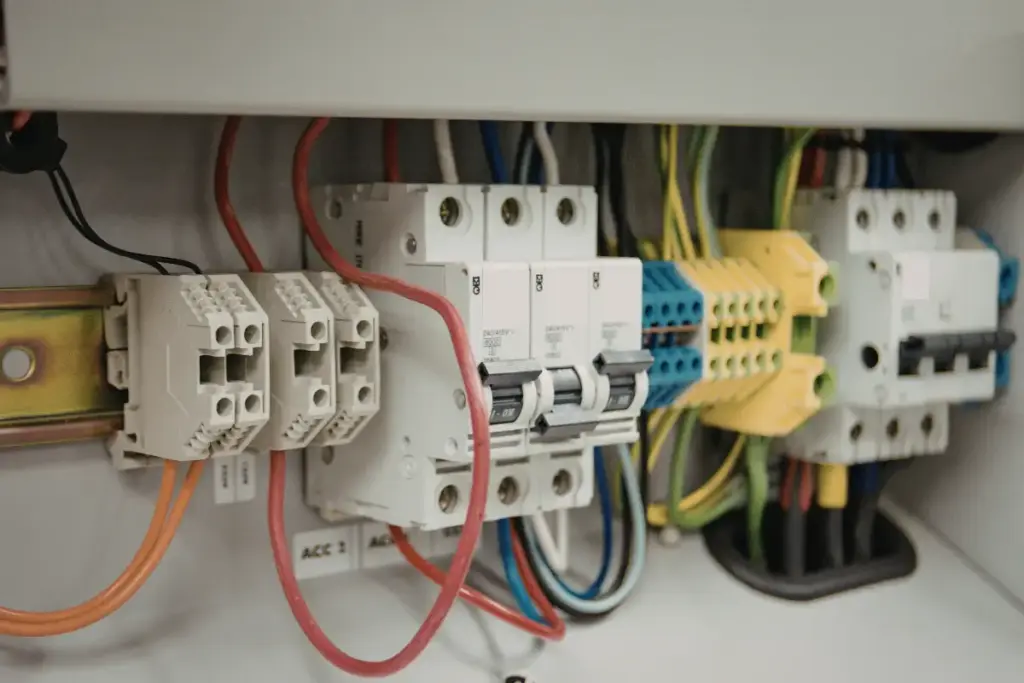
Once the cooker circuit has been confirmed as safe and adequately rated, attention turns to selecting components that match the appliance load and installation method. The installer first checks the cooker’s rating plate, usually expressed in kilowatts, then converts this to current (amps) to guide choices.
Cable size is selected to safely carry this current while considering the cable route and installation conditions. In many domestic situations, 6 mm² twin‑and‑earth cable is common, but higher‑powered cookers or demanding routes may require 10 mm². Cable must also match or exceed the circuit breaker rating.
The breaker (or MCB) is selected to protect both the cable and the cooker from overload and fault conditions. It must not exceed the cable’s current‑carrying capacity and must suit the supply type and board.
A double‑pole cooker control switch isolates both the live and neutral conductors. Its current rating must at least equal the breaker rating and provide a clear, positive disconnection.
Plan Safe Positioning for Cooker and Switch
Before any cable is run, the safe positioning of the cooker and its control switch must be planned to minimise risks of fire, shock, and mechanical damage.
The cooker should be placed on a level, heat‑resistant surface, with clearances that follow the manufacturer’s instructions, especially at the sides, rear, and above the hob. Adequate ventilation around the appliance must be allowed, and combustible materials such as curtains, timber panelling, or low shelves must be kept outside the stated safety distances when wiring an electric cooker.
The cooker control switch needs to be readily accessible without requiring a reach across hot zones. It is commonly installed on the wall, at about eye or chest height, and within sight of the cooker, yet not so close that rising heat or splatter can affect it. The switch should be placed where it cannot be knocked, blocked by appliances, or hidden behind the cooker, ensuring clear, quick operation in normal use or an emergency.
Isolate Power Safely Before Any Wiring
With the cooker position and control switch location confirmed, attention must turn to making the circuit safe to work on.
Before anyone touches a cable, the supply feeding the cooker circuit must be fully isolated at the consumer unit (fuse box). The cooker’s circuit breaker or main switch should be switched to the OFF position, never just the local cooker control switch. Next, the circuit must be shown to be dead. A non-contact voltage detector or two-pole voltage tester is used on the cooker outlet or terminal plate to confirm that no live voltage is present. Testing a known live source first, then the cooker circuit, and finally the live source again, verifies that the tester is working correctly.
Clear labelling at the consumer unit helps prevent someone from accidentally restoring power. Where possible, a lock-off device and warning tag are used so only the person working on the circuit can re-energise it.
Step-By-Step: Wire Your Electric Cooker
A clear wiring sequence helps guarantee the cooker is connected safely and reliably.
With power already isolated, the installer first confirms that the circuit rating and cable size match the manufacturer’s requirements. The cooker connection plate or terminal box cover is removed, exposing the marked terminals: live (L), neutral (N), and earth/ground (⏚ or E).
The outer sheath of the supply cable is carefully stripped, leaving enough length for a neat bend and strain relief. Individual conductors are then stripped minimally, twisted if stranded, and checked for damage. The brown (or red) conductor goes to L, the blue (or black) to N, and the green/yellow to E.
Each conductor is fully inserted and firmly tightened to avoid exposed copper. The installer gently tugs each wire to confirm security, then refits the terminal cover and secures any cable clamp so the cable cannot move or loosen under normal use.
Test Your Electric Cooker and Fix Issues
Once the cooker is wired and reassembled, systematic testing confirms it operates safely and as intended. The consumer unit breaker or cooker switch is turned on, then the cooker’s main control is set to “off” so no element energises immediately.
Indicator lights on the cooker and the cooker switch are checked; both should illuminate only when the appliance is turned on. Each hob zone is then tested individually at a low setting to confirm that it heats and that no burning smell, crackling, or visible arcing occurs.
The oven and grill functions are tested next, again starting on low settings, and the fans, lights, and heating elements are observed to behave normally. If a problem appears, such as a tripped breaker, a non‑functional zone, or a flickering indicator, testing stops, and power is switched off at the isolator. The circuit, terminals, and connections are then re‑inspected against the wiring plan to locate faults.
Avoid Wiring Mistakes and Know When to Call an Electrician
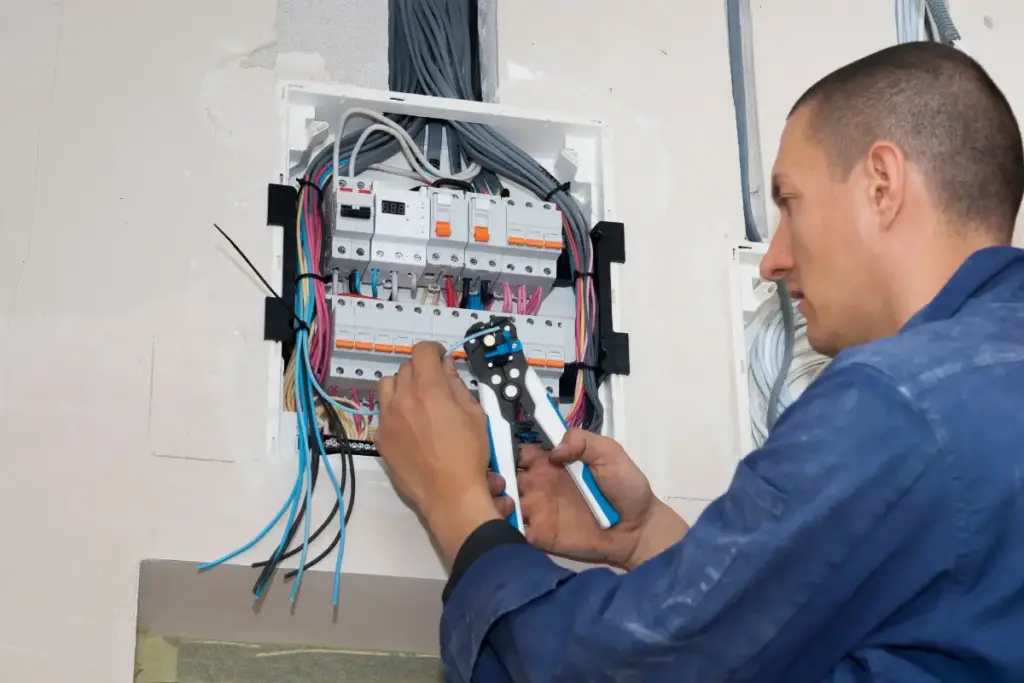
Thorough testing highlights whether the cooker is wired safely, but many faults arise from avoidable mistakes made much earlier in the process. Common errors include choosing a cable undersized for the cooker’s load, failing to use the correct-rated circuit breaker, or mixing up live, neutral, and earth conductors. Loose terminal screws, damaged insulation, and bypassing the cooker control unit also create serious hazards.
A competent person should recognise limits and call an electrician whenever the consumer unit (fuse box) needs alteration, when the existing circuit’s rating is unknown, or when test results are confusing or inconsistent.
Repeated tripping, burning smells, buzzing from the cooker switch, or visible overheating at terminals are urgent warning signs. In older properties without modern RCD protection, or where bonding and earthing are uncertain, professional assessment is essential. When in doubt, the safest decision is to stop work and seek qualified help.
Frequently Asked Questions
Can I Use a Second‑Hand Cooker and What Checks Should I Perform?
Yes, a second‑hand cooker can be used if safety checks pass. They should inspect the casing, cable, plug, terminals, seals, and controls, test all functions, and, ideally, obtain a qualified electrician’s inspection or a Portable Appliance Test certificate.
How Does Cooker Wiring Differ Between Gas, Dual‑Fuel, and All‑Electric Models?
Cooker wiring differs mainly in load and function: gas uses minimal electrical supply for ignition and controls; dual‑fuel needs higher current for the electric oven; all‑electric demands the heaviest dedicated circuit, often with thicker cable and breakers.
Are There Special Wiring Considerations for Induction Cookers?
Yes, induction cookers need specific wiring: higher-amperage circuits, suitable cable size, and RCD/RCBO protection. They may require dedicated circuits, low‑induction breakers, correct earthing, and adherence to manufacturer diagrams, load‑diversity rules, and local electrical regulations.
What Regulations Apply if I’M in a Rented Property Installing a Cooker?
Tenant-installed cookers must comply with national wiring regulations (e.g., BS 7671), building codes, and landlord consent requirements. A qualified electrician is normally required, electrical certificates may be needed, and tenants remain responsible for unsafe, unapproved alterations.
How Often Should Cooker Wiring and Connections Be Professionally Inspected?
They should be professionally inspected at least every 5–10 years, or during each landlord’s electrical safety check. Inspections are also advisable after any electrical faults, visible damage, tripping breakers, burning smells, or cooker performance issues.
Conclusion
By understanding circuits, choosing the right cable and protection, and planning safe switch positions, the homeowner can wire an electric cooker with greater confidence and security. Careful power isolation, methodical step‑by‑step wiring, and thorough testing all reduce the risk of faults, shocks, or fire. However, recognising the limits of DIY skills is essential; when in doubt, consulting a qualified electrician remains the safest and most responsible choice.