



Radiator Hot at the Top and Cold at the Bottom? Causes and How to Fix It
“A radiator hot at the top and cold at the bottom” typically indicates sediment build-up, airlocks, or blockages in the system. Sediment accumulation restricts water flow, leading to uneven heating and reduced efficiency. Additionally, air trapped within the radiator prevents hot water from circulating properly, exacerbating the issue. To rectify this, one can bleed the radiator to release trapped air and flush the system to clear any sediment or debris. Regular maintenance, including checking valve functionality and system pressure, is also essential in preventing such problems. Understanding further specifics can enhance your ability to maintain an ideal heating system.
Key Takeaways
- Sediment accumulation often causes the radiator to be hot at the top and cold at the bottom.
- Regular bleeding of radiators removes trapped air, improving heat distribution.
- Flushing the system helps eliminate blockages and restore full functionality.
- Installing and maintaining proper radiator valves ensures efficient heat flow.
- Early detection and repair of leaks maintain optimal system pressure and performance.
What Does It Mean When Your Radiator Is Hot at the Top and Cold at the Bottom?
When a radiator is hot at the top and cold at the bottom, it typically indicates a common issue: sediment accumulation or sludge buildup. This condition suggests that the natural circulation of hot water within the radiator system is hindered, preventing heat from being evenly distributed. As radiators age or are subjected to continual use, particles such as rust and mineral deposits can form inside the heating system, settling at the bottom of radiators and creating an insulating layer.
This thermal barrier restricts the flow of warm water towards the lower part of the radiator, resulting in uneven heating. The top of the radiator gets hot as heat naturally rises, but the bottom stays cold because warm water isn’t circulating. This problem not only affects the efficiency of the heating system but can also lead to higher energy consumption as the system struggles to reach the desired temperature. Recognising this issue is essential for maintaining ideal radiator performance and ensuring a uniformly heated space in your home or office. Effective diagnosis and timely intervention can prevent long-term damage and costly repairs in the future.
The Main Causes of a Radiator Being Hot at the Top and Cold at the Bottom
Understanding the underlying reasons a radiator is hot at the top and cold at the bottom can help address this common heating issue effectively. One primary cause is sediment buildup within the radiator. Over time, minerals and debris from the water supply can accumulate at the bottom of the radiator, creating an insulating layer that prevents the proper circulation of hot water throughout the entire unit. This sediment can be particularly problematic in areas with hard water.
Another significant factor is the natural process of heat rising. Since hot water rises, the top of the radiator often gets heated first and most intensely. If the flow of hot water is insufficient due to a partial blockage or a malfunctioning pump, the bottom of the radiator may not receive enough heated water, resulting in uneven heating.
Lastly, incorrect installation or sizing issues can also lead to this problem. Radiators that are too large for a room or improperly installed may not circulate heat evenly. Ensuring that your radiator is correctly sized and installed is essential for ideal performance and efficiency.
Airlocks in Radiators: Why They Cause Uneven Heating
Airlocks in radiators are a significant contributor to uneven heating, where the radiator is hot at the top and cold at the bottom. This common issue occurs when air becomes trapped in the radiator’s system, blocking the natural flow of hot water. The blockage prevents heat from being evenly distributed across the radiator, thereby resulting in cold spots at the bottom.
Understanding the impact of airlocks involves recognising several key factors:
- Disrupted Water Circulation: Airlocks block the hot water pathway, which is vital for uniform heat distribution.
- Reduced Efficiency: With part of the radiator not heating up, the system has to work harder to achieve desired temperatures, potentially increasing energy costs.
- Increased Wear and Tear: Uneven heat distribution can cause certain parts of the system to overwork, leading to faster degradation.
- Noise: Trapped air can cause gurgling or banging sounds, indicating airlocks.
Addressing airlocks promptly is essential to restoring full functionality to your heating system and ensuring consistent warmth throughout the space. Regular maintenance and timely interventions can prevent airlocks from forming and keep your radiator running efficiently.
How Trapped Air Affects Heat Distribution in Your Radiator
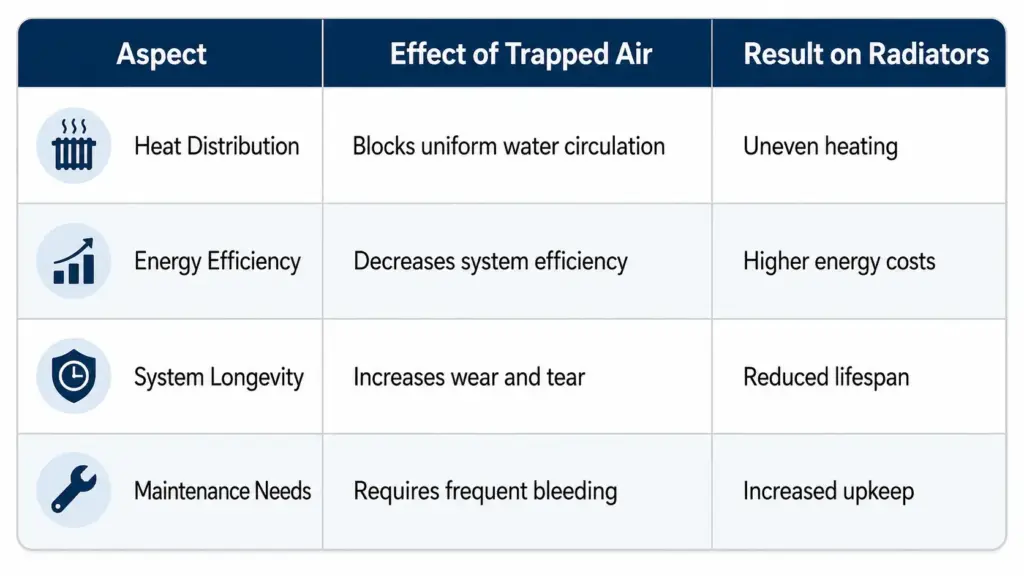
Trapped air in a radiator significantly disrupts the ideal heat distribution, primarily by creating barriers that stops the steady flow of hot water through the system. This phenomenon can cause the top of the radiator to feel hot, while the bottom remains cold, considerably reducing the efficiency of your heating setup.
To better understand the impact of trapped air, consider how it affects various aspects of radiator performance:
The Role of Radiator Valves in Heat Distribution
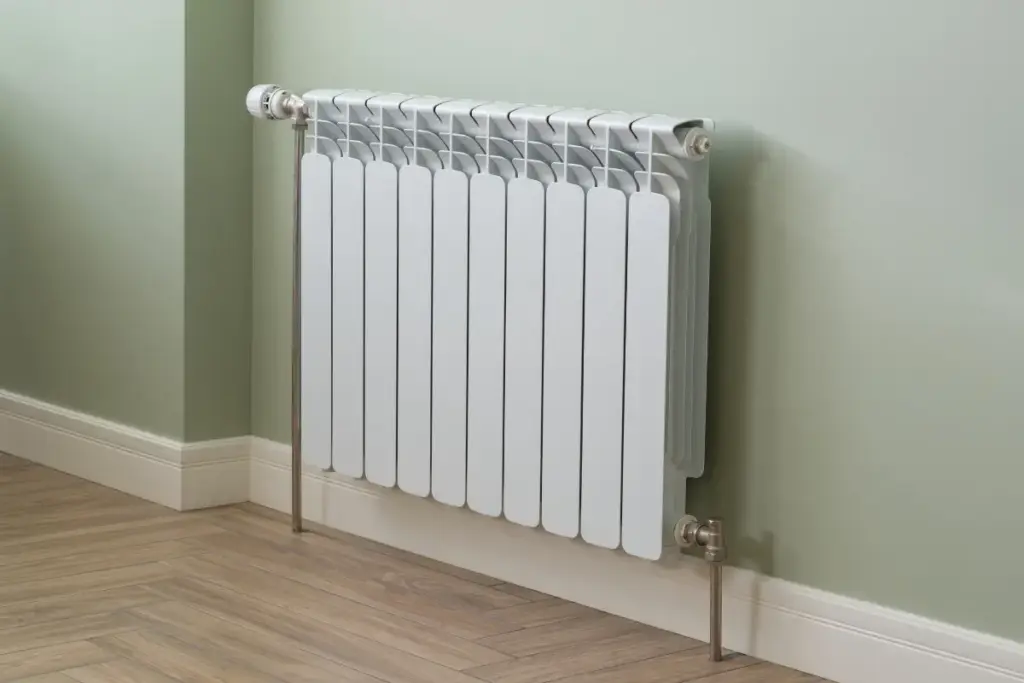
Radiator valves regulate the flow of hot water or steam through the radiator system, thereby affecting how heat is distributed throughout the space.
Radiator valves come in various types, each designed to fulfill specific roles:
- Manual Valves: These require manual adjustment to control the heat output. They do not automatically respond to changes in room temperature, making them less flexible but straightforward.
- Thermostatic Radiator Valves (TRVs): These automatically adjust water flow based on room temperature, promoting energy efficiency and optimal heat distribution.
- Lockshield Valves: Located on the opposite end of the radiator from the TRV, these valves balance the radiators in your home, ensuring even heat distribution across rooms.
- Smart Radiator Valves: These can be controlled remotely via apps, allowing for precise control over heating schedules and temperatures, therefore enhancing convenience and efficiency.
Understanding and maintaining these valves is essential for achieving a well-heated, comfortable indoor environment, free from issues such as uneven heating or energy waste.
How to Bleed Your Radiator to Fix Cold Spots
Cold spots in a radiator often indicate air pockets that disrupt the flow of hot water, reducing heating efficiency. Bleeding a radiator involves releasing trapped air, allowing hot water to circulate properly, and allowing your space to warm efficiently.
To begin, verify your heating system is off and cool. Locate the bleed valve, typically found at the top corner of the radiator. Protect your flooring with a cloth or a container to catch any water that may drip. Using a radiator key or a flat-blade screwdriver, depending on your valve type, slowly turn the valve counterclockwise. You’ll hear a hissing sound as the air escapes. Once water begins to dribble out, this signifies that all air has been expelled.
Tighten the valve clockwise to close it securely, wiping away any water to prevent rust. Turn your heating back on and check if the radiator heats up evenly. If cold spots persist, there may be additional air pockets or other issues requiring further investigation. Regularly bleeding your radiators can maintain their efficiency and prolong their lifespan.
Is Your Radiator System Under-Pressured?
Inadequate pressure in your radiator system can greatly impair its ability to heat your home effectively. When the pressure is too low, water and heat do not circulate properly, leading to uneven heating and cold spots at the bottom of radiators. This issue can stem from several sources, including system leaks or insufficient initial pressurisation. Monitoring and maintaining the correct pressure are key to guaranteeing that your heating system operates at its finest.
Here are some significant impacts of an under-pressured radiator system:
- Reduced Heating Efficiency: Low pressure can prevent the system from reaching the ideal temperatures needed to heat your space effectively.
- Higher Energy Costs: Inefficiencies from low pressure can increase energy use as the system struggles to maintain the desired temperatures.
- Increased Wear and Tear: Without proper pressure, the system has to work harder, which can accelerate wear and tear on components such as boilers and pumps.
- Potential for System Failure: Prolonged low-pressure issues can lead to system breakdowns, requiring costly repairs or replacements.
Monitoring pressure and promptly rectifying issues guarantees efficient operation and longevity of your heating system.
Clogged Radiators: How Blockages Cause Cold Areas at the Bottom
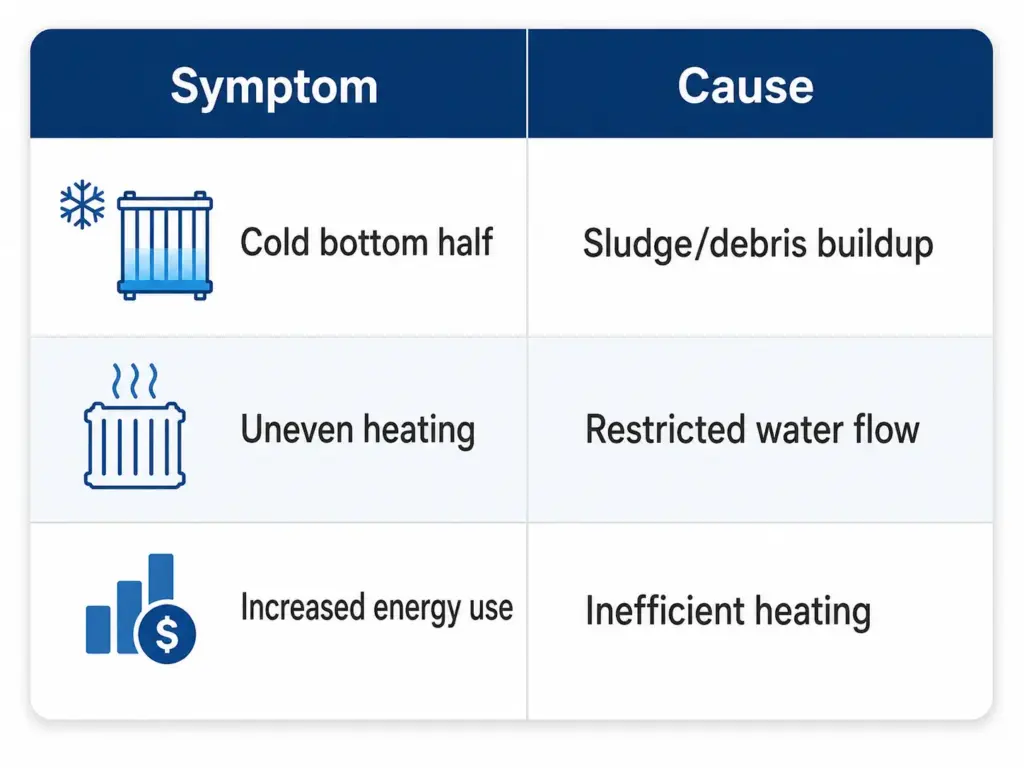
A common culprit behind radiators being hot at the top and cold at the bottom is internal blockages. These blockages are typically caused by the accumulation of sludge and debris in the radiator. Over time, this buildup can restrict the flow of hot water through the radiator’s lower sections, preventing adequate heating of these areas.
When a radiator is clogged, the heat distribution becomes uneven, leading to noticeable temperature differences. The top of the radiator remains warm because hot water rises by convection, but the bottom part is blocked and fails to receive it, resulting in cold spots.
To better understand the impact of blockages, consider the table below outlining common symptoms, causes, and effects of radiator blockages:
Addressing these blockages involves flushing the radiator system, which requires draining the radiator, using a specialised flushing agent, and then refilling the system with clean water and appropriate inhibitors to prevent future blockages. This process guarantees that the radiator heats efficiently and uniformly.
When to Call a Professional for Radiator Issues and Heating Problems
Recognising when to call a professional can save you both time and money, ensuring your heating system operates efficiently and safely.
When evaluating your situation, consider the following:
- Persistent Issues: If the problem reoccurs despite following preliminary fixes such as bleeding the radiator or adjusting the thermostat, it’s time to consult a professional.
- Boiler Problems: Signs such as unusual noises from the boiler, water leakage, or failure to heat up suggest underlying issues that require expert diagnosis.
- System-Wide Malfunction: When multiple radiators in your home are affected, or there are signs of a systemic issue, a professional can perform a thorough inspection and repair.
- Inadequate Heating Performance: If your heating bills are rising without a corresponding increase in heat output, it could indicate system inefficiencies that a professional needs to address.
These scenarios clearly indicate that professional help is necessary to maintain a functional and efficient heating system.
Frequently Asked Questions
Can Painting a Radiator Affect Its Heating Efficiency?
Yes, painting a radiator can affect its heating efficiency. Thick or insulative paint types can reduce heat output by inhibiting thermal emission, potentially leading to less effective room heating. Choose paint wisely to avoid this issue.
Are Radiator Covers Safe and Do They Impact Heat Distribution?
Radiator covers are generally safe and can enhance a room’s aesthetics. However, they may affect heat distribution by restricting airflow, potentially reducing the heating system’s efficiency at warming a space.
How Often Should Radiator Systems Be Professionally Serviced?
Radiator systems should be professionally serviced annually to guarantee peak performance and efficiency. Regular maintenance can prevent common issues, extend the system’s lifespan, and maintain consistent heat distribution throughout your home or building.
Can Energy-Efficient Radiators Completely Prevent Cold Spots?
Energy-efficient radiators considerably reduce cold spots but may not eliminate them. Proper installation, maintenance, and system design are essential to optimise performance and guarantee uniform heat distribution throughout the space.
Does Room Size Affect the Effectiveness of Radiator Heating?
Yes, room size greatly affects the effectiveness of radiator heating. Larger rooms may require multiple radiators or higher-capacity units to ensure even heat distribution and maintain a comfortable temperature throughout the space.
Conclusion
In summary, radiators hot at the top and cold at the bottom typically suffer from issues such as airlocks, incorrect pressure levels, or blockages. Efficient heat distribution in a radiator is essential for peak performance and energy efficiency. Addressing the issues by bleeding the radiators, checking the system pressure, and ensuring clear pathways for water flow can restore functionality. If these steps fail, consulting a heating professional is advisable to prevent further complications and maintain system longevity.