



Does a Listed Building Require an EPC? Listed buildings are not automatically exempt from EPCs; owners and landlords must obtain a certificate unless a statutory exemption applies. Exemptions often protect historic fabric where energy measures would alter character, such as places of worship, scheduled monuments, temporary buildings or units without fixed heating. Assessors must use non‑invasive methods and document any exemption. Failure to comply risks fines, sale or let delays and disputes. Continue for practical guidance on exemptions, assessment and compliance.
Key Takeaways
- Listed buildings usually need an EPC unless a statutory exemption applies to protect their historic fabric or character.
- Owners, long-term leaseholders, or landlords are responsible for obtaining and providing an EPC when required.
- Exemptions commonly include buildings used solely for worship, scheduled ancient monuments, temporary buildings, or very low-energy structures.
- Assessors must use non‑invasive methods; feasible, reversible measures are preferred to avoid damaging historic fabric.
- Always document evidence of exemption, consult local conservation officers, and obtain an EPC when unsure to avoid fines or sale/letting delays.
Quick Answer: EPC Requirements for Listed Buildings
Many listed buildings are exempt from mandatory Energy Performance Certificate (EPC) requirements when proposed energy-saving measures would unacceptably alter their character or appearance. However, owners should still obtain an EPC if they voluntarily carry out works or if no such exemption applies. In brief, statutory exemptions exist where heritage protection prevents the installation of insulating materials, replacement windows, or other fabric changes that would harm listed status. If works can be designed to preserve significance, an EPC may be required, and improvements may be recommended. Here are the 4 Reasons Why You Should Never Delay EPC Inspection.
Exemption status depends on the specific listing description, local authority advice, and whether a building is habitually used for residential or commercial purposes. Certificates remain useful as advisory tools for energy management, funding eligibility, and market transparency even when not legally required. Those valuing autonomy may consequently weigh preservation against potential efficiency gains, seek conservation-consistent solutions, or obtain discretionary assessments to inform choices without compromising heritage integrity.

Who EPC Rules Apply To: Owners, Landlords and Buyers
Responsibility for complying with EPC requirements falls primarily on those with legal control of listed building owners and long-term leaseholders and on landlords when a property is rented, while prospective buyers and tenants rely on EPC information to assess energy performance and legal obligations before completing transactions. Owners retain the duty to secure or record exemptions and to commission assessments when required; they must also provide valid EPCs to agents or make them available at the time of sale.
Does a Listed Building Require an EPC? Landlords must supply an EPC to prospective tenants and include its rating in marketing; if an exemption applies, they should document it. Buyers and tenants use EPCs to compare running costs and to identify potential retrofit constraints, informing negotiation and future autonomy over upgrades. Professionals acting on behalf of parties, agents, solicitors, and managing agents support compliance by exchanging EPCs and evidence of exemption. Clear allocation of responsibilities reduces disputes and preserves the freedom to decide on conservation-sensitive energy measures.
The Law in Plain English: EPCs and Listed Buildings
Although listed buildings are afforded special consideration under planning and heritage laws, they remain subject to the UK’s Energy Performance Certificate (EPC) regime with tailored rules and exemptions. The law requires assessment for most sales and lettings, but it recognises heritage value, so practical and regulatory flexibility applies. Responsibility falls to owners or landlords to obtain an EPC unless a statutory exemption applies. Assessors must balance accuracy with minimal impact on historic fabric, using non-invasive inspection methods where possible. Enforcement focuses on compliance rather than punitive measures when heritage constraints limit improvement options. Clear records and evidence of attempted improvements or professional advice support those relying on exemptions.
- Owners or landlords must check EPC obligations before marketing a property.
- Assessors conduct reasonable inspections, respecting conservation needs.
- Documentation of constraints or specialist advice strengthens an exemption claim.
- Enforcement considers heritage context and proportionality when deciding penalties.
Which Listed Buildings Are Routinely Exempt From EPCs
Having outlined how heritage considerations and exemptions operate within the EPC framework, the discussion now turns to the specific categories of listed buildings that are routinely exempt.
Generally exempt are buildings used solely for worship and religious activities, and those scheduled as ancient monuments where listing and scheduling overlap. Temporary buildings with a planned use of two years or less, and detached structures with very low energy demand (such as small outbuildings) also frequently qualify. Buildings due for demolition with a valid demolition notice are typically exempt. Structures without a fixed heating, cooling or power supply, or those rarely occupied, may be excluded on practical grounds.
Exemptions aim to balance conservation and practicality, allowing custodians to prioritise preservation and character without compulsion to retrofit in ways that could damage historic fabric. Owners and managers must still check current guidance and, where uncertainty remains, seek formal confirmation from the relevant local authority or accredited assessor.
How Use and Change of Use Affect EPC Requirements for Historic Properties
Any change in a historic building’s use can alter its EPC obligations because the assessment and required rating are tied to the building’s purpose, occupancy patterns and installed services. A shift from residential to commercial use, conversion to short‑term rental, or introduction of public access may trigger an EPC where none was previously needed, or require a different assessment scope. Responsibility follows the person controlling or marketing the property for sale or lease. Exemptions linked to fabric sensitivity remain relevant but do not automatically negate obligations created by a new use.
- A change to a use class that normally requires an EPC will likely remove prior exemptions.
- Temporary uses can create interim EPC duties if advertising the property for let or sale.
- The building’s fixed services (heating, hot water, ventilation) are re‑assessed when use changes.
- Legal advice is advisable to balance conservation freedoms with compliance obligations.
Getting an EPC Without Harming Historic Features
When an energy performance certificate is needed for a listed building, the assessment should be conducted and implemented in ways that protect its historic fabric and character; careful planning, use of non‑invasive measures, and collaboration with conservation officers can guarantee compliance without irreversible change. An accredited assessor can prioritise minimal intervention: survey original materials, recommend reversible insulation, draught‑proofing that avoids masonry damage, and efficient services located discreetly. Owners retain freedom to choose sympathetic upgrades and seek listed‑building consent early. Clear specifications, sample trials, and documented justification ease approval. The goal is measurable efficiency gains while conserving patina, joinery, and architectural features.
If Exempt: Alternative Compliance Routes and Certificates
If a listed building is judged exempt from a standard EPC because improvements would unacceptably harm its special architectural or historic interest, owners and assessors can pursue alternative compliance routes that document energy performance without imposing inappropriate works. These routes provide clear records and demonstrate due diligence while respecting the building’s character. Options often include advisory reports, tailored energy assessments, and certificates that acknowledge constraints and recommend non-invasive measures. Such documentation supports transactions, planning discussions, and grant applications while preserving occupants’ freedoms and owners’ autonomy.
- A tailored energy assessment that records performance and constraints without mandating fabric alterations
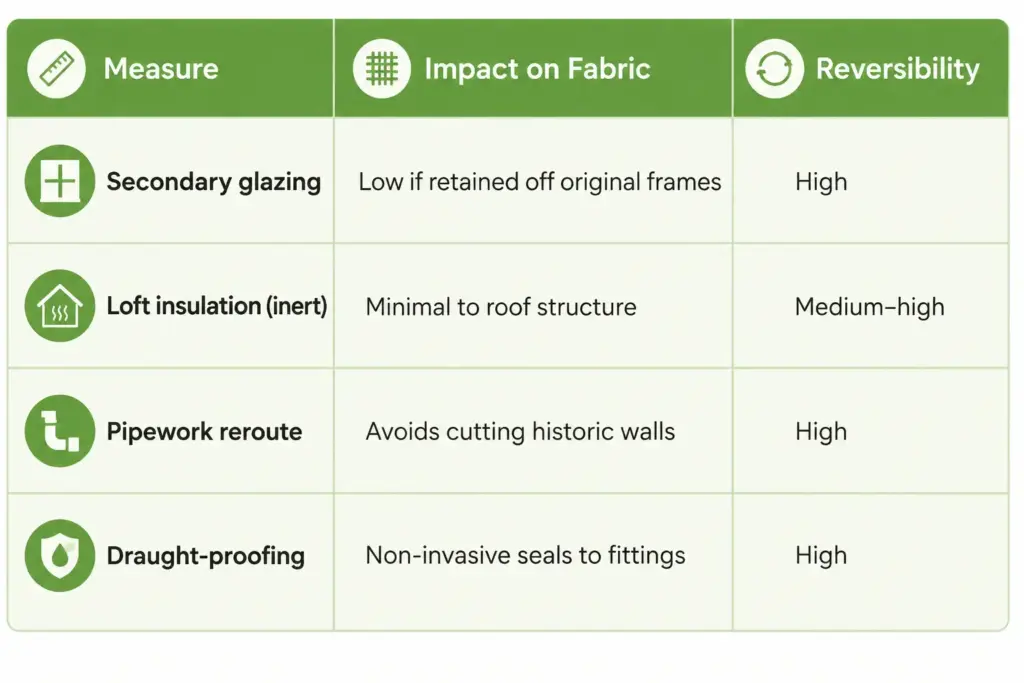
- An advisory report setting out feasible, reversible, or micro-scale measures (e.g., secondary glazing, heating upgrades)
- A statement of reasons or exemption certificate from a qualified assessor confirming harm from required improvements
- Voluntary retrofit passports or bespoke conservation-accredited certificates that track soft measures and future options

Common Pitfalls, Enforcement Risks and What to Prepare Before Selling or Renting
Although exempted listed buildings are treated differently under EPC rules, sellers and landlords still face specific pitfalls and enforcement risks that require careful preparation. The detached observer notes common issues: misclassifying exemptions, failing to provide alternative certificates, and overlooking local authority notices. Enforcement can mean fines, sale delays or blocked lets. Preparing clear documentation, contacting conservation officers, and commissioning sympathetic energy assessments preserve rights and market freedom. Practical steps include recording evidence of exemptions, planning minimal-impact improvements, and briefing agents and buyers on constraints. Anticipatory transparency reduces disputes and enforcement exposure.
| Risk | Preparation |
| Misclassification | Gather listing details and professional advice |
| Missing paperwork | Keep certificates and exemption statements |
| Enforcement notices | Communicate with the local authority early |
| Tenant/seller disputes | Provide full, clear disclosures |
| Unclear improvement options | Obtain tailored conservation-led advice |
This concise approach protects autonomy while managing statutory obligations, balancing heritage care with the liberty to sell or rent.
Frequently Asked Questions
Can Tenants Request an EPC for a Listed Property I Rent to Them?
Yes, tenants can request an EPC; the landlord retains legal responsibility. The landlord may claim listed-building exemption if applicable, but otherwise must commission an EPC. Tenants seeking proof should formally request documentation in writing.
Do Temporary Events or Short-Term Lets Need an EPC for a Listed Building?
Yes: temporary events or short-term lets in a listed building typically require an EPC unless the property qualifies for the listed-building exemption; the owner must check statutory criteria and can seek exemption evidence to avoid mandatory certification.
Are Listed Building Mortgage Lenders Influenced by EPC Ratings?
Yes, listed-building mortgage lenders can be influenced by EPC ratings, but priorities vary: some accept lower ratings if conservation constraints are demonstrated, while others demand improvements or adjusted terms, reflecting risk appetite and regulatory expectations.
Does a Listed Building on a Heritage At-Risk Register Change EPC Obligations?
Yes, being on a heritage at‑risk register does not automatically alter EPC obligations; one should expect the same legal exemptions or requirements as other listed buildings, though specific local conservation guidance may affect practical compliance.
How Do Green Energy Subsidies Affect EPC Requirements for Listed Properties?
Green energy subsidies do not automatically alter EPC legal requirements for listed properties; they can fund eligible energy efficiency works that may improve ratings, but installers and owners must still navigate listed-building consents and specific grant conditions before any changes proceed.
Conclusion
In sum, does a Listed Building require an EPC? Listed buildings are generally subject to EPC rules but benefit from specific exemptions and reasonable-effort requirements where historic fabric would be harmed. Owners, landlords and buyers should check a property’s listed status, intended use and any permitted works before commissioning an assessment. When exempt, alternative documentation may be needed; when not, energy improvements must respect conservation. Early engagement with conservation officers and qualified assessors reduces enforcement risk and streamlines the sale or rental process.