


Choosing between maintained and non‑maintained emergency lighting depends on how a building is used, its legal duties and energy priorities. Maintained fittings stay on in normal use, ideal for busy or low‑light areas needing constant illumination. Non‑maintained fittings only light during power failure, cutting energy use and visual impact. Both need testing and battery care, and many buildings mix the two for the best coverage. The key distinctions, costs and ideal applications are explored in more depth next.
Key Takeaways
- Maintained emergency lights stay on in normal use and during outages; non-maintained only illuminate when mains power fails.
- Choose maintained fittings for high-traffic, low-light, or public areas where constant wayfinding and visibility are required.
- Choose non-maintained fittings for offices, stores, and back-of-house areas where you want normal lighting unaffected and lower running costs.
- Maintained systems cost more to run and maintain but offer continuous illumination; non-maintained systems are cheaper, simpler, and experience less wear.
- Modern LED, self-test, and combined fittings let you mix both types, optimising safety, energy use, and compliance across different building zones.
Maintained vs Non‑Maintained: Key Differences
Although both systems serve the same safety objective, maintained and non‑maintained emergency lighting differ fundamentally in how and when they operate. Maintained fittings stay illuminated during normal conditions, drawing mains power, and automatically switch to battery when the supply fails. Non‑maintained fittings remain off in everyday use and only activate when the power cuts, running solely on their internal battery during an outage. This distinction shapes how a space feels and functions.
Maintained lighting supports flexible use of areas where people gather, trade, or move frequently, ensuring consistent illumination without relying on the building’s main lighting scheme. Non‑maintained lighting suits environments where users prefer darker, less regulated spaces, yet still need a clear escape route when something goes wrong.
In practice, the choice often blends both: maintained fittings for busy or public zones, non‑maintained units for low‑occupancy, low‑light areas that still demand reliable freedom of exit.
How Maintained Emergency Lighting Works
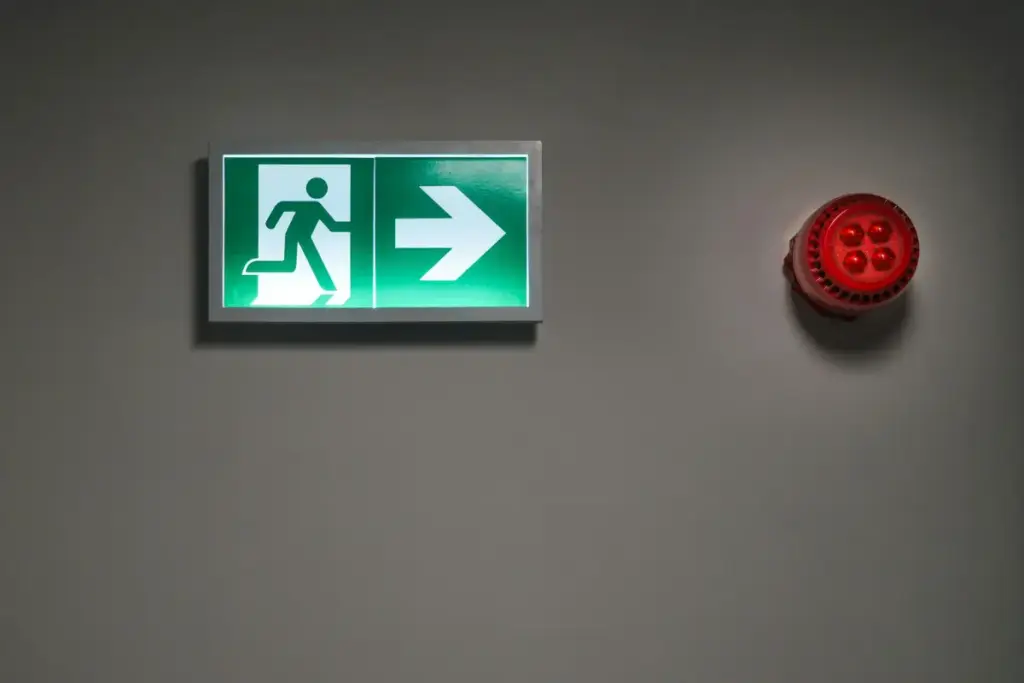
Maintained emergency lighting operates as a dual‑mode system, functioning both as part of the normal lighting scheme and as backup illumination during power loss. In everyday use, each fitting draws power from the mains supply, like a standard light, giving users consistent brightness and a familiar environment. Inside the unit, an internal battery charges quietly in the background, ready to take over when the supply fails.
When power is cut, a changeover device automatically switches to battery operation, keeping the same luminaire lit without interruption. This seamless shift supports safe movement, rapid exit, and the freedom to react without confusion or darkness.
Luminaires can be wired into normal lighting circuits or controlled separately, giving building operators flexible control over ambience and energy use.
- Continuous illumination that avoids sudden darkness
- Familiar lighting layout that doubles as safety lighting
- Flexible control options for varied occupancy patterns
How Non‑Maintained Emergency Lighting Works
Non‑maintained emergency lighting operates only when the normal electrical supply fails, remaining off during everyday use. Each fitting contains a dedicated battery and charging circuit that stays on standby while the mains power is available. The luminaire does nothing visible in daily life; it simply waits, charged and ready.
When the supply drops or is cut, an internal relay or control gear senses the loss of power and instantly switches the light to battery operation. Illuminated escape routes, exits and key safety points then guide occupants to open space and clear choices, rather than confusion.
These systems are commonly installed along corridors, stairwells, final exits and high‑risk task areas. Because they remain off in normal conditions, they do not interfere with existing lighting schemes or ambience. Users keep full control over their everyday environment, while still meeting the essential requirement for automatic lighting in an emergency.
Maintained vs Non‑Maintained: Cost, Energy and Maintenance
When comparing maintained and non‑maintained emergency lighting, the practical differences often emerge most clearly in cost, energy use and long‑term upkeep. Maintained fittings, illuminated at all times, typically consume more power and may require more frequent lamp replacement. Non‑maintained units remain off until a power failure, reducing everyday energy consumption and extending component life, which can appeal to those who want lower running costs and fewer constraints.
Upfront, maintained systems may involve higher installation and wiring costs, especially when integrated with existing lighting schemes. Non‑maintained options are often simpler to retrofit, offering flexibility in layout and budget. Ongoing maintenance also diverges. Both types require periodic testing and battery replacement, but non‑maintained units usually experience less wear in normal operation, potentially lowering servicing demands over time.
To weigh the trade‑offs, many decision‑makers focus on:
- Lifetime energy spend
- Battery and component replacement cycles
- Testing access and disruption to daily use
When Maintained Emergency Lighting Is the Best Choice
In certain environments, continuous illumination from emergency fittings is not just beneficial but essential. Maintained emergency lighting proves most suitable where people move freely, gather in large numbers, or may be unfamiliar with the layout, such as bars, clubs, theatres, shopping centres, transport hubs and high‑rise residential buildings. Here, occupants expect to come and go without restriction, and any sudden darkness could quickly undermine safe evacuation.
Maintained systems also suit premises that often operate in low light for ambience or performance reasons. By keeping exit routes, changes in level, and key decision points permanently visible, these fittings support intuitive wayfinding even before an incident occurs.
They are further favoured in buildings where occupants might include children, visitors with limited mobility, or individuals under the influence of alcohol or medication. In such spaces, a predictable, always‑on light level provides reassurance and helps prevent panic when mains power fails.
When Non‑Maintained Emergency Lighting Works Better
Although maintained fittings have clear advantages in many busy or low‑light environments, there are numerous premises where non‑maintained emergency lighting is the more appropriate choice.
This approach appeals to those who want flexible spaces, lower running costs, and minimal visual intrusion from safety equipment in day‑to‑day life. Because the luminaires only activate on power failure, normal lighting design remains uncluttered, and energy use is kept tightly under control.
Non‑maintained systems often work better where occupants value open, adaptable environments that are not dominated by constantly lit safety fittings. They are commonly favoured in:
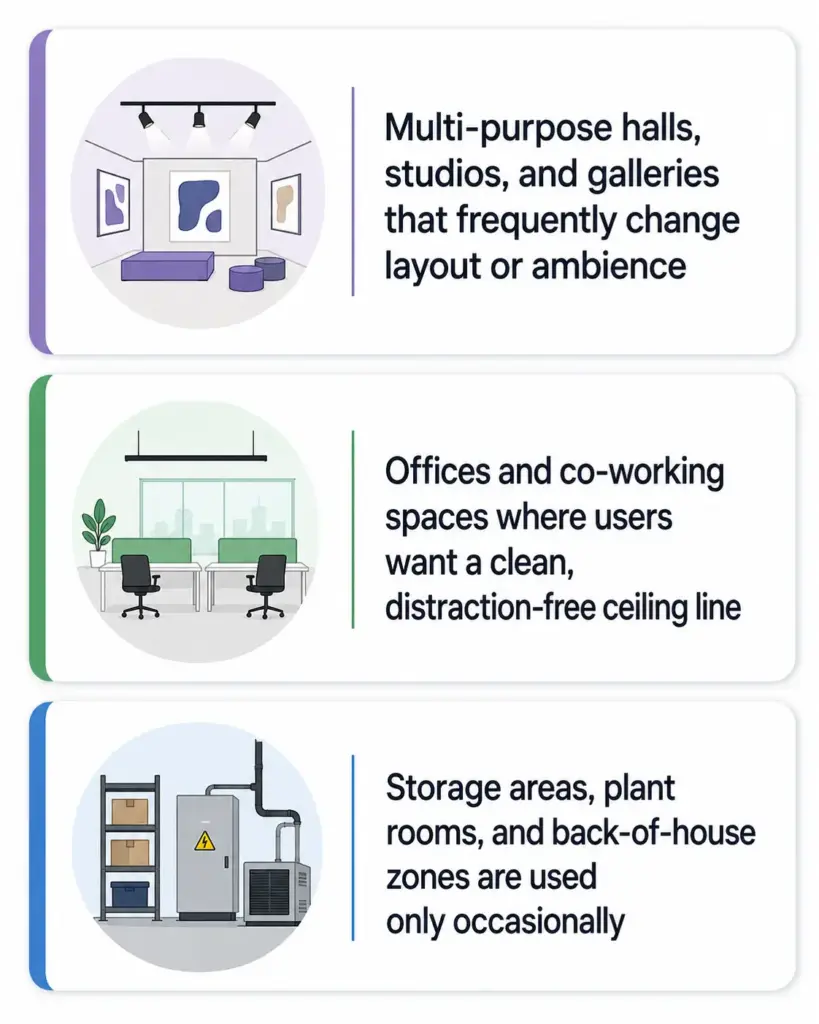
In these settings, non‑maintained lighting provides reliable escape illumination while keeping everyday operation simple, efficient, and unobtrusive.
UK Rules for Maintained and Non‑Maintained Emergency Lighting
Because emergency lighting is a legal life‑safety measure rather than a design preference, UK rules tightly define where maintained and non‑maintained systems may be used and how they must perform. The core requirements sit in the Regulatory Reform (Fire Safety) Order 2005, BS 5266‑1, and BS EN 1838, which together set minimum light levels, duration, testing and signage standards. Learn more about Important Guidelines about Emergency Lighting Regulations.
Maintained emergency lighting is expected in spaces open to the public, higher‑risk task areas, and venues where sudden darkness would cause panic or trap occupants. Non‑maintained fittings are generally permitted in workplaces and circulation routes where normal lighting is reliable, and occupants are familiar with escape paths.
Both system types must provide at least one hour of operation in most buildings, rising to three hours where re‑entry or overnight occupation is possible. Regular testing, accurate logbooks, and prompt fault rectification are mandatory, ensuring people can move independently and safely during any power loss.

How to Choose the Right Emergency Lighting for Your Building
Understanding the legal framework is only the starting point; selecting suitable emergency lighting also depends on a building’s use, occupancy, and existing electrical infrastructure. The decision shapes how quickly people can move, how confidently they can act, and how independently they can exit without relying on staff or security.
A clear strategy begins with a risk assessment. High‑risk tasks, sleeping accommodation, and complex layouts usually benefit from maintained fittings, ensuring constant familiarity with escape routes. Simpler spaces, such as small offices or storage areas, often function well with non‑maintained units that activate only during power loss. For more basics, visit our blog post Guide to Locating Emergency Lighting in the Right Areas.
To keep choice flexible and future‑proof, many building owners weigh:
- The freedom to adapt layouts without costly rewiring
- The desire to keep escape routes intuitive, even in partial darkness
- The balance between upfront investment and long‑term maintenance demands
Combined, Self‑Test and LED Emergency Lighting Options
Modern emergency lighting extends beyond the simple choice between maintained and non‑maintained fittings, offering combined, self‑test and LED options that refine how systems perform and are maintained. Combined fittings operate as normal luminaires in day‑to‑day use, then switch to emergency mode during power loss. This dual role can reduce the number of fittings required, freeing up ceiling space and simplifying layouts.
Self‑test emergency luminaires automate routine testing, running function and duration checks without manual intervention. Results are indicated locally or via central monitoring, cutting inspection time and helping duty‑holders prove compliance without constant supervision. LED emergency lighting offers long lamp life, low energy demand and compact form factors. High efficacy means clearer escape routes with fewer fittings, while reduced maintenance supports leaner staffing and lower disruption.
Together, combined, self‑test and LED options give building owners more control, flexibility and efficiency than traditional emergency lighting alone.
Frequently Asked Questions
How Do I Test Emergency Lights Without Disrupting Normal Building Operations?
They test emergency lights during low-occupancy hours, isolate circuits locally, and simulate power failure via test switches. They follow legal logbook procedures, rotate zones, warn occupants, and verify duration and brightness, preserving everyday freedom of movement and work.
What Records Must I Keep for Emergency Lighting Inspections and Tests?
They must keep dates of inspections/tests, locations and ID of each fitting, duration results, defects found, corrective actions taken, responsible persons’ names, and evidence of contractor reports, forming a clear logbook trail that satisfies legal scrutiny yet preserves operational autonomy.
How Long Do Emergency Lighting Batteries Typically Last Before Needing Replacement?
Emergency lighting batteries typically last 3–4 years before replacement, though quality units can reach 5. Lifespan depends on regular testing, ambient temperature, charging conditions, and manufacturer guidance, all of which are essential for keeping escape routes reliably illuminated during power loss.
Can Emergency Lighting Design Be Integrated With Interior Design and Aesthetics?
Yes, emergency lighting can blend seamlessly with interior design. Designers often hide fittings in architectural details, use minimalist or decorative luminaires, match finishes and colour temperatures, and plan sightlines so safety lighting supports both freedom of movement and visual harmony.
How Should I Train Staff to Respond When Emergency Lights Activate Unexpectedly?
They should pause activity, stay calm, check for real hazards, avoid overriding lights, guide others to exits, follow rehearsed evacuation routes, report faults, document the incident, then debrief to refine procedures and preserve everyone’s autonomy and safety.
Conclusion
Choosing between maintained and non‑maintained emergency lighting depends on a building’s use, occupancy and risk profile. By understanding how each system operates, its costs, energy impact and maintenance needs, duty holders can align lighting strategies with both safety objectives and UK regulations. Considering the combined self‑test and LED options further refines performance and efficiency. Ultimately, a tailored, well‑designed scheme offers the most reliable protection for occupants when normal lighting fails.