

In the UK, fire safety is primarily enforced by local fire and rescue authorities under the Regulatory Reform (Fire Safety) Order 2005. The Health and Safety Executive enforces fire safety on construction sites and in certain workplaces, while local authorities may oversee venues such as sports grounds and entertainment premises. Day-to-day compliance remains the duty of the Responsible Person, who must manage risks and precautions. The sections below explain how enforcement works in practice and who is responsible for enforcing fire safety.
Key Takeaways
- Local fire and rescue authorities mainly enforce fire safety law in most non-domestic premises across England and Wales.
- The Health and Safety Executive enforces fire safety on construction sites and in certain specialist workplaces.
- Local authorities may enforce fire safety rules in some entertainment venues and sports grounds.
- The Responsible Person must manage fire safety daily, including risk assessments, precautions, and informing occupants.
- In Scotland and Northern Ireland, different fire safety legislation applies, with separate enforcing authorities.
What Does Fire Safety Enforcement Mean in the UK?
In the UK, fire safety enforcement is the legal process that ensures responsible persons comply with their fire safety duties under the Regulatory Reform (Fire Safety) Order 2005 and related legislation. It exists to protect life, property, and the public’s ability to live and work without avoidable danger.
In practice, enforcement means checking whether fire risks have been properly identified, assessed, reduced, and managed. It also means there are consequences when basic safeguards are ignored. Breaches may trigger formal notices requiring improvements, restricting the unsafe use of the premises, or prohibiting activities that pose a serious risk.
Who Enforces Fire Safety in the UK?
Across the UK, fire safety is primarily enforced by local fire and rescue authorities in most non-domestic premises and the common parts of multi-occupied residential buildings. These authorities inspect premises, investigate concerns, and take action where standards fall short, aiming to protect life without imposing unnecessary restrictions on lawful activity.
In certain sectors, enforcement shifts to other regulators. The Health and Safety Executive enforces fire safety on construction sites, ships under repair, and some specialist workplaces. Local authorities may enforce rules in sports grounds, entertainment venues, and licensed premises, depending on the circumstances.
Crown premises have separate arrangements, though equivalent standards still apply. In Scotland and Northern Ireland, similar duties exist under different legislation and enforcement structures. Where risks are serious, enforcers can issue notices, restrict use of premises, or pursue prosecution, ensuring public safety while preserving the public’s confidence and freedom to work, trade, and gather.
Who Is the Responsible Person for Fire Safety?
The responsible person for fire safety is usually the property owner, landlord, or manager who has control over the building. They are legally accountable for ensuring that fire risks are properly managed and that safety measures are in place for everyone on the premises.
What Does the Responsible Person Have to Do?
Identify the responsible person first: under UK fire safety law, this is usually the employer, owner, landlord, occupier, or anyone with control over the premises. That person must assess fire risks, remove or reduce hazards, and protect people without imposing unnecessary restrictions on the building’s normal use.
Duties include maintaining alarms, extinguishers, emergency lighting, clear escape routes, and fire doors. The responsible person must provide staff with information, instruction, and training, appoint competent help where needed, and plan for emergencies.
Regular reviews are required whenever the premises, occupants, or activities change. They must also cooperate with others who share the building, keep records where required by law, and ensure that vulnerable people can evacuate safely. In short, responsibility means practical prevention, clear organisation, and lawful accountability. Learn more in detail by reading our blog post Who Is Responsible for Fire Safety?
When Do Fire and Rescue Authorities Inspect a Premises?
When, then, do fire and rescue authorities inspect a premises? They inspect when risk, intelligence, or events warrant scrutiny. In the UK, inspections are not usually random. Authorities generally prioritise premises where sleeping accommodation, large crowds, hazardous materials, or complex layouts increase the chance of harm.
They may also visit after complaints, reports of unsafe conditions, fires, near misses, or significant alterations. Local risk-based programmes often shape inspection timing. Higher-risk buildings are seen more often, while low-risk premises may go for long periods without a visit. Authorities can also inspect when a business opens, changes use, or appears non-compliant with fire safety duties.
Some sectors, such as care homes, hotels, licensed venues, and high-rise residential buildings, attract closer attention because failures there can trap people and restrict safe choices.
For this reason, responsible persons should not wait for a fire authority inspection before taking action. Arranging a suitable fire risk assessment helps identify hazards, review escape routes, check fire safety measures and keep clear evidence of compliance. This can reduce the chance of enforcement issues and support a safer premises for staff, visitors and residents.
What Notices Can Be Issued for Fire Safety Breaches?
Enforcement notices, prohibition notices, and alteration notices are the main formal measures available where fire safety breaches are found.
An enforcement notice is used where the responsible person has failed to comply with fire safety duties. It identifies the problem, states what must be put right, and sets a time-frame for corrective action. This approach allows continued use of the premises while improvements are made.
A prohibition notice is more restrictive. It is issued when the use of all or part of the premises involves a serious risk to relevant persons. The notice can limit or stop certain activities immediately or from a specified date, protecting occupants until the danger is removed.
An alteration notice is used when a premise poses a higher risk if altered. It requires the responsible person to notify the authority before making specified alterations, helping prevent new hazards from being introduced without oversight and preserving a safe, lawful occupation.
What Are the Penalties for Non-Compliance?
Breaches of fire safety law can lead to prosecution, substantial fines, and, in the most serious cases, imprisonment. Courts consider the scale of risk, the duration of non-compliance, and whether warnings were ignored. Penalties are designed to protect life while ensuring duty holders cannot gain unfair freedom from responsibility by cutting corners.
Common consequences include:
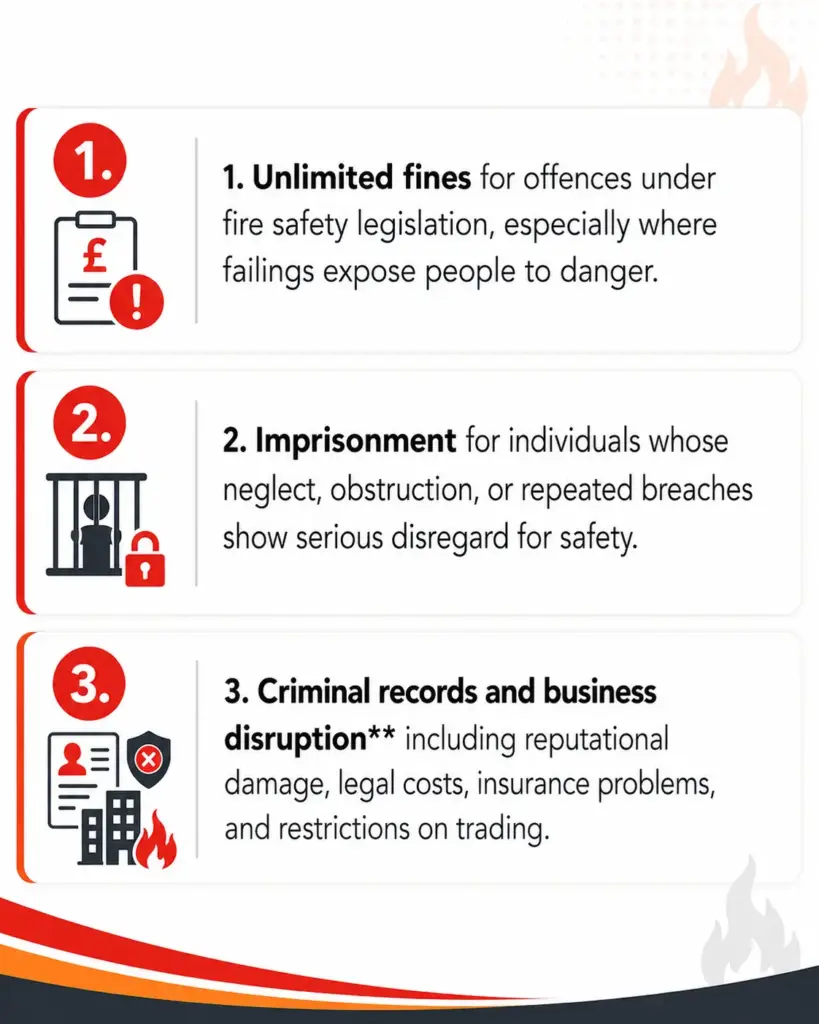
Enforcement action can follow a single severe breach or a pattern of smaller failures. Sentencing may be increased where vulnerable people were put at risk or where there was deliberate non-cooperation with inspectors.
Do Flats and Residential Buildings Follow Different Rules?
Indeed, flats and residential buildings can be subject to different fire safety duties depending on their layout, use, and whether areas are privately occupied or shared.
In self-contained houses, obligations are usually simpler, focusing on alarms, escape routes, and safe electrical systems.
In blocks of flats, the picture changes because corridors, stairwells, entrance halls, plant rooms, and external walls are communal spaces that affect everyone’s ability to leave safely. The person in control of those shared parts, often a landlord, freeholder, managing agent, or residents’ management company, is generally expected to assess risks and maintain precautions there.
Individual flat owners or tenants remain responsible for hazards within their own homes, but they do not control the common escape routes used by neighbours. This split matters because fire doors, signage, lighting, alarm systems, and smoke ventilation in shared areas protect both safety and personal independence. Rules consequently vary not to limit freedom, but to preserve it in denser living environments.
Does HSE Enforce Fire Safety in Some Workplaces?
While local fire and rescue authorities enforce most workplace fire safety requirements, the Health and Safety Executive takes the lead in certain higher-risk premises, such as construction sites, mines, factories, and some Crown workplaces. In these settings, HSE oversees fire precautions where dangerous processes, heavy machinery, explosive materials, or complex working conditions pose risks beyond those in ordinary office environments.
Its role matters because these workplaces can threaten life, property, and operational independence on a larger scale.
HSE enforcement may involve:
- inspecting premises and work activities
- investigating serious fire-related incidents
- requiring corrective action where legal duties are breached
This division of responsibility helps guarantee that enforcement sits with the authority best equipped for the environment. For employers and workers who value clear boundaries and practical regulation, that separation supports accountability without unnecessary overlap. In short, HSE does enforce fire safety, but only in the specific categories of workplaces assigned to it by law in Britain. Here are the Essential guidelines for safer workplace.
How to Stay Compliant With UK Fire Safety Law
Maintain compliance with UK fire safety law by treating it as an ongoing management duty rather than a one-off checklist. The responsible person should complete a suitable fire risk assessment, remove or reduce hazards, protect escape routes, maintain alarms and extinguishers, and guarantee emergency lighting and signage remain effective.
Staff and regular occupants need clear instructions, practical drills, and training that matches the premises and risks. Compliance also depends on records, review, and swift action when conditions change. Alterations to layout, storage, staffing, or processes can create new risks and should trigger reassessment.
Maintenance contracts, inspection logs, and documented testing help prove control without smothering day-to-day operations. Where specialist issues arise, competent fire safety advice can prevent costly mistakes.
A sensible system gives people confidence to work, trade, and move freely, while still meeting legal duties. In practice, good compliance protects life, property, continuity, reputation, and long-term operational independence for everyone involved.
Frequently Asked Questions
Can Tenants Report Fire Safety Concerns Directly to Authorities?
Yes, tenants can report fire safety concerns directly to local fire and rescue services, councils, or housing regulators. They are free to raise urgent risks independently, especially where landlords ignore hazards or residents face immediate danger.
How Often Should Fire Extinguishers Be Serviced in UK Workplaces?
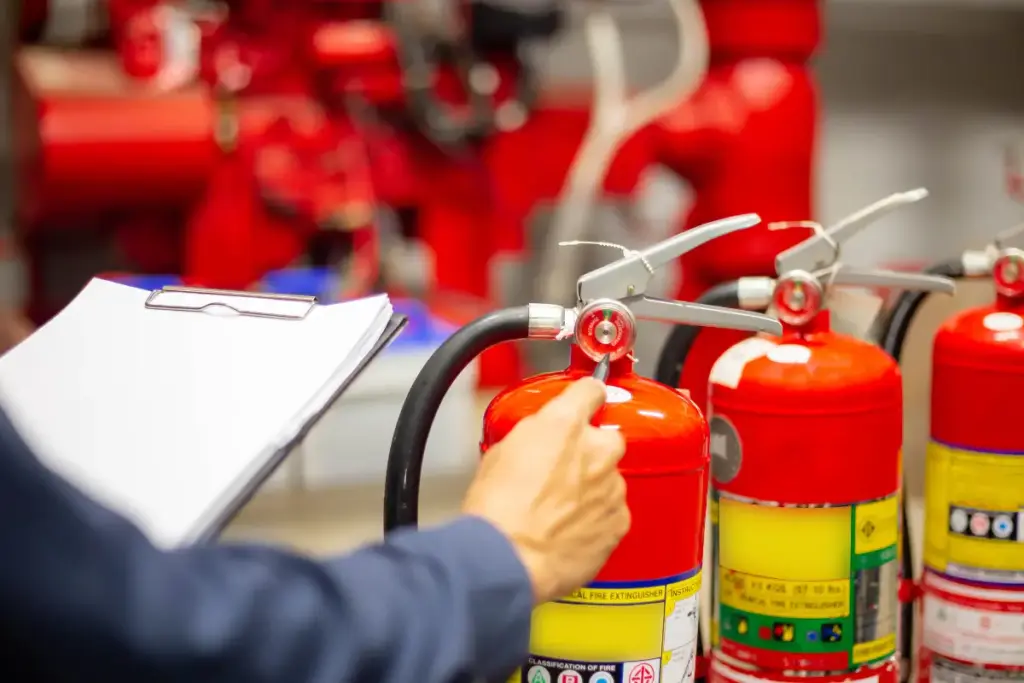
Fire extinguishers in UK workplaces should generally be serviced annually by a competent person, with regular visual checks in between. This helps occupants maintain safer, more independent workplaces while meeting legal fire safety expectations and standards.
Are Fire Drills Legally Required in Small Businesses?
Yes, fire drills are generally legally required in small UK businesses where employees are present, as part of fire safety arrangements. Frequency depends on risk assessment, though regular practice helps people evacuate confidently and preserves operational independence.
What Fire Safety Records Must Landlords Keep for Inspections?
Landlords should keep fire risk assessments, alarm and emergency lighting test logs, extinguisher servicing records, electrical and gas safety certificates, evacuation plans, and evidence of repairs or resident fire safety information, ready for inspection.
Do Listed Buildings Have Special Fire Safety Requirements?
Yes, listed buildings often face special fire safety requirements. Owners must balance protective measures with heritage rules by using sympathetic alterations, obtaining listed building consent where needed, and demonstrating equivalent safety when standard upgrades threaten the historic fabric.
Conclusion
In conclusion, regarding who is responsible for enforcing fire safety, the answer is that enforcement in the UK is shared among fire and rescue authorities, responsible persons, and, in some cases, the HSE. While enforcement bodies inspect premises and issue notices or penalties where needed, legal responsibility usually rests with those in control of the building. Compliance depends on understanding the relevant legislation, conducting appropriate fire risk assessments, and addressing hazards promptly. A clear, proactive approach helps protect occupants, meet legal duties, and reduce the risk of enforcement action.