

A landlord’s gas safety certificate (CP12) in the UK typically costs £60–£120 for a standard home. Prices rise in big cities, larger or older properties, and where there are multiple gas appliances. Costs also vary by engineer, urgency, and whether a full boiler service is included. Bundled boiler service and certificate deals can offer better value. Those who want to understand pricing, inclusions, hidden extras, and ways to save can explore the topic further.
Key Takeaways
- Typical landlord gas safety certificates cost £60–£120 for standard homes, with higher prices in major cities and high-demand areas.
- Costs rise with more gas appliances, larger or older properties, and when a full boiler service is included rather than basic checks.
- Expect the fee to cover checks on the appliance, flue, and pipework, leak testing, pressure checks, and a Landlord Gas Safety Record (CP12).
- Extra charges often apply for additional appliances, out-of-hours visits, urgent call-outs, and sometimes certificate or admin fees.
- You can reduce costs by bundling boiler servicing, using multi-property discounts, planning checks early, and comparing local engineers with national firms.
Typical UK Cost of a Landlord Gas Safety Certificate (CP12)
Although prices vary by region and property type, the typical cost of a landlord’s gas safety certificate (CP12) in the UK generally falls between £60 and £120 for a standard residential property with one boiler and one gas appliance. In large cities and high‑demand areas, prices often sit at the upper end of that range, while smaller towns and less competitive markets may offer lower fees.
Costs usually rise when additional gas appliances are present, when properties are larger, or when access is awkward and appointments take longer. Landlords who want flexibility often compare quotes from multiple Gas Safe registered engineers, weighing travel fees, call‑out charges, and availability.
Some engineering firms offer discounted rates for multiple properties or for combining CP12 checks with boiler servicing, helping landlords keep compliance costs under control while preserving cash flow and choice over who carries out the inspection each year.

What’s Included in a Landlord Gas Safety Check
A landlord gas safety check covers a structured series of inspections and tests on all gas appliances, flues, and associated pipework provided in a rental property.
A Gas Safe registered engineer visually inspects each appliance such as boilers, gas fires, and hobs for correct installation, adequate ventilation, and safe positioning. They confirm that flame quality is correct and that safety devices operate as intended.
They then test for gas leaks, verify working gas pressures, and measure the effectiveness of flue systems to guarantee harmful combustion products are safely expelled. Checks also include confirming that emergency shut-off valves are accessible and functional. The engineer assesses whether appliances are suitable for the space, compliant with current regulations, and not at risk of producing carbon monoxide.
Finally, they record findings on the Landlord Gas Safety Record (CP12), listing each appliance checked, identified defects, any remedial actions taken, and recommendations needed to keep tenants safe and unrestricted in their use of the property.
Key Factors That Change Your Gas Certificate Price
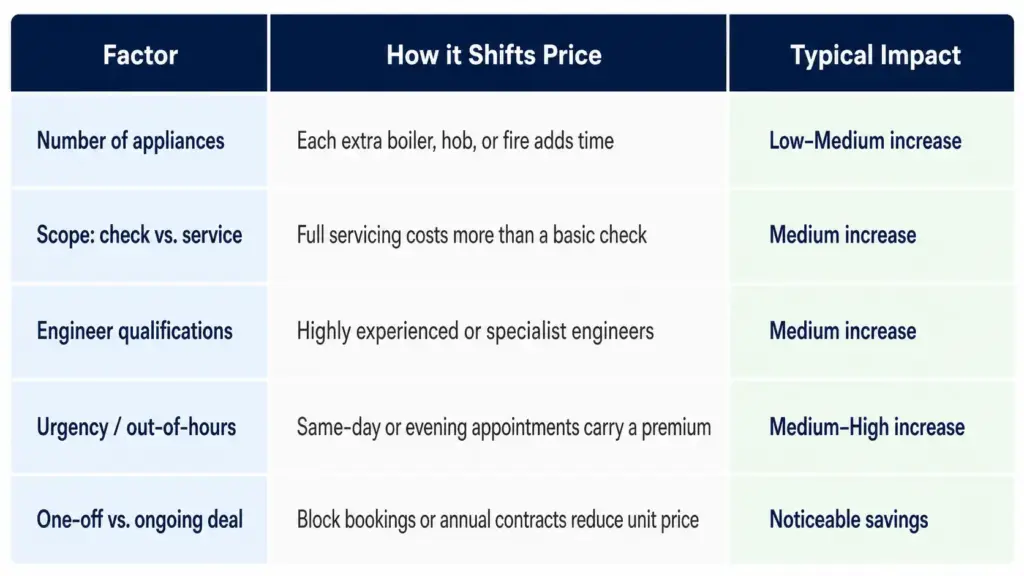
Price variation in landlord gas safety certificates is driven by a few core factors rather than random differences between providers. Landlords who want control over costs need to understand what actually shifts the price. The number of gas appliances, the service scope, engineer credentials, urgency, and contract structure all matter more than vague “from £XX” adverts.
Why Property Type and Location Change the Price
Beyond the core inputs like appliance count and urgency, the physical context of the property and where it sits on the map also shapes the final cost of a landlord gas safety certificate. A compact studio in a city centre does not demand the same time, access solutions, or travel as a rambling farmhouse down single-track roads, and pricing reflects that difference.
Property type often shifts cost because layout, age, and construction style alter how easily an engineer can inspect and test the system.
Location then adds another layer, with higher overheads and travel time baked into quotes. In practice, landlords see prices move because of:
- City‑centre flats versus spread‑out suburban houses
- Rural or island properties that require long travel or ferries
- Older, heavily modified buildings where pipe routes are harder to trace and document
How the Number of Appliances Affects Certificate Cost
When evaluating the cost of a landlord’s gas safety certificate, the number of gas appliances in a property is one of the most direct price drivers. Each additional boiler, gas fire, hob, or heater adds inspection time, testing, and documentation, so engineers typically increase their fee per appliance or apply stepped pricing once a threshold is passed.
Most providers quote a base price covering one appliance, then a fixed extra charge for each further item. As appliance counts rise, total cost climbs, but the marginal cost per appliance often falls because the engineer is already on site, spreading travel and administrative time across several checks.
Landlords seeking flexibility over their portfolio budgets pay close attention to this structure. Concentrating appliances in fewer units, or standardising types of appliances, can simplify inspections, reduce time on site, and help keep certification costs more predictable and easier to control.
Combined Boiler Service and Gas Certificate Bundle Deals
Many landlords reduce overall compliance costs by opting for combined boiler service and gas safety certificate bundle deals from the same engineer. This approach keeps essential checks under one appointment, minimising disruption for tenants and reducing the admin burden for owners who value their time and flexibility.
A typical bundle includes a full boiler service plus the legally required CP12 inspection. When priced together, these often work out cheaper than booking two separate visits.
Landlords seeking maximum control over annual costs may look for:
- Transparent bundle pricing that clearly separates labour, parts, and certificate issuance.
- Annual or multi‑year plans that lock in today’s rates and protect against future price rises.
- Flexible booking options, such as evening or weekend slots, to accommodate tenant availability.
Hidden Extra Charges on Landlord Gas Safety Checks
Hidden charges can substantially inflate the apparent cost of a landlord gas safety check, catching owners off guard after an initially attractive quote. Many quotes headline only the basic certificate fee, with key elements quietly excluded.
Landlords then discover added costs for extra gas appliances, flue inspections, or certificates issued per dwelling in HMOs or blocks. Some engineers charge premiums for “out‑of‑hours” appointments, parking, congestion zones, or revisits when tenants miss appointments.
Others separate the call‑out fee from the actual inspection, so the real price only emerges on the invoice. Parts and remedial work sit outside the certificate cost, yet some firms apply inflated mark‑ups or mandatory “admin” or “processing” fees.
Freedom‑minded landlords protect themselves by insisting on a fully itemised quote in writing, confirming what is included, what triggers extra charges, and how prices change if faults are found or access problems arise.

National vs Local Gas Safe Engineers for Certificates
Although both national firms and small local engineers must be Gas Safe registered and issue the same legally recognised certificate, the way they structure prices and service can differ greatly.
National brands often promote fixed-fee packages and online booking, appealing to landlords who want predictable costs and minimal hassle. Local engineers, by contrast, may offer more flexible appointment times and tailored pricing that reflects the actual size and complexity of a property.
Landlords weighing up both options often compare:
- Price transparency – Nationals may publish headline rates; locals might negotiate, particularly for multiple properties in the same area.
- Responsiveness – Local engineers can sometimes attend faster, especially in tight rental changeover windows.
- Administrative support – National firms typically provide digital records, reminders, and centrally managed paperwork, while local engineers may rely on direct phone or email contact, which some landlords prefer for control and flexibility.
How to Cut Gas Certificate Costs and Budget Yearly
Careful planning can greatly reduce what a landlord spends on gas safety certificates each year. Instead of treating checks as last‑minute emergencies, many landlords map out inspections months in advance, locking in fixed prices and avoiding rush premiums.
They often align gas checks with other compliance visits, cutting the number of call‑outs and travel charges.
Some landlords build small, predictable monthly contributions into their property budgets, creating a ring‑fenced pot for annual certificates and any minor repairs flagged during inspections. This prevents sudden costs from dictating decisions or forcing higher‑interest borrowing.
Others secure multi‑property or multi‑year deals with the same Gas Safe engineer, trading commitment for discounted rates. Keeping appliances serviced and ventilated also reduces the chance of repeated call‑outs.
Frequently Asked Questions
Do I Need a Gas Safety Certificate for Airbnb or Holiday Let Properties?
Yes, a gas safety certificate is required for Airbnb and holiday lets where gas appliances exist. The law treats hosts as landlords, demanding annual checks by a Gas Safe engineer to protect guests’ safety and preserve hosting freedom.
How Do Gas Safety Requirements Differ for HMOS Versus Single-Let Properties?
Gas safety rules are the same in law, but HMOs face tighter practical scrutiny: more frequent inspections, clearer record‑keeping, robust carbon monoxide alarm coverage, and stronger emphasis on written procedures aligning with licensing and local authority expectations.
What Penalties Can Landlords Face for Missing or Invalid Gas Certificates?
Landlords risk prosecution, unlimited fines, imprisonment up to six months, invalidated insurance, enforcement notices, and potential rent‑repayment orders. Courts may also restrict future letting, and serious breaches after accidents can lead to harsher criminal charges, including manslaughter.
How Long Must Landlords Keep Historic Gas Safety Records and Certificates?
They must keep historic gas safety records for at least two years, and each new certificate must be retained until two further checks are completed. This rule preserves transparency while limiting long‑term data hoarding over tenants’ living conditions.
Can Tenants Legally Refuse Access for a Scheduled Gas Safety Inspection?
Yes, tenants can legally refuse access, but landlords must show “all reasonable steps” to arrange inspections. Written notices, flexible appointments, and documented attempts protect landlords, while tenants risk increased liability and potential action if serious safety risks arise.
Conclusion
Landlord gas safety certificates are a legal necessity and a crucial safeguard for tenants. Costs vary by property type, location, number of appliances and the engineer chosen, with bundles and local specialists often offering savings. By understanding typical prices, checking what’s included and watching for hidden extras, landlords can plan ahead and budget annually. Taking a proactive approach helps keep compliance costs manageable while ensuring gas installations remain safe, efficient and fully up to regulatory standards.