


An Electrical Installation Condition Report (EICR) is a formal safety inspection of a property’s fixed electrical wiring and equipment. A qualified electrician checks for damage, deterioration, and non-compliance with current regulations that could cause fire, electric shock, or equipment failure. It is often required for rented and commercial properties and recommended for homeowners at set intervals. The report uses clear codes to prioritise any faults, and the next sections explain who needs one, how it works, and typical costs.
Key Takeaways
- An Electrical Installation Condition Report (EICR) is a formal inspection and testing of a property’s fixed wiring to assess electrical safety and compliance.
- It is carried out by a qualified electrician, who visually inspects and tests circuits, sockets, switches, earthing, and bonding with specialist equipment.
- The report uses observation codes (C1, C2, FI, C3) to classify defects by risk level and recommend necessary remedial actions.
- EICRs are legally required for private rented homes in England and recommended periodically for homeowners and commercial properties to prevent fire and electric shock.
- The EICR provides documented proof of electrical safety, supporting legal compliance, insurance requirements, property sales, and long‑term maintenance planning.
What Is an EICR and Why Do You Need One
An Electrical Installation Condition Report (EICR) is a formal inspection and testing document that assesses the safety and condition of a property’s fixed electrical wiring and equipment. It records the results of a detailed examination carried out by a qualified electrician, who checks whether the installation is safe to use and compliant with current standards.
The report highlights any damage, deterioration, defects, or non‑compliances that could present a risk.
An EICR matters because electrical faults are a common cause of fires, electric shocks, and equipment failure. Hidden issues such as loose connections, overloaded circuits, or outdated protective devices often show no obvious signs until something goes wrong.

Who Needs an EICR and When It’s Required by Law
When is an EICR simply good practice, and when is it a legal obligation?
In many situations it is recommended, but in some it is required by law. An EICR is legally mandated for privately rented homes in England under the Electrical Safety Standards in the Private Rented Sector Regulations 2020.
Landlords must have a valid report and provide copies to tenants and, if requested, to the local authority. Similar legal duties exist, with local variations, across the UK.
Is EICR a Legal Requirement for Business? Commercial property owners and employers also have obligations. While specific regulations may not always name “EICR” directly, health and safety law requires that electrical systems are maintained in a safe condition; an EICR is the recognised way to demonstrate this.
Homeowners are not usually legally compelled to have an EICR, but mortgage lenders, insurers, or buyers may insist on one as evidence that the installation is safe and well-maintained.
How Often Should You Get an EICR?
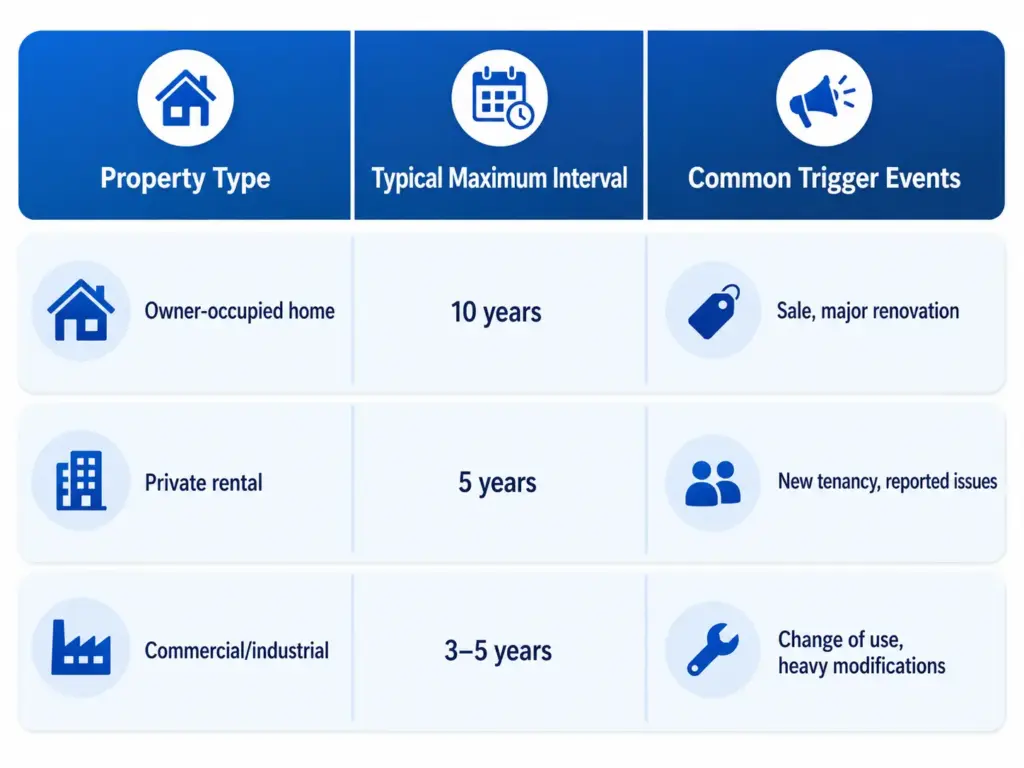
Legal duties set the minimum standard, but determining how often an EICR should be carried out depends on the type of property, its use, and the condition of the installation. Guidance from British Standards and industry bodies suggests typical maximum intervals, but these may be shortened if an electrician finds evidence of wear, alteration, or previous damage.
Homeowners are often advised to have an EICR every 10 years, or when buying or selling. Rental properties usually require testing at least every 5 years, or at each change of tenancy, to demonstrate ongoing safety for occupants. Commercial and higher‑risk premises, such as industrial sites or locations open to the public, may need more frequent checks.
What Happens During an EICR Inspection?
During an EICR inspection, a qualified electrician methodically examines the fixed electrical installation to assess its safety and condition. They begin with a visual inspection, looking for signs of damage, overheating, outdated equipment, or poor workmanship. Accessories such as sockets, switches, consumer units, and visible wiring are checked for suitability and correct installation.
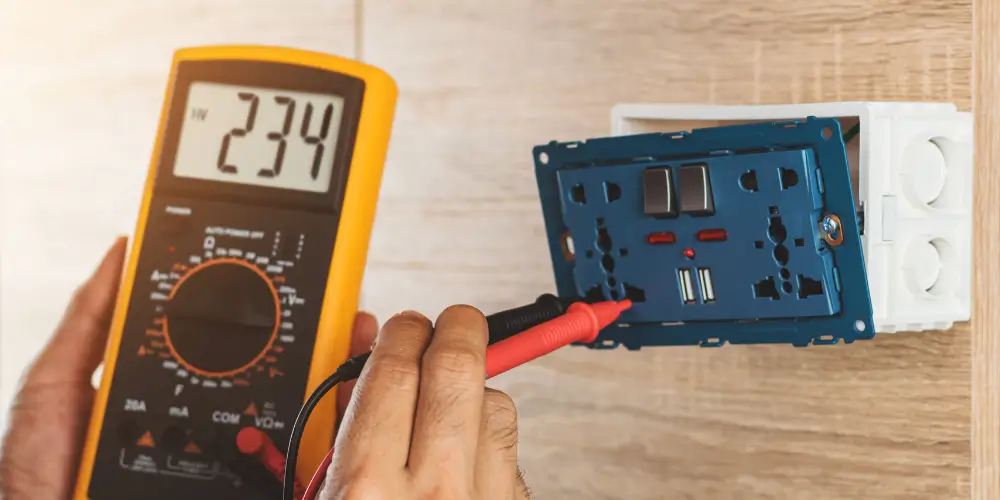
Next, they carry out a series of electrical tests, usually with the power turned off temporarily.
These EICR tests procedures measure things like continuity of protective conductors, insulation resistance of cables, and the effectiveness of earthing and bonding arrangements. They may also verify that circuit breakers and residual current devices (RCDs) operate correctly.
The electrician records observations and test results throughout. Access may be needed to various rooms, cupboards, and the consumer unit, and some furniture might need moving. Once completed, the findings are compiled into the formal EICR document for the property owner or duty holder.
What Do EICR Codes Mean?
Clarity in an Electrical Installation Condition Report largely comes from the observation codes, which show how serious each issue is and what action is required. Each observation the electrician finds is given a code, and these codes determine whether the installation is considered satisfactory or not.
Code C1 highlights a danger that is present now, meaning there is an immediate risk of electric shock or fire.
C2 marks a potentially dangerous situation that could become hazardous if left unaddressed.
FI stands for “Further Investigation,” used when the electrician suspects a problem but cannot confirm it during the inspection.
Code C3 indicates an improvement that is recommended but not essential for safety; installations can still pass with C3 items present.
Together, these codes allow property owners to prioritise work, understand the level of risk, and see how well their electrical installation meets current safety standards. Know the EICR Codes in detail by reading our blog post.
What to Do If Your EICR Fails
When an EICR is marked as “unsatisfactory,” it signals that one or more issues pose a risk significant enough that remedial work is required before the installation can be considered safe. At this point, the report becomes a practical roadmap: it shows what is wrong, how serious each defect is, and where action is needed.
Homeowners or landlords should first read the observations alongside their codes, then ask the electrician to explain any unclear terms. Priorities normally follow the coding: C1 and C2 items require urgent attention; FI points need investigation to confirm whether danger exists.
| Reaction | Hidden Feeling | Why It Matters |
| Worry about safety | Fear of harm | Motivates prompt remedial work |
| Confusion | Overwhelm | Signals a need for a clearer explanation |
| Frustration | Loss of control | Eases when given a structured action plan |
After clarification, they should obtain quotations for the recommended remedial work and arrange repairs promptly. Do you want to know each and every detail of EICR failure and key steps to fix it fast.
How Much Does an EICR Cost?
Although prices vary between properties and regions, the cost of an Electrical Installation Condition Report (EICR) is typically influenced by four main factors: the size of the property, the number of circuits, the complexity of the installation, and the local labour market.
Larger homes or commercial premises usually have more circuits and take longer to test, so they command higher fees than small flats or simple single‑phase installations.
In many areas, a basic EICR for a one‑bedroom flat might fall into a lower price bracket, while a typical three‑bedroom house sits in a mid‑range, and larger or more complex properties cost more again. Hourly labour rates in cities or high‑cost regions also push prices upwards.
It is also common for older properties, or those with extensions and modifications over time, to take longer to inspect, increasing the overall fee even if the property is not especially large.
How to Choose a Qualified EICR Electrician
Choosing a qualified electrician to carry out an EICR begins with verifying formal competence and registration rather than simply comparing prices. A suitable contractor should be fully qualified, hold current inspection and testing credentials, and be registered with a recognised electrical governing body or competent person scheme.
These affiliations indicate adherence to industry standards, up‑to‑date training, and periodic assessment of their work. Prospective clients should ask whether the electrician regularly performs EICRs, not just general electrical work. Experience with properties similar in size and type to their own is valuable, as it helps guarantee realistic timescales and accurate reporting.
It is also sensible to request sample reports, evidence of insurance, and clear written terms covering what the inspection includes, how observations will be coded, and how findings will be explained. Independent reviews or recommendations can further support the decision, helping to distinguish thorough professionals from purely low‑cost options.
How an EICR Protects You and Your Property
Beyond simply meeting legal or contractual requirements, an Electrical Installation Condition Report (EICR) functions as a structured safeguard for both occupants and property.
It identifies faults, deterioration, and non‑compliances that could otherwise remain hidden until they cause shock, fire, or costly damage. By turning a complex electrical system into clear observations and coded recommendations, an EICR helps owners make informed, prioritised decisions.
An EICR typically protects people and buildings in four key ways:
- Fire prevention – Detects overheating cables, faulty connections, and overloaded circuits that could ignite surrounding materials.
- Shock protection – Checks earthing, bonding, and protective devices so exposed faults disconnect safely and quickly.
- Equipment protection – Highlights poor wiring practices and voltage irregularities that shorten the life of appliances and electronics.
- Risk management and planning – Provides documented evidence of electrical safety, supporting insurance, compliance, and long‑term maintenance budgeting.
Frequently Asked Questions
Can I Be Present During the EICR Inspection and Ask Questions in Real Time?
Yes, the client can usually be present and ask questions during an EICR inspection. The electrician may welcome this, provided it does not obstruct work, as it helps explain findings, safety issues, and recommended remedial actions.
Does an EICR Include Testing of Hard‑Wired Smoke Alarms and Fire Detection Systems?
Yes, but only to a limited extent. An EICR normally checks that hard‑wired smoke alarms and fire detection systems are correctly supplied and connected; full functional testing is usually done under a separate, specialist fire alarm maintenance regime.
Will an EICR Affect My Home Insurance Premiums or Existing Policy Terms?
An EICR can influence premiums or terms, but effects vary by insurer. Some reward satisfactory reports with discounts or acceptance, while unsatisfactory findings may trigger conditions, exclusions, or required remedial works to maintain full cover and claims validity.
Can I Use an EICR Report to Negotiate a Property Purchase Price or Sale?
Yes, buyers and sellers can use an EICR to negotiate a price. Identified electrical defects often justify reductions, repair allowances, or conditions of sale. Its findings provide objective evidence that supports restructuring offers or requiring remedial work before completion.
How Do I Securely Store and Share My EICR Report With Tenants or Buyers?
They should store the EICR as a password‑protected PDF in encrypted cloud storage, back it up securely, then share via time‑limited links or secure email, redacting personal data while keeping property address, test results, and recommendations visible.
Conclusion
An EICR is a crucial safeguard rather than a bureaucratic formality. By confirming that an electrical system is safe, compliant and fit for use, it protects people, property and investments. Understanding the codes, acting promptly on any remedial work, and using a qualified electrician guarantees that issues are identified before they become dangerous. Regular inspections, carried out at the correct intervals, provide ongoing peace of mind and help maintain legal and insurance compliance.