


When dealing with electrical hazards, knowing what fire extinguisher for electrical fire is crucial. For electrical fires, CO₂ extinguishers, marked with a black band, are preferred because they do not leave residue and help prevent electrical damage. In contrast, dry powder extinguishers, identifiable by a blue band, can also be used, but may leave a residue that is harmful to sensitive devices. In the UK, it is essential to use non-conductive agents in extinguishers to avoid electrical shock. Safety protocols include de-energising equipment before attempting to extinguish fires and placing extinguishers strategically near high-risk areas. Exploring further will provide deeper insights into effective electrical fire response strategies.
Key Takeaways
- Use CO₂ extinguishers for electrical fires to avoid damaging sensitive equipment and prevent residue.
- Dry powder extinguishers are also suitable, but can leave harmful residues on electronic devices.
- Ensure extinguishers are labelled and colour-coded (black for CO₂, blue for dry powder) for quick identification.
- Regularly train staff on using extinguishers correctly, focusing on the PASS technique: Pull, Aim, Squeeze, Sweep.
- Comply with UK regulations by placing extinguishers near electrical hazards and ensuring they are easily accessible.
What is a Fire Extinguisher for Electrical Fire
A fire extinguisher specifically designed to combat electrical fires is an important safety tool in both residential and commercial settings. These extinguishers are typically categorised as Class C in the United States and Class E internationally. They are formulated to safely extinguish fires without returning electricity to the user, making them ideal for environments with computers, servers, or other sensitive electronic devices. Knowing what fire extinguisher for electrical fire to use is essential.
The most common types of fire extinguishers for electrical fires are carbon dioxide (CO2) and dry-chemical extinguishers. CO2 extinguishers work by displacing oxygen around the fire, effectively suffocating it without leaving any residue. This feature is particularly beneficial in areas where damage to electronic components must be minimised. Dry chemical extinguishers, on the other hand, release a fine powder that insulates electrical equipment from oxygen, helping to halt combustion.
When selecting a fire extinguisher for electrical fires, it is important to look for one that clearly indicates it is suitable for electrical fires. Regular maintenance and proper training on the use of these extinguishers are also critical to guarantee they function effectively when needed. Learn about Types of Fire and Fire Extinguisher: A Complete Guide to Fire Safety.
Why Water Extinguishers Should Never Be Used on Electrical Fires
Water conducts electricity, and using it to extinguish an electrical fire poses a risk of electric shock to the user and anyone nearby. This can not only escalate the hazard but also potentially lead to severe injuries or fatalities.
Moreover, applying water to electrical fires can cause further damage to electrical equipment and infrastructure. Water can cause short circuits in live electrical systems, which might exacerbate the fire or start additional fires elsewhere as electricity travels unpredictably through water. This reaction also risks damaging the electrical system beyond repair, leading to costly replacements and repairs.
Understanding what fire extinguisher for electrical fire to use is important, since water extinguishers can worsen the situation by spreading flames. Non-conductive agents like CO2 or dry-chemical types are the safe choice.
CO₂ Fire Extinguishers for Electrical Fires: How They Work
CO₂ fire extinguishers, specifically designed for electrical fires, deploy carbon dioxide gas to swiftly suppress flames without leaving any residue. This type of extinguisher is highly effective in environments with electrical equipment because the gas displaces oxygen in the air around the fire, effectively suffocating it. Carbon dioxide is a non-conducting, non-corrosive gas, ensuring that sensitive electrical components are not damaged during firefighting operations.
The mechanism of a CO₂ extinguisher involves a high-pressure cylinder containing liquid carbon dioxide. When activated, the liquid is released and expands into a gas form. This rapid expansion cools the carbon dioxide, which also helps to cool the fire as it is being extinguished. The discharge is a cold, dry gas that does not conduct electricity, making it safe for use on or near electrical panels, computers, and other electronic devices.
Safety personnel and employees in workplaces with high-risk electrical environments need to understand how to operate and properly apply CO₂ fire extinguishers. Regular training and drills should be conducted to ensure everyone is prepared to act effectively in the event of an electrical fire.
Dry Powder Fire Extinguishers and their Use on Electrical Equipment
As an alternative to CO₂ extinguishers, dry powder fire extinguishers offer a solution for tackling electrical fires, particularly where versatility is required. Dry powder extinguishers are filled with a fine powder, usually a combination of monoammonium phosphate and ammonium sulfate, which smothers the fire by inhibiting the chemical reactions that sustain it. This type of extinguisher can be used on class A, B, and C fires, making it suitable for mixed-fire environments that include flammable liquids and gases.
When it comes to electrical fires, dry powder extinguishers are effective because the powder can quickly extinguish the flames without conducting electricity back to the user. However, they should be used with caution on sensitive electronic equipment, such as computers and televisions. The powder can damage these devices by corroding metal parts and infiltrating fine electronic components.
Common Electrical Fire Risks in Homes and Commercial Premises
Electrical fire risks in both residential and commercial settings often stem from common sources such as faulty wiring, overloaded circuits, and improper use of electrical devices. In homes, ageing electrical systems may not be able to handle the increased demands of modern appliances, leading to overheating and potential ignition. Similarly, in commercial premises, high-powered equipment and extensive wiring systems can exacerbate these risks if not properly maintained.
Frequent over reliance on surge protectors and power strips can also lead to circuit overloads and fires. Additionally, the misuse of electrical equipment, such as leaving devices running unattended or covering heat vents, can lead to electrical fires. Environmental factors like moisture intrusion can also play a role, especially in settings where electrical systems are exposed to variable temperatures and humidity, which can degrade wiring insulation over time.
UK Fire Safety Guidance for Tackling Electrical Fires
Recognising the hazards associated with electrical fires, the UK fire safety regulations provide specific guidelines for effectively tackling these emergencies. Central to these regulations is the use of appropriate fire extinguishers. The UK recommends CO2 and dry-powder extinguishers for fires involving electrical equipment. These extinguishers are chosen because they do not leave a residue that could further harm electrical components or create additional cleanup issues.
Training is another critical aspect covered under UK regulations. Workplace personnel are required to receive training in the proper use of fire extinguishers, with a focus on the unique challenges posed by electrical fires. This is why it is essential to understand what fire extinguisher for electrical fire.
Where Electrical Fire Extinguishers Should Be Placed in a Building
After a deep knowledge of what fire extinguisher for electrical fire. Determining the ideal placement of fire extinguishers designed for electrical fires within a building is essential for effective fire safety management. Strategic placement not only ensures rapid accessibility in an emergency but also enhances the overall safety of occupants and property. Extinguishers should be located near areas with a high concentration of electrical equipment, such as server rooms, electrical panels, and kitchens.
It is recommended that extinguishers be placed no more than 30 meters from the potential source of an electrical fire to ensure they are easily accessible and visible. In larger facilities, distances might be shorter depending on the layout and specific risks associated with different areas. Additionally, fire extinguishers should be mounted on walls or in clearly marked cabinets at an accessible height, typically not more than 1.5 meters above the floor. You should learn where to install the fire extinguisher in your house.
How to Identify the Correct Fire Extinguisher Using Colour Codes
For electrical fires, the primary choice should be a CO2 extinguisher, identifiable by its black band. CO2 extinguishers are effective because they leave no residue that could harm electronic equipment. Additionally, they remove oxygen from the fire, effectively suffocating it without damaging electrical components.
Another option is a dry powder extinguisher, which has a blue band. These are versatile and can be used on various types of fires, including electrical. However, they do leave a residue that might harm sensitive electronic devices. It’s essential to weigh the potential damage from the fire against the possible equipment damage caused by the extinguishing agent. For more detailed information, read our blog post understanding fire extinguisher colour codes.
Steps to Safely Use a Fire Extinguisher on an Electrical Fire
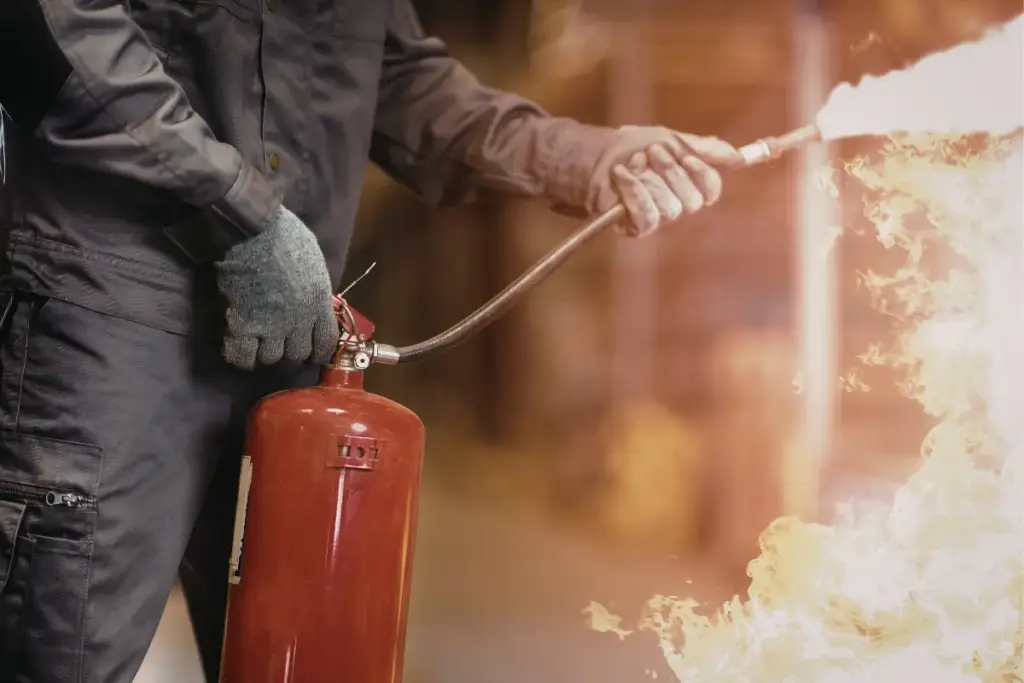
When faced with an electrical fire, quick and correct action can prevent the fire from spreading, minimising damage and potential harm. Here are the steps to safely use a fire extinguisher on an electrical fire:
- Ensure Safety First: Disconnect power if possible. This reduces the risk of electric shock and can help minimize the fire’s fuel. If you cannot safely turn off power, proceed with extreme caution.
- Choose the Correct Extinguisher: Use a CO2 or dry powder extinguisher, identified by a blue band or entirely blue label, respectively. These types are effective against electrical fires and will not conduct electricity.
- Follow the PASS Technique:
- Pull the pin to break the tamper seal.
- Aim low, pointing the extinguisher nozzle or hose at the base of the fire.
- Squeeze the handle to release the extinguishing agent.
- Sweep the nozzle from side to side, covering the fire area until it is extinguished.

Professional Fire Safety Inspections for Electrical Fire Protection
Regular professional fire safety inspections are an essential step for any facility. Our Certified fire safety professionals at Landlord Safety Certificate conduct these inspections. During an inspection, experts assess the integrity of electrical systems, including wiring, circuit breakers, and electrical panels, to guarantee they comply with the latest safety standards and regulations.
Inspectors also evaluate the condition and suitability of fire extinguishers and other fire suppression systems. Special attention is given to the type and placement of fire extinguishers, ensuring they are appropriate for electrical fires, which typically require CO2 or dry powder extinguishers. They check for clear access to these extinguishers, unobstructed escape routes, and properly marked and illuminated exits.
Furthermore, these inspections often include a review of the facility’s fire safety policies and training programs. Inspectors provide recommendations for improvements and updates needed to meet regulatory requirements and enhance safety measures.
Frequently Asked Questions
Can Faulty Wiring Be Easily Detected Before Causing a Fire?
Faulty wiring can be detected before it causes a fire through regular professional inspections, thermal imaging to identify hot spots, and signs such as flickering lights, burning smells, or frequently tripped circuit breakers.
Are There Specific Fire Extinguisher Training Requirements for Employees?
Yes, specific training requirements for employees on the use of fire extinguishers are mandated by law. These include practical training and understanding of different extinguisher types, tailored to the workplace hazards and equipment present.
How Often Should Fire Extinguishers Be Serviced or Replaced?
Fire extinguishers should be serviced annually by a certified professional. Replacement depends on the type and condition, but generally occurs every 5 to 10 years, in compliance with manufacturer guidelines and local safety regulations.
What Are the Insurance Implications of Electrical Fires?
Electrical fires can significantly affect insurance claims; policies may require compliance with safety standards to remain valid. Insurers might adjust premiums or deny claims based on adherence to recommended electrical maintenance and fire safety norms.
Can Regular Home Appliances Cause Electrical Fires?
Yes, regular home appliances can cause electrical fires if they are faulty, improperly installed, or poorly maintained. Overloaded circuits and damaged wires are common triggers for these fires in residential settings.
Conclusion
In summary, know how of what fire extinguisher for electrical fire greatly enhances safety in both residential and commercial settings. CO₂ and dry powder extinguishers are particularly effective for this purpose. Adhering to safety protocols and understanding the placement and usage of these devices is imperative. Additionally, regular professional inspections are recommended to enhance electrical fire safety measures. Compliance with UK regulations not only promotes safety but also mitigates the risk of severe damage and injury.