


First, confirm there is no active fire or danger, evacuate everyone, close doors, and call emergency services from a safe distance. Identify the alarm type (battery, hardwired, or interconnected) by checking for wiring and labelling. To silence it, press the Hush/Test button until the pattern changes; one unit may quiet an interconnected system. After the smoke or steam clears, ventilate, then press Test/Reset to restore normal operation. If hardwired and necessary, switch off the correct breaker. More practical fixes and prevention steps follow for How To Turn Off Fire Alarm.
Key Takeaways
- Check for smoke or fire first; evacuate everyone, close doors, and call emergency services from a safe location.
- Identify the alarm type: battery-only, hardwired, or interconnected, since shutdown steps differ.
- Press the Hush/Test button on the sounding unit to temporarily silence it; interconnected systems may quiet all alarms.
- After the air clears, ventilate the area and reset the alarm by holding the Test/Reset or Hush/Test button as labelled.
- If hardwired and still sounding with no danger, switch off the correct breaker as a last resort and restore power after resolving the cause.
Check for Fire and Get Everyone Safe First
Act immediately: confirm whether there is an active fire or other danger, and prioritise getting everyone to a safe location before attempting to silence the alarm. A fire alarm is designed to prompt evacuation, not troubleshooting. If smoke, flames, a burning smell, or unusual heat are present, everyone should leave by the nearest safe exit and stay low if smoke is visible. Close doors behind you to slow the spread, and do not stop for belongings.
Once outside, account for all occupants and keep them away from the building. Call emergency services from a safe location, even if the situation seems small; early reporting reduces risk. Avoid re-entering until firefighters or building staff indicate it is safe.
If no clear danger is observed, treat the alarm as potentially real while continuing a quick visual check of key areas, such as kitchens, garages, and utility rooms, without delaying evacuation.
Identify Your Fire Alarm Type (Battery, Hardwired, Interconnected)
After everyone is safely outside and no immediate danger is apparent, the next step is to identify the type of alarm sounding, as the shutdown method depends on the power source and wiring.
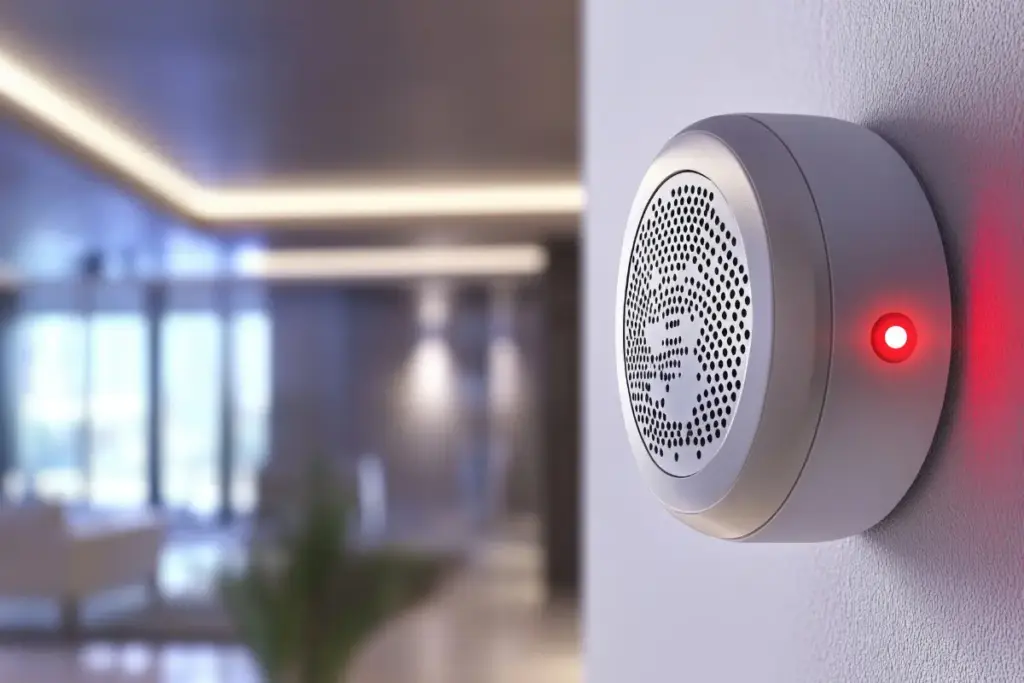
Start by looking at the unit’s placement and labelling: a battery-only alarm is usually a single device with a battery drawer or twist-off cover and no visible cable entering the back. Many battery models chirp for low power and may have a “Replace by” date on the housing. A hardwired alarm is typically mounted to a ceiling or wall plate connected to household wiring; it may still contain a backup battery. This is important when figuring out How To Turn Off Fire Alarm.
If multiple alarms activate simultaneously, the system is likely interconnected, meaning that one triggered unit triggers others. Interconnection can be wired (often a third wire) or wireless, and newer homes commonly use linked units. Identifying these traits helps select the correct shutdown steps safely. That’s why obtaining a fire alarm certificate is important, it helps prevent situations like this.
Silence a Fire Alarm Using the Hush/Test Button
Pressing the alarm’s Hush/Test button is usually the quickest way to stop a nuisance alarm once the area is confirmed safe. On most units, the button is labelled “Hush,” “Silence,” or “Test/Hush” and is located on the front cover. The person should stand close to the alarm and press firmly; some models require holding the button for several seconds until the chirp pattern changes or the siren stops. If the home has interconnected alarms, silencing one device may quiet the whole network, but it may also require pressing the initiating alarm.
If the sound continues, the person should verify that the correct unit is being pressed and that the alarm is not reporting an active risk condition. The Hush feature is typically temporary and may re-sound if smoke or heat remains present.
Reset the Fire Alarm After the Air Clears
Once the air is clear and the source of the nuisance alarm is gone, the alarm should be reset to restore normal monitoring. Most units will resume automatically after a brief hush period, but some require a manual reset. The safest approach is to follow the label instructions on the alarm body or the manufacturer’s guide for that model.
To reset, press and hold the Test/Reset or Hush/Test button for several seconds until the unit chirps or the indicator light returns to its normal pattern. If the alarm is part of an interconnected system, allow a minute for all linked alarms to synchronise and stop. Continue ventilating the area while resetting to prevent lingering particles from retriggering the sensor. This is how you can handle How To Turn Off Fire Alarm.
If the alarm reactivates immediately, treat it as an unresolved trigger: recheck for smoke, steam, or dust near the device, and confirm the area is truly clear.
Turn Off Power at the Breaker (Hardwired, Last Resort)
Cutting power at the breaker should be considered a last resort for hardwired fire alarms when silencing and resetting fail. Before acting, the person should confirm there is no active fire, then locate the electrical panel and identify the labelled “smoke alarm” or “fire alarm” circuit. If labelling is unclear, switching off the suspected breaker briefly and listening for the alarm to stop helps confirm the correct circuit.
| Checkpoint | What to do | Why it matters |
| Safety | Verify no smoke/heat | Avoids masking a real emergency |
| Panel access | Use good lighting | Reduces wrong-breaker errors |
| Circuit ID | Find the alarm-labelled breaker | Targets only the needed circuit |
| Power off | Flip breaker fully OFF | Interrupts hardwired power reliably |
| Next step | Restore power after resolving the cause | Prevents leaving safety devices disabled |
After the power is cut, the alarm should be quiet within seconds. Power should be restored promptly once the issue is corrected and normal operation verified.
Silence an Interconnected Fire Alarm or Alarm Panel
Start by determining whether the noise is coming from a group of interconnected smoke/CO alarms or from a central alarm panel, since the silencing method differs. Interconnected alarms usually all sound together; identify the initiating unit by listening for the one that continues after others pause or shows a red indicator. Press and hold the TEST/SILENCE button on that unit first, then on any others still sounding.
If the alarms are tied to a security or fire panel, go to the keypad or control box and look for ALARM, TROUBLE, or zone information. Use the panel’s SILENCE or ACKNOWLEDGE function to stop the siren; some systems require entering a code. If the alarm returns immediately, treat it as an active condition and verify the area is safe before further attempts. When in doubt, follow the manufacturer’s instructions or contact the monitoring or building maintenance team.
Stop a Fire Alarm From Chirping (Battery and Sensor Fixes)
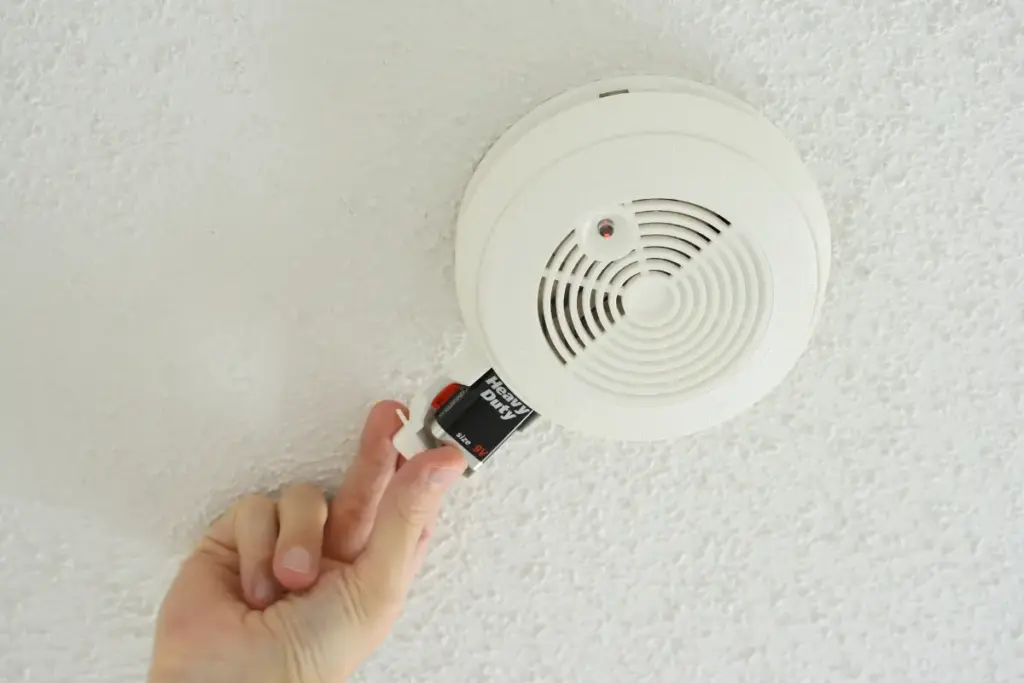
A steady chirp every 30–60 seconds almost always signals a maintenance issue rather than an active fire: a low battery, an end‑of‑life warning, or a dirty sensor chamber. First, identify the unit that’s chirping; sound can echo, so follow the LED indicator or listen closely at each alarm.
For battery models, open the compartment, replace it with the specified battery type, and verify the correct polarity. Press and hold the Test/Silence button for 10–20 seconds to reset and clear residual charge. For hardwired alarms with battery backup, turn off power at the breaker before removing the alarm, then replace the backup battery and restore power. If chirping continues, check for an end‑of‑life signal (often a patterned chirp and a date code on the back). Replace the entire alarm if expired. For dust-related chirps, remove the alarm, gently vacuum vents, and clean the sensor chamber per the manufacturer’s instructions. Reinstall securely.
Prevent Fire Alarm False Alarms in the Future
Why does my Fire Alarm keep going off unsystematically? Most “false alarms” are nuisance triggers: cooking aerosols, steam, dust, insects, or sensor mismatch for the space. Prevention focuses on correct placement, regular cleaning, and choosing the right alarm type (photoelectric vs ionisation) for nearby activities.
- Install alarms at recommended distances from kitchens and bathrooms, per manufacturer guidance.
- Use photoelectric models near cooking areas to reduce aerosol sensitivity.
- Vacuum vents and gently clean housings monthly to remove dust and cobwebs.
- Control humidity and steam with exhaust fans; avoid mounting near HVAC supply registers.
- Replace ageing units (typically at 10 years) and test monthly; swap weak batteries early.
How can you keep the Fire Alarm System in Perfect Condition? If alarms still sound, the homeowner should document the pattern and consult the manufacturer or a licensed electrician, as wiring issues or incompatible interconnections can also cause repeated nuisance activations.
Frequently Asked Questions
Do I Need Landlord Permission to Disable a Fire Alarm Temporarily?
Generally, yes; tenants usually need landlord permission and must follow local fire codes before disabling any alarm, even temporarily. Disabling can violate leases and laws, pose safety risks, and incur fines. Use approved maintenance procedures instead.
Are There Legal Penalties for Turning off a Fire Alarm?
Yes. Many jurisdictions impose fines or criminal charges for disabling alarms, especially in multiunit buildings or during emergencies. Liability may also arise if harm occurs. Temporary deactivation usually requires authorised personnel and prompt reactivation.
How Do I Know if My Alarm Is Connected to a Security Monitoring Service?
Check the alarm panel for monitoring company labels, a phone line/cellular module, or “communication” indicators. Review the installation paperwork, call the manufacturer with the model/serial number, or contact the building owner or service provider for confirmation.
Can Turning off the Alarm Void My Home Insurance Coverage?
Turning off an alarm can sometimes affect home insurance if it violates policy terms or worsens risk. Coverage may be reduced or denied after a loss. They should review policy requirements and notify the insurer before disabling it.
When Should I Replace the Entire Fire Alarm Unit Instead of Fixing It?
The entire fire alarm unit should be replaced when it is over 10 years old, has repeatedly triggered false alarms, has corrosion or damage, won’t reset after troubleshooting, or uses non-replaceable batteries. Replace immediately after any fire exposure.
Conclusion
Turning off a fire alarm should only happen after confirming there is no fire and everyone is safe. Once the cause is identified, the correct method depends on the alarm type: battery, hardwired, or interconnected. Using the hush/test button, resetting the unit after the smoke clears, or cutting power at the breaker can stop persistent alarms. Chirping usually indicates low battery power or sensor issues. Regular cleaning, timely battery changes, and proper placement help prevent false alarms. This covers How To Turn Off Fire Alarm.