



In the UK, most properties cannot be marketed for sale or rent without a valid Energy Performance Certificate (EPC). Sellers or landlords are legally responsible for providing the EPC, though agents often arrange it. Exemptions are limited (eg listed buildings, very short-term lets). Failure to supply an EPC risks fines, delayed conveyancing and reduced buyer confidence. Commercial rules and MEES minimum ratings add complexity, and further guidance explains liabilities, timing and how to comply.
Key Takeaways
- In most UK property sales, you must provide a valid EPC to prospective buyers and include its rating in marketing materials.
- Sellers are legally responsible for arranging and supplying the EPC, though agents often coordinate the assessment.
- Exemptions exist (e.g., listed buildings, some temporary structures), but these must be proven and documented.
- Failing to provide an EPC can lead to fines, marketing removal, delayed conveyancing, and reduced buyer confidence.
- Obtain a qualified assessor and an up-to-date certificate before marketing to avoid penalties and support smooth transactions.
Can You Sell a Property Without an EPC in the UK?
Although legally required for most sales, an Energy Performance Certificate (EPC) is not always mandatory in the UK: certain transactions such as those involving listed buildings, properties sold as part of a demolish-and-rebuild scheme, temporary buildings, or off-plan developments where the EPC will be provided later are exempt, but sellers generally must obtain and supply an EPC to prospective buyers and include the rating in advertising, with penalties for non-compliance. The rule aims to inform buyers about energy costs and carbon impact, supporting informed choices and market transparency. Exemptions are limited and specific; relying on them without verification risks fines. Selling without an EPC where one is required may delay completion and reduce buyer confidence. Those seeking flexibility should check statutory guidance, document any legitimate exemption, and consider commissioning an EPC early to avoid disruption. Clear compliance preserves sale momentum while respecting buyers’ autonomy over energy-related decisions.
Who Must Arrange the EPC: Owner, Agent or Seller?
Who is responsible for arranging an Energy Performance Certificate (EPC) depends on the nature of the transaction and the parties involved: statutory responsibility lies with the seller or landlord to guarantee an EPC is available at marketing, but in practice estate agents or property managers often coordinate the commissioning to keep sales on track, provided the seller gives clear instruction and covers the cost. Responsibility thus sits legally with the owner or landlord, who must verify compliance and supply the certificate to prospective buyers or tenants. Agents typically act as facilitators, organising qualified assessors and managing/’ paperwork to avoid delays, but this is contingent on explicit instruction and payment authority from the seller. Where sellers opt for hands-off convenience, agents assume practical duties while liability remains with the owner. Parties are advised to document who arranges and pays for the EPC to preserve autonomy and avoid disputes, verifying the legal obligation and operational tasks are plainly allocated.
Which Property Types Need an EPC Before Marketing?
Which buildings require an EPC before being marketed depends on their use and size: virtually all residential properties offered for sale or rent, most commercial premises when marketed, and newly constructed buildings must have an EPC available at the point of marketing. The rule aims to inform prospective buyers or tenants so they can choose freely, knowing likely energy costs and performance.
Typical property types requiring an EPC before any public marketing include:
- Residential homes and flats sold or let on the open market, including show homes in new developments.
- Commercial buildings offered for sale or lease, such as offices, retail units and warehouses, subject to size and scope exemptions. Read our blog post What is the Importance of Commercial EPC and How to acquire it? to find the details.
- Newly built dwellings and non-domestic buildings at practical completion.
- Common parts of multi-unit buildings marketed separately or where an individual unit is offered with shared services.
Exemptions exist for very short-term lets, certain temporary structures and listed buildings where obtaining an EPC is impractical; sellers should verify circumstances to preserve transactional freedom. Explore the 5 Ways of Improving the EPC Rating of a Building.
How MEES (Minimum Energy Efficiency Rules) Affect EPCs and Your Sale
Many sellers must consider Minimum Energy Efficiency Standards (MEES) because these regulations set a legal floor for the energy performance of properties offered for letting and, in practice, influence sales by affecting marketability and required upgrades. MEES require that let residential and commercial properties meet a minimum EPC rating (currently E or above) before new or renewed tenancies commence. While MEES apply directly to landlords, their existence shapes buyer expectations: purchasers who intend to let will factor compliance costs into offers, and non-compliant homes may attract fewer bidders.
An up-to-date EPC reveals current performance and highlights inexpensive improvements insulation, glazing, boiler upgrades that can raise ratings and broaden market appeal. Sellers seeking freedom to negotiate can choose to invest in measures to improve the EPC, present clear cost estimates for works, or market to owner-occupiers less constrained by MEES. Transparent EPC information reduces friction and supports informed, flexible transactions.
What Happens If You Sell Without an EPC: Penalties and Legal Risks
If a property is marketed or sold without a valid Energy Performance Certificate (EPC), the seller can face financial penalties, delays in the transaction, and potential challenges at conveyancing. Breaching EPC rules exposes the seller to fixed penalties from local trading standards, and non-compliance can be raised as a contractual issue by buyers, risking claims for misrepresentation or rescission. Conveyancers may advise delaying exchange until an EPC is produced, impeding the freedom to conclude deals swiftly. Reputational harm can make future sales harder and attract scrutiny.
- Fines: civil penalties set by authorities, payable by the seller.
- Contract risk: buyers may seek compensation or withdraw if EPC absence is material.
- Conveyancing delay: legal advisors may insist on resolution before exchange.
- Market impact: listings removed or reduced buyer confidence, limiting bargaining freedom.
Sellers should weigh these risks against their objectives and act to preserve transactional autonomy.
How to Get an EPC Quickly: Process, Timescale and Cost
Arrange an EPC assessment by commissioning a registered energy assessor who inspects the property, collects data on fabric, heating and lighting, and inputs the findings into government-approved software to generate the certificate. The assessor can usually be booked online or by phone; inspections often take 30–90 minutes depending on property size. Certificates are lodged on the national register; turnaround ranges from the same day to five working days. Typical costs vary: small flats may cost £50–£100, houses £75–£200, and larger or complicated buildings more. Choosing an accredited assessor with clear pricing and available slots speeds the process, preserving the seller’s control and timeline. Check out the 6 Steps to Get an EPC Certificate Fast. 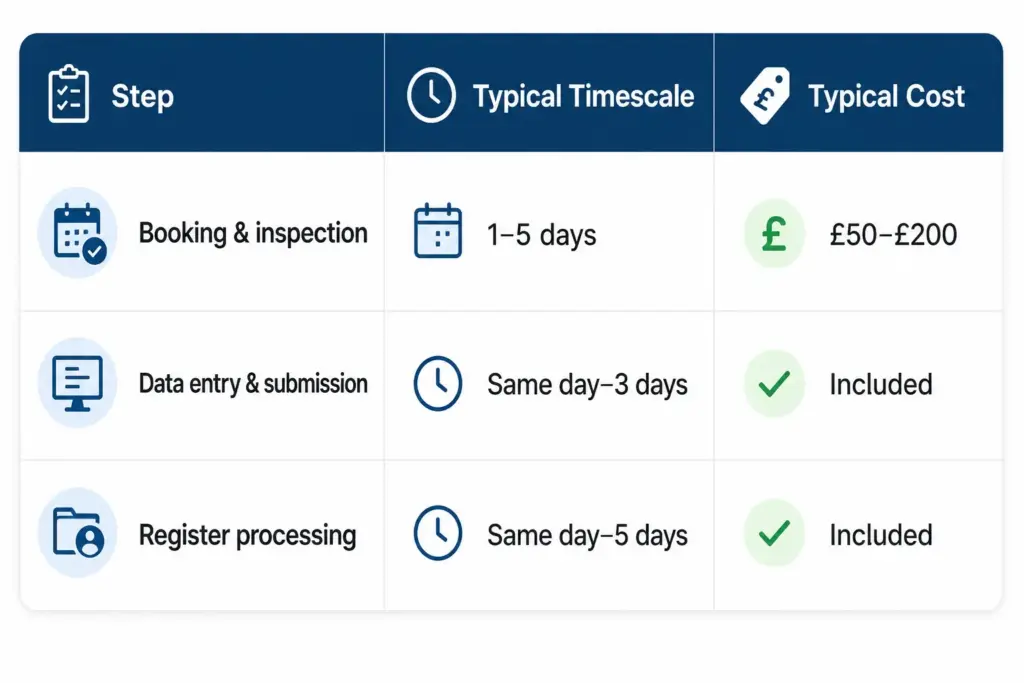
Prompt action and clarity with documents yield the quickest result.
Avoid EPC Delays and Fines: Seven Practical Steps
Having an EPC in place speeds sales and avoids last-minute hold-ups, but sellers must also guard against common causes of delay and potential fines. The seller should plan early: book a certified assessor well before listing and gather energy-related documents to prevent rescheduling. Clear access to meters and boiler servicing records reduces on-site inspection time. When working with agents, confirm EPC requirements are listed in marketing materials so compliance is visible to buyers. Maintain digital copies of the certificate for quick sharing and proof.
- Book accredited assessors early to secure desired dates
- Prepare boiler, meter access and relevant documentation beforehand
- Confirm estate agent lists EPC status in all adverts
- Keep digital copies and a backup for swift evidence
These steps preserve freedom of movement in the transaction, minimise enforcement risk and avoid fines that can stall completion. Proactive organisation protects timelines and keeps the sale on terms favourable to the seller. Here are the 4 Reasons Why You Should Never Delay EPC Inspection.
EPC Rules for Private Sellers, Landlords and Commercial Sales
EPC requirements differ by sector and role: private sellers must provide a valid certificate when marketing a property, landlords need compliant ratings and up-to-date certificates for tenancies, and commercial transactions follow separate assessment standards and display rules. Private sellers who value autonomy should guarantee an EPC is commissioned before listing; failure risks fines and can impede sale progression. Landlords must meet minimum energy efficiency standards for new and renewing tenancies, remedying shortfalls or seeking exemptions to retain control over rental choices. Commercial property owners face distinct assessment methods, often needing tailored surveys and visible certificates in public areas, with compliance affecting business operations and investor appeal. Across all sectors, accurate documentation empowers owners to negotiate freely and avoids regulatory barriers. Seeking qualified assessors, understanding exemption criteria, and planning upgrades where needed preserves options and reduces exposure to penalties, enabling transactions to proceed with confidence and minimal constraint.
Frequently Asked Questions
Can a Buyer Waive the EPC Requirement in Writing?
Yes. He may attempt to waive the EPC requirement in writing, but such waiver lacks legal effect where statutes mandate an EPC for property sale; prudent freedom-seekers should obtain professional advice to avoid nullified transactions and penalties.
Do EPC Ratings Affect Mortgage Approval or Terms?
Yes. Lenders may consider EPC ratings: a poor rating can restrict mortgage options, increase interest rates, or require energy improvements; a strong rating can improve terms. The buyer’s freedom to secure financing may consequently be affected.
Are Solar Panels Reflected in the EPC Score?
Yes. They are: solar panels typically improve an EPC by reducing energy consumption and boosting renewable energy scores, which can raise ratings. The impact varies with system size, orientation, usage and whether panels supply hot water or electricity generation.
How Long Is an EPC Valid After Property Renovations?
After renovations, an EPC remains valid for ten years unless significant works alter energy performance; then one free choice is to commission a new assessment sooner to reflect improvements and potentially improve the property’s rating and marketability.
Can Historic or Listed Buildings Be Exempt From EPCS?
Yes, historic or listed buildings can be exempt from EPCs when conservation works would conflict with preserving character; the authority may grant an exemption, allowing owners greater autonomy while balancing heritage protection and regulatory aims.
Conclusion
In conclusion, sellers in the UK generally must provide a valid EPC when marketing residential or relevant commercial property, with responsibility typically falling to the owner though agents often arrange it. Exemptions are limited, and MEES can restrict letting or sale without a minimum rating. Failing to supply an EPC risks fines and legal complications. Obtaining one is straightforward through accredited assessors; prompt action and clear record-keeping help avoid delays and penalties.